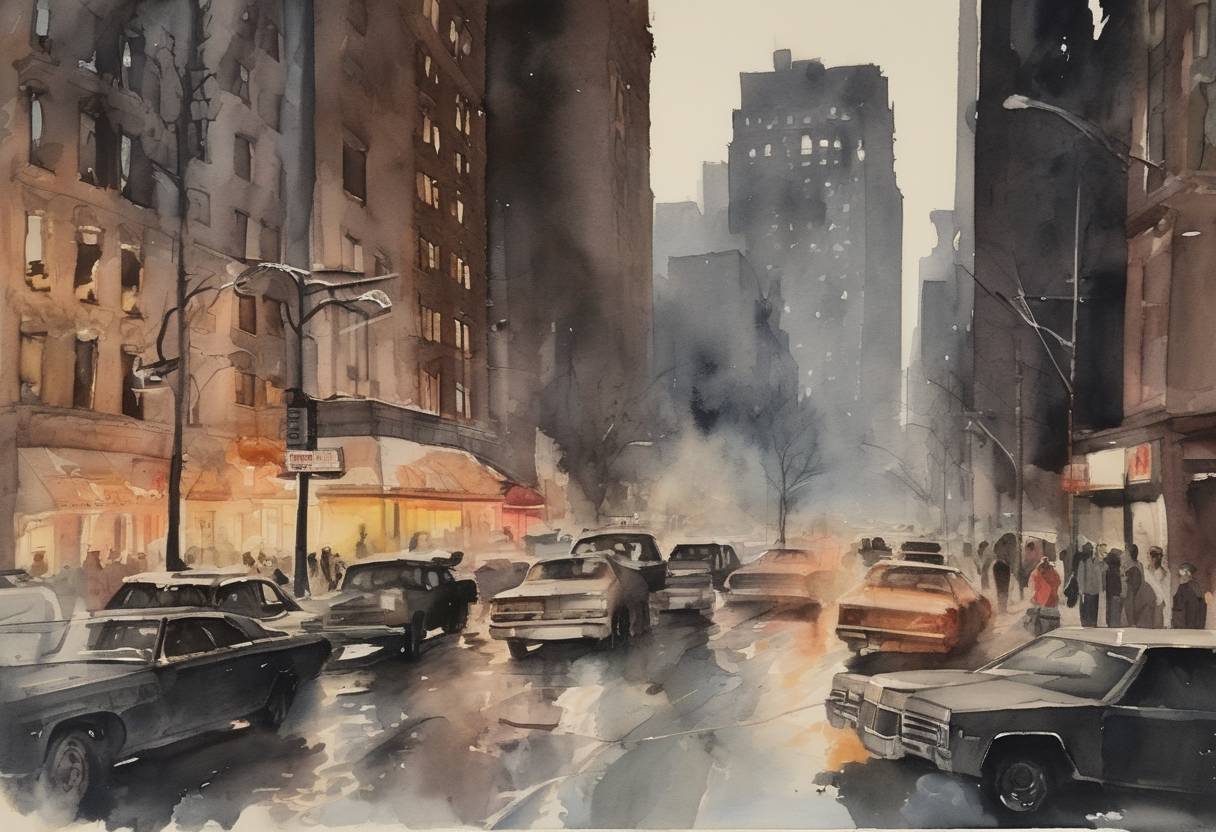
The New York City Blackout of July 13, 1977
On July 13, 1977, New York City experienced a major blackout that had significant social and economic repercussions. This event occurred during a period of considerable economic hardship and social unrest in the city, exacerbating existing tensions and leading to widespread looting and arson.
Context Leading Up to the Blackout
During the 1970s, New York City was facing severe financial difficulties. The city was on the brink of bankruptcy, and there were high levels of unemployment and crime. Social services were strained, and there was a general atmosphere of discontent among the population. This backdrop of economic and social turmoil set the stage for the events that unfolded during the blackout.
The Blackout
The blackout began on the evening of July 13, 1977, and lasted for approximately 25 hours. It was caused by a series of lightning strikes that hit power lines and substations, leading to a cascading failure of the city’s electrical grid. The entire city was plunged into darkness, affecting millions of residents.
The blackout had immediate and dramatic consequences:
Looting and Arson: In many neighborhoods, particularly those already struggling with poverty and crime, the blackout led to widespread looting and arson. Stores were broken into, and fires were set, causing significant property damage. The hardest-hit areas included parts of Brooklyn, the Bronx, and Harlem.
Law Enforcement Challenges: The New York City Police Department was overwhelmed by the scale of the unrest. Thousands of arrests were made, but the sheer volume of incidents made it difficult to maintain order.
Economic Impact: The blackout caused an estimated $300 million in damages. Many businesses suffered losses due to theft and destruction, and the event further strained the city’s already precarious financial situation.
Broader Historical Significance
The 1977 blackout highlighted the vulnerabilities of New York City’s infrastructure and the deep-seated social issues facing the city. It underscored the need for investment in infrastructure and social programs to address the root causes of unrest.
In the years following the blackout, New York City began to recover economically, and efforts were made to improve the reliability of the power grid. The event remains a significant moment in the city’s history, illustrating the complex interplay between infrastructure, social conditions, and public safety.
Conclusion
The New York City blackout of July 13, 1977, was a pivotal event that exposed the challenges facing the city during a difficult period. It serves as a reminder of the importance of robust infrastructure and the need to address social inequalities to prevent similar occurrences in the future.