Consecration of Constantinople as the New Capital of the Roman Empire
330 · Constantinople, Roman Empire
Constantinople is consecrated as the new capital of the Roman Empire by Emperor Constantine the Great.
May 18, 0332
Constantine the Great announced free distribution of food to the citizens of Constantinople, a gesture to gain favor and support for his new capital.
Constantinople, Byzantine Empire | Roman Empire
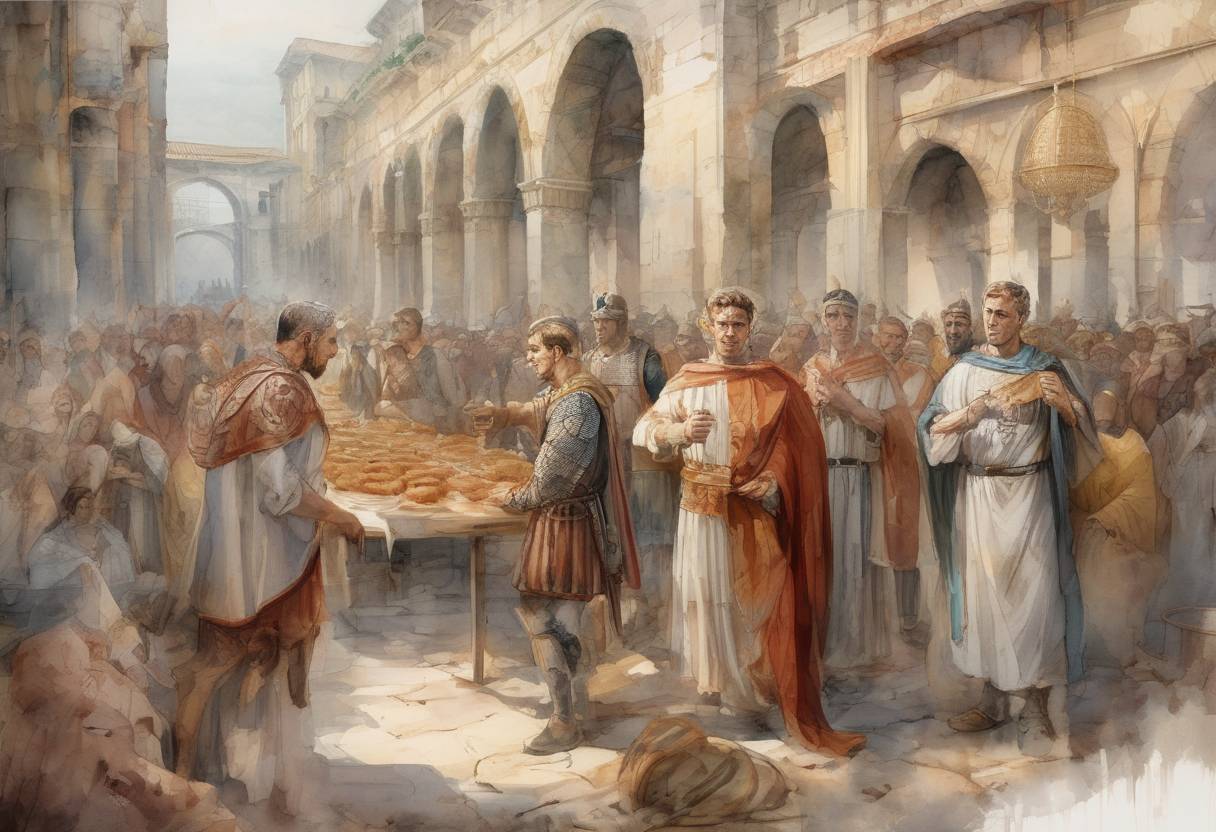
On May 18, 332, Constantine the Great, the Roman Emperor, announced the free distribution of food to the citizens of Constantinople. This strategic move was part of his broader efforts to solidify support and ensure the prosperity of his newly established capital.
Foundation of Constantinople: Constantine the Great founded Constantinople (modern-day Istanbul) in 330 AD, strategically located on the site of the ancient city of Byzantium. This new capital was intended to be the heart of the Roman Empire, symbolizing a shift in power from Rome to the East.
Political Strategy: By establishing Constantinople, Constantine aimed to create a center of power that could effectively manage the vast territories of the Roman Empire. The city was positioned at the crossroads of Europe and Asia, providing economic and military advantages.
Purpose: The announcement of free food distribution was a calculated gesture to gain favor among the inhabitants of Constantinople. It was a common practice in Roman politics to provide such largesse to secure loyalty and support from the populace.
Implementation: The distribution likely included staple foods such as grain, which was essential for the sustenance of the urban population. This act of generosity would have helped alleviate any immediate economic hardships faced by the citizens and reinforced Constantine’s image as a benevolent ruler.
Consolidation of Power: By ensuring the well-being of Constantinople’s citizens, Constantine strengthened his political base in the East. This move was crucial for maintaining stability and control over the newly established capital.
Legacy: The free distribution of food set a precedent for future emperors, who continued similar practices to maintain public order and support. It also highlighted the importance of Constantinople as a vital center of the Roman Empire.
Cultural Impact: Over time, Constantinople grew into a thriving metropolis, becoming a hub of culture, commerce, and political power. The city’s prosperity and strategic importance would endure for centuries, influencing the course of European and Middle Eastern history.
In summary, Constantine’s decision to distribute food freely to the citizens of Constantinople on May 18, 332, was a pivotal moment in the city’s early history. It not only helped secure his rule but also laid the foundation for Constantinople’s future as a major center of the Roman Empire.
Source: www.britannica.com