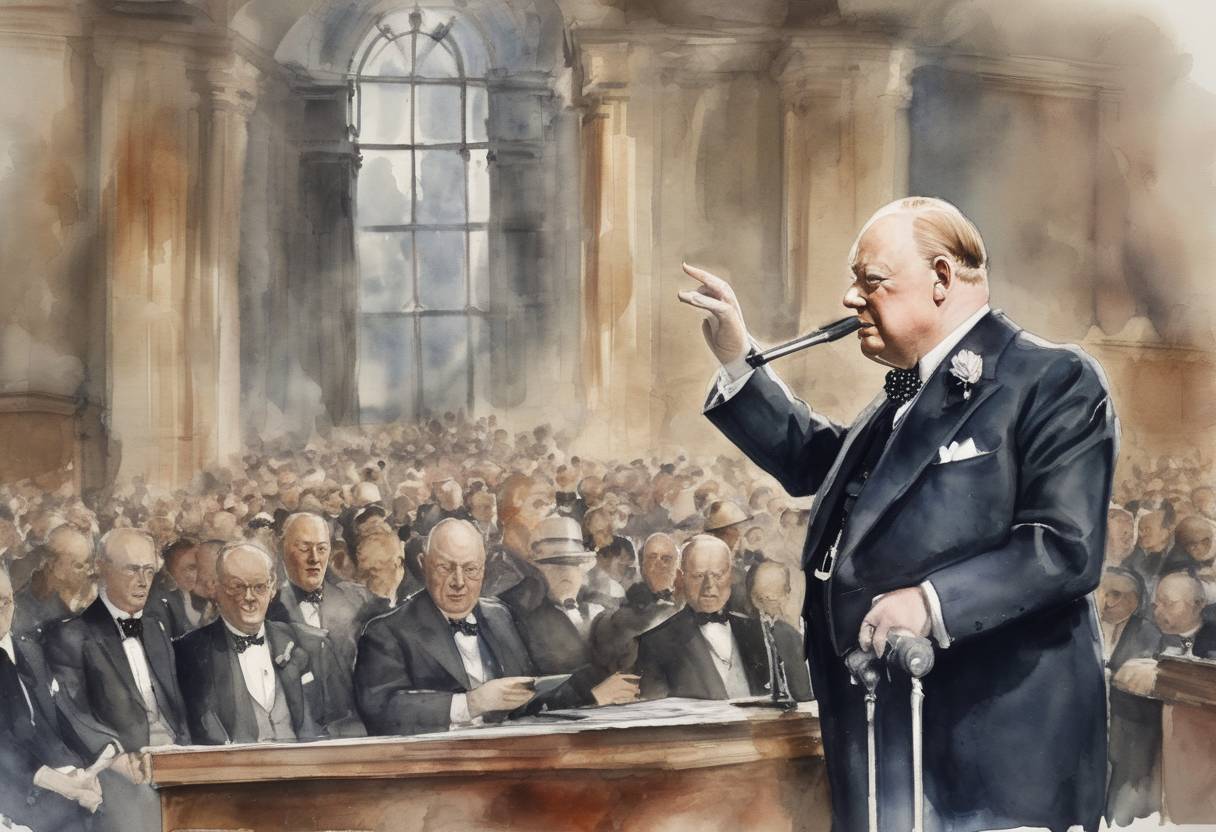
Winston Churchill’s First Speech as Prime Minister
On May 13, 1940, Winston Churchill delivered his first speech as Prime Minister to the House of Commons, a pivotal moment in British history. This speech is famously remembered for the phrase, “I have nothing to offer but blood, toil, tears, and sweat.” It marked the beginning of Churchill’s leadership during one of the most challenging periods of World War II.
Context Leading Up to the Speech
Political Turmoil: Churchill became Prime Minister on May 10, 1940, following the resignation of Neville Chamberlain. Chamberlain’s policy of appeasement towards Adolf Hitler had been widely criticized, especially after the German invasion of Poland in 1939 and the subsequent outbreak of World War II.
Military Situation: At the time of Churchill’s appointment, Nazi Germany had launched a massive offensive against Western Europe, invading Belgium, the Netherlands, and France. The situation was dire, with British and Allied forces facing significant challenges.
Key Points of the Speech
Call to Unity: Churchill’s speech was a call to unity and resilience. He sought to rally the British government and people to face the existential threat posed by Nazi Germany.
Commitment to Victory: He emphasized the necessity of victory at all costs, stating that the survival of Britain and its way of life depended on defeating the Axis powers.
Famous Phrase: The phrase “I have nothing to offer but blood, toil, tears, and sweat” encapsulated the gravity of the situation and Churchill’s determination to lead Britain through the hardships of war.
Aftermath and Significance
Public Morale: The speech was crucial in boosting public morale. Churchill’s rhetoric and leadership style inspired confidence and steeled the British public for the difficult times ahead.
Leadership Style: Churchill’s direct and unflinching communication style became a hallmark of his leadership, helping to solidify his reputation as a wartime leader.
Historical Impact: This speech set the tone for Churchill’s tenure as Prime Minister. His leadership during the war is credited with helping to sustain British resistance against Nazi Germany until the eventual Allied victory in 1945.
Churchill’s first speech as Prime Minister remains a defining moment in British history, symbolizing resilience and determination in the face of overwhelming adversity.