Queen Elizabeth I Signs the Death Warrant for Mary, Queen of Scots
1587 · London, England
Queen Elizabeth I of England signs the death warrant for Mary, Queen of Scots.
April 12, 1606
The Union Flag was adopted as the national flag of Great Britain, symbolizing the union of England and Scotland.
London, England | Kingdom of Great Britain
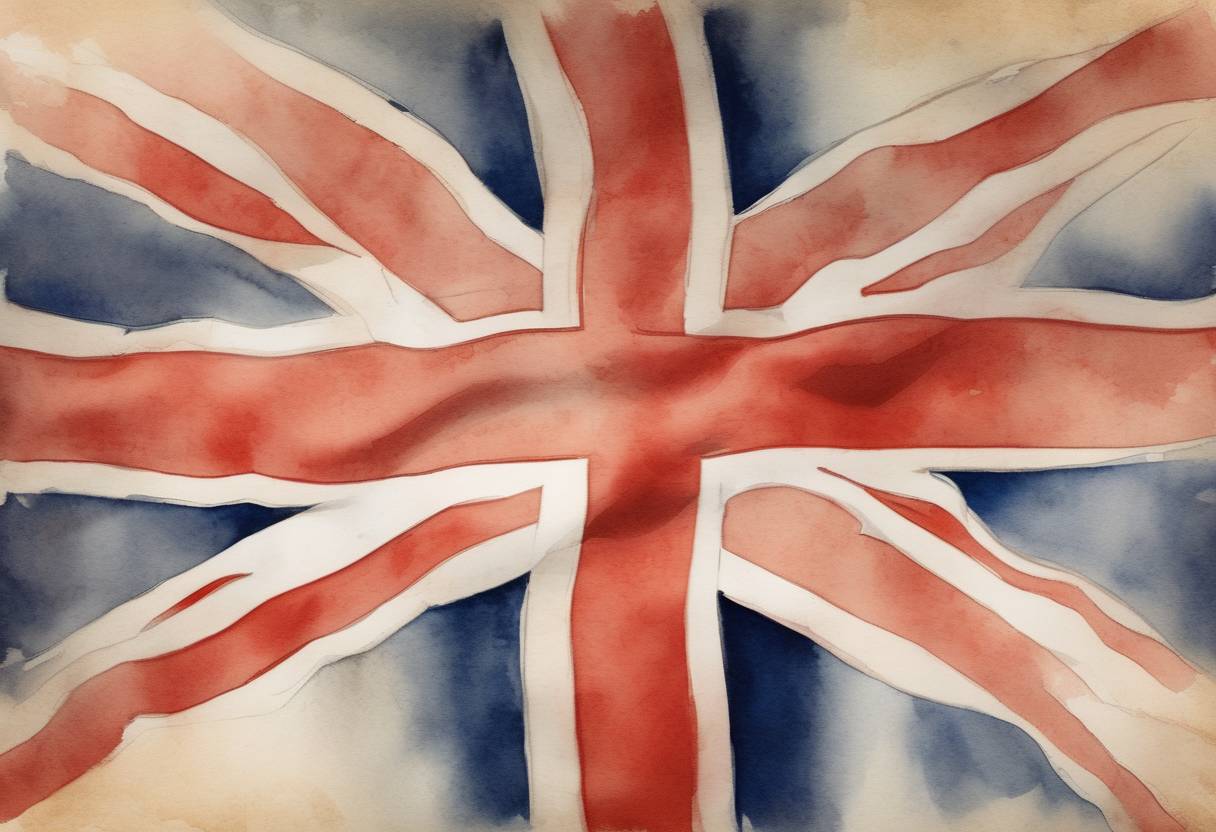
On April 12, 1606, the Union Flag was adopted as the national flag of Great Britain, symbolizing the union of England and Scotland. This event marked a significant moment in the history of the British Isles, reflecting the political and cultural shifts of the early 17th century.
The adoption of the Union Flag came after the Union of the Crowns in 1603, when King James VI of Scotland ascended to the English throne as King James I, following the death of Queen Elizabeth I. This personal union brought England and Scotland under a single monarch, although both countries remained legally separate entities with their own parliaments and laws.
The original Union Flag, often referred to as the “Union Jack,” was a combination of the flags of England and Scotland. It featured:
The design was intended to symbolize the unity of the two nations under one crown, although it did not include any representation of Ireland, which was not part of the union at that time.
The adoption of the Union Flag was a visual representation of the new political reality in the British Isles. It was used primarily at sea and by the military, symbolizing the combined strength and unity of England and Scotland. However, the flag did not immediately gain widespread acceptance on land, as both nations retained strong individual identities.
The Union Flag laid the groundwork for future developments in British symbolism and identity. It would later evolve to include the Cross of St. Patrick, representing Ireland, following the Acts of Union in 1801, which created the United Kingdom of Great Britain and Ireland.
The creation of the Union Flag was an early step in the complex process of unifying the British Isles. While it symbolized a royal union, the political and cultural integration of England and Scotland would continue to evolve over the centuries, culminating in the Acts of Union in 1707, which formally united the two countries into the Kingdom of Great Britain.
The Union Flag remains a potent symbol of British identity and heritage, reflecting the historical journey of the United Kingdom and its constituent nations.
Source: en.wikipedia.org