Vermont's Admission as the 14th State of the United States
1791 · Montpelier, United States
Vermont was admitted as the 14th state of the United States.
June 21, 1788
New Hampshire became the ninth state to ratify the United States Constitution, which led to its official adoption as the framework of the government of the United States.
Concord, United States | United States
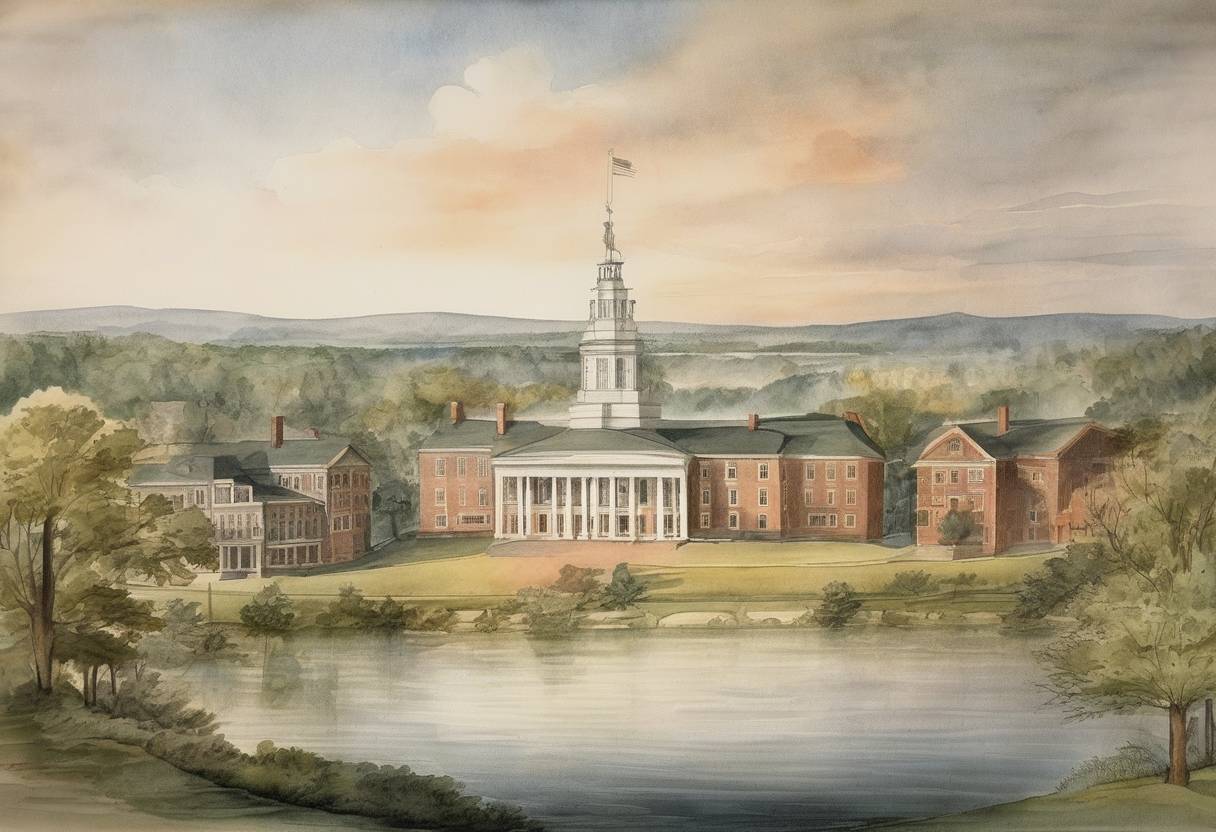
On June 21, 1788, New Hampshire became the pivotal ninth state to ratify the United States Constitution, marking a significant milestone in American history. This ratification was crucial because it provided the necessary majority for the Constitution to become the official framework of the United States government.
Following the American Revolutionary War, the newly independent states were governed by the Articles of Confederation. However, the Articles proved inadequate due to their lack of a strong central government, leading to issues such as interstate disputes and financial instability. In response, the Constitutional Convention was convened in Philadelphia in 1787, where delegates drafted a new Constitution designed to create a more robust federal structure.
Constitutional Convention (1787): The Convention concluded on September 17, 1787, with the signing of the Constitution. It then required ratification by at least nine of the thirteen states to become effective.
State Ratification Debates: Each state held conventions to debate the merits of the new Constitution. These debates were often contentious, with Federalists advocating for a strong central government and Anti-Federalists concerned about the potential for tyranny.
New Hampshire’s Decision: New Hampshire initially postponed its decision due to strong opposition. However, after a series of debates and the promise of a Bill of Rights to address concerns about individual liberties, the state reconvened its convention.
On June 21, 1788, New Hampshire voted to ratify the Constitution by a narrow margin, becoming the ninth state to do so. This ratification was critical because it provided the necessary majority for the Constitution to be enacted.
Official Adoption: With New Hampshire’s ratification, the Constitution officially became the law of the land. This event marked the beginning of a new era in American governance, transitioning from a loose confederation to a federal system.
Influence on Other States: The ratification by New Hampshire encouraged other states, including Virginia and New York, to follow suit, further solidifying the Constitution’s acceptance.
Bill of Rights: The promise of a Bill of Rights was fulfilled in 1791, addressing many concerns of the Anti-Federalists and ensuring protections for individual liberties.
The adoption of the Constitution established a framework that has governed the United States for over two centuries. It created a system of checks and balances, a separation of powers, and a federal structure that has allowed for both stability and adaptability. New Hampshire’s ratification was a crucial step in this foundational process, underscoring the importance of compromise and consensus in the formation of the United States government.
In summary, New Hampshire’s ratification of the Constitution on June 21, 1788, was a decisive moment in American history, enabling the establishment of a new government and setting the stage for the United States’ development as a nation.
Source: en.wikipedia.org