Howard Carter and Lord Carnarvon Enter Tutankhamun's Tomb on November 26, 1922
1922 · Luxor, Egypt
Howard Carter and Lord Carnarvon enter the tomb of Pharaoh Tutankhamun.
February 16, 1923
Howard Carter unseals the burial chamber of Pharaoh Tutankhamun.
Luxor, Egypt | Egyptian Antiquities Service
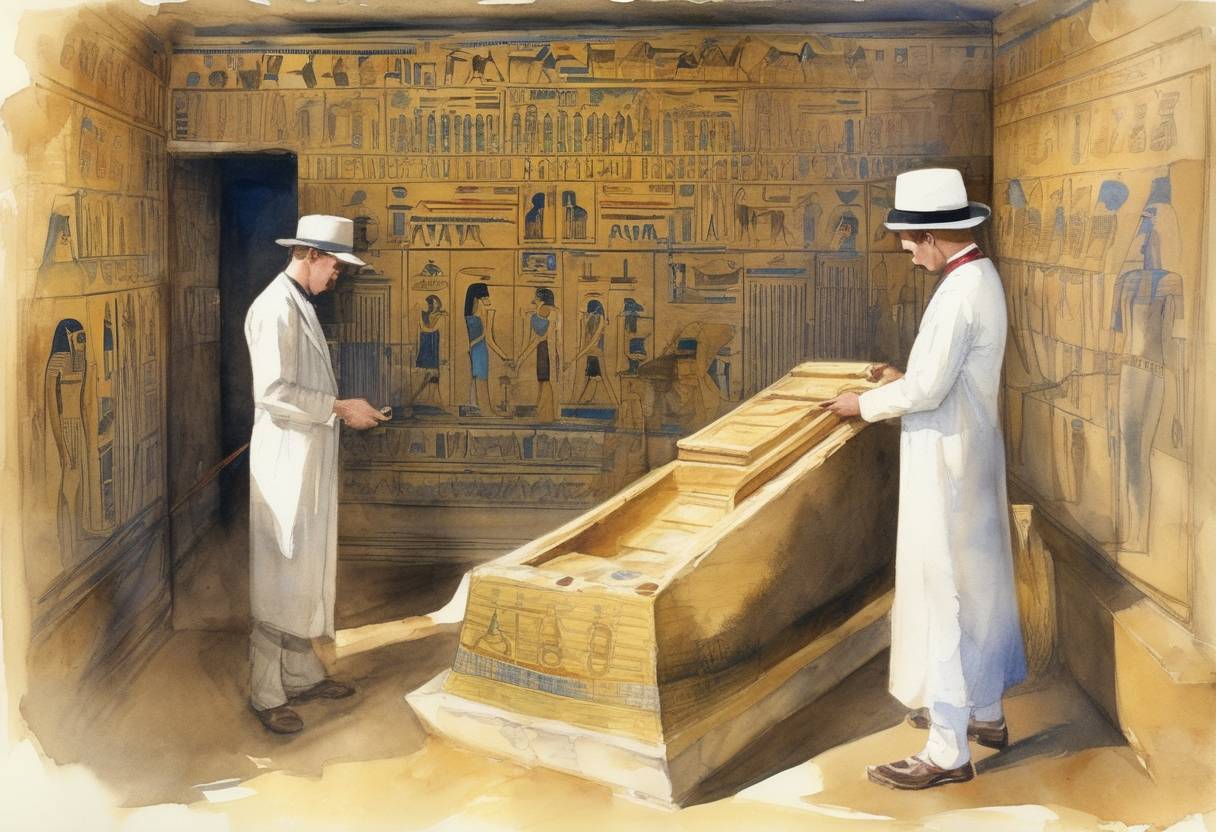
On February 16, 1923, British archaeologist Howard Carter made history by unsealing the burial chamber of Pharaoh Tutankhamun in the Valley of the Kings, Egypt. This event marked a significant milestone in Egyptology and captured the world’s imagination with the discovery of one of the most intact and well-preserved pharaonic tombs.
Discovery of the Tomb: Howard Carter, funded by British aristocrat Lord Carnarvon, had been excavating in the Valley of the Kings since 1917. After several years of fruitless searching, Carter discovered the entrance to Tutankhamun’s tomb (KV62) on November 4, 1922.
Initial Entry: On November 26, 1922, Carter made a small breach in the tomb’s antechamber, famously peering inside and responding to Lord Carnarvon’s question about what he saw with, “Yes, wonderful things.”
Preparation and Ceremony: The unsealing of the burial chamber was conducted with great care and ceremony. Carter, along with Lord Carnarvon, his daughter Lady Evelyn Herbert, and a small team, prepared to open the chamber that had been sealed for over 3,000 years.
Opening the Chamber: On February 16, 1923, Carter unsealed the chamber, revealing a sight that had not been seen since antiquity. The chamber contained the sarcophagus of Tutankhamun, surrounded by a wealth of artifacts, including gilded statues, chariots, and jewelry.
Historical Importance: The discovery of Tutankhamun’s tomb provided unprecedented insights into the wealth and artistry of the New Kingdom period of ancient Egypt. It also offered valuable information about the young pharaoh, who reigned from approximately 1332 to 1323 BCE.
Cultural Impact: The discovery sparked a global fascination with ancient Egypt, often referred to as “Tutmania.” It influenced art, fashion, and popular culture in the 1920s and beyond.
Preservation and Study: The artifacts from the tomb have been meticulously cataloged and studied, contributing significantly to the field of Egyptology. The tomb’s contents are now housed primarily in the Egyptian Museum in Cairo.
Legacy of Howard Carter: Carter’s discovery cemented his place in history as one of the most famous archaeologists. Despite controversies over the handling of the artifacts and the tomb, his work remains a cornerstone of archaeological study.
Ongoing Research: Research and exploration of Tutankhamun’s tomb continue to this day, with modern technology providing new insights into the life and death of the young pharaoh.
The unsealing of Tutankhamun’s burial chamber remains one of the most celebrated events in the history of archaeology, offering a glimpse into the splendor of ancient Egypt and continuing to captivate scholars and the public alike.
Source: en.wikipedia.org