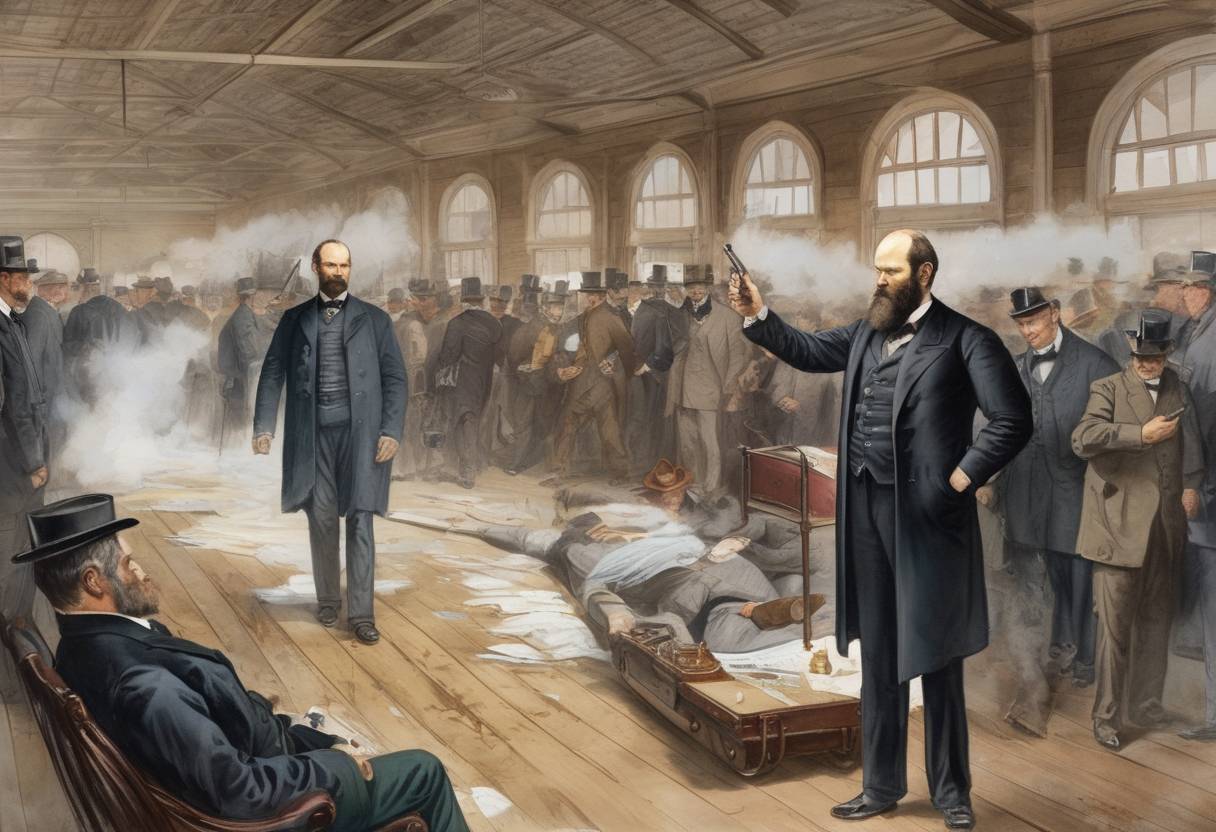
Assassination of President James A. Garfield
On July 2, 1881, U.S. President James A. Garfield was shot by Charles J. Guiteau at the Baltimore and Potomac Railroad Station in Washington, D.C. This tragic event marked a significant moment in American history, highlighting issues related to political patronage and the vulnerabilities of public figures.
Context Leading Up to the Event
James A. Garfield’s Presidency: Garfield had been inaugurated as the 20th President of the United States on March 4, 1881. His presidency was characterized by efforts to reform the civil service and reduce the influence of the patronage system, which was deeply entrenched in American politics at the time.
Charles J. Guiteau: Guiteau was a disgruntled office seeker who believed he was owed a political appointment by the Garfield administration. His repeated requests for a consulship were denied, leading to his growing resentment towards the President.
The Shooting
The Incident: On the morning of July 2, 1881, President Garfield was at the Baltimore and Potomac Railroad Station, preparing to depart for a summer retreat. As he walked through the station, Guiteau approached him from behind and fired two shots. One bullet grazed Garfield’s arm, while the other lodged in his back.
Immediate Aftermath: Garfield was taken to the White House, where doctors attempted to treat his wounds. The medical care he received was rudimentary by modern standards, and the lack of antiseptic practices likely contributed to his deteriorating condition.
Aftermath and Consequences
Garfield’s Struggle: President Garfield endured a long and painful struggle for survival over the next 11 weeks. Despite initial hopes for recovery, he succumbed to infections and complications from his wounds on September 19, 1881.
Guiteau’s Trial and Execution: Charles J. Guiteau was arrested immediately after the shooting. His trial began in November 1881, where he was found guilty of murder. Guiteau was executed by hanging on June 30, 1882.
Impact on Civil Service Reform: The assassination of President Garfield intensified public demand for civil service reform. This led to the passage of the Pendleton Civil Service Reform Act in 1883, which aimed to curtail the patronage system and implement merit-based appointments.
Historical Significance
The assassination of President Garfield underscored the dangers of the patronage system and the need for reform in American politics. It also highlighted the vulnerabilities of public figures and the importance of security measures. Garfield’s death ultimately spurred significant changes in the U.S. civil service, shaping the future of American governance.
This event remains a poignant reminder of the impact of political discontent and the necessity for systemic reforms to ensure the stability and integrity of democratic institutions.