Theodoric the Great and the Assassination of Odoacer
493 · Ravenna, Italy
Theodoric the Great, king of the Ostrogoths, kills Odoacer, the first barbarian King of Italy, during a banquet, consolidating his rule over Italy.
August 12, 0490
The Battle of Adda River took place, where Theodoric the Great, king of the Ostrogoths, defeated Odoacer, the first King of Italy, leading to the eventual establishment of the Ostrogothic Kingdom in Italy.
Adda River, Italy | Ostrogoths
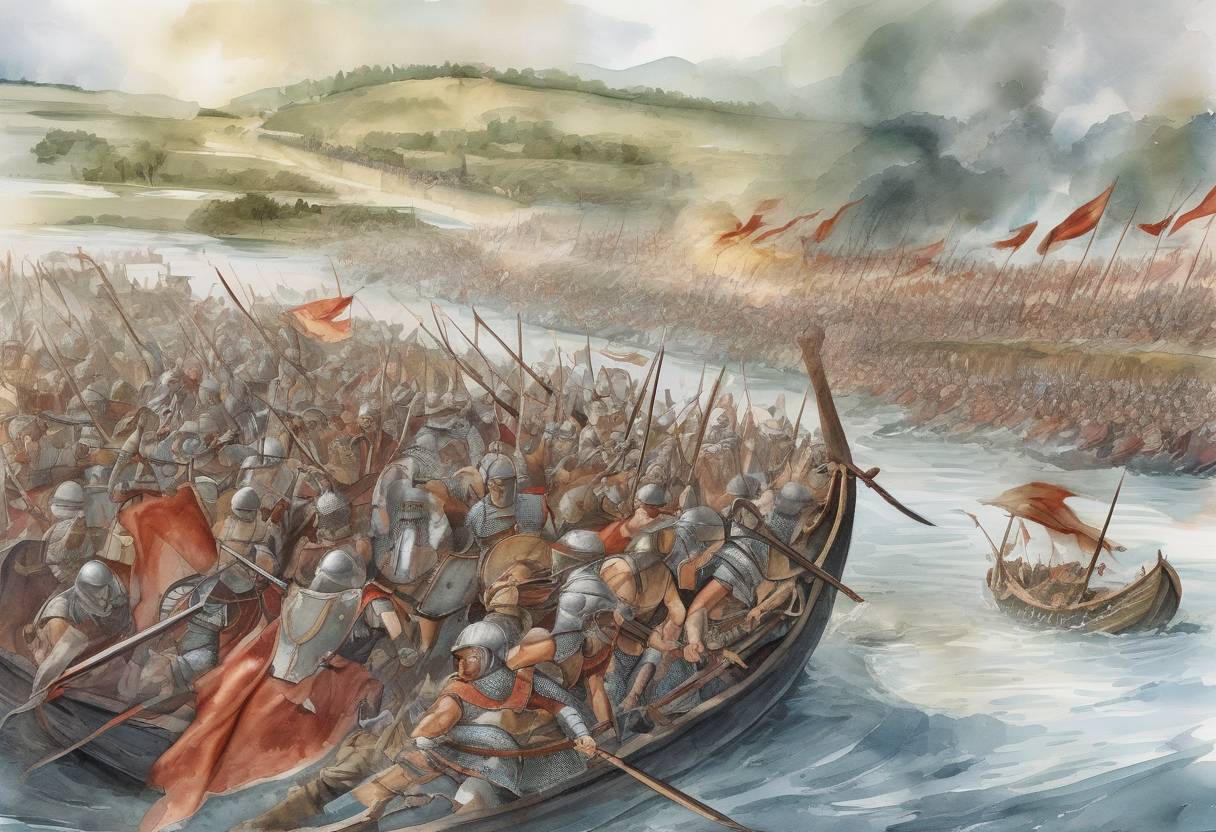
The Battle of Adda River, fought on August 12, 490, was a pivotal conflict in the power struggle for control of Italy following the collapse of the Western Roman Empire. This battle marked a significant turning point in the establishment of the Ostrogothic Kingdom under Theodoric the Great.
Fall of the Western Roman Empire (476 AD): The deposition of the last Roman emperor, Romulus Augustulus, by the Germanic chieftain Odoacer marked the end of the Western Roman Empire. Odoacer declared himself King of Italy, ruling as a client king under the nominal authority of the Eastern Roman Empire.
Theodoric the Great: Born around 454 AD, Theodoric was the king of the Ostrogoths, a Germanic tribe that had settled in the Balkans. He was initially an ally of the Eastern Roman Empire, which sought to use him as a means to regain control over Italy.
Conflict with Odoacer: Tensions between Odoacer and the Eastern Roman Emperor Zeno escalated, leading Zeno to support Theodoric’s invasion of Italy as a means to depose Odoacer.
Theodoric’s Campaign: Theodoric led his Ostrogothic forces into Italy in 488, engaging in a series of battles against Odoacer’s troops. The conflict was marked by several engagements, with neither side achieving a decisive victory until the Battle of Adda River.
Location: The battle took place near the Adda River in northern Italy, a strategic location that was crucial for controlling the region.
Forces Involved: Theodoric commanded a formidable Ostrogothic army, while Odoacer led his own forces, composed of remnants of the Roman military and Germanic mercenaries.
Outcome: Theodoric’s forces decisively defeated Odoacer’s army. The victory was attributed to Theodoric’s superior military tactics and the effective use of his cavalry.
Siege of Ravenna: Following the battle, Theodoric laid siege to Ravenna, Odoacer’s stronghold. The siege lasted for nearly three years, culminating in Odoacer’s surrender in 493.
Assassination of Odoacer: After a brief period of co-rule, Theodoric invited Odoacer to a banquet where he was assassinated, consolidating Theodoric’s control over Italy.
Establishment of the Ostrogothic Kingdom: Theodoric established the Ostrogothic Kingdom, ruling as king from 493 until his death in 526. His reign marked a period of relative stability and prosperity in Italy, blending Roman administrative practices with Gothic traditions.
Cultural Synthesis: Theodoric’s rule is noted for its cultural synthesis, as he maintained Roman traditions while integrating Gothic elements, promoting religious tolerance and economic recovery.
Legacy: Theodoric’s reign laid the groundwork for the medieval European kingdoms that followed, influencing the political landscape of Italy and the broader region for centuries.
The Battle of Adda River and the subsequent establishment of the Ostrogothic Kingdom under Theodoric the Great represent a crucial chapter in the transition from Roman to medieval Europe, highlighting the complex interplay of power, culture, and identity during this transformative period.
Source: en.wikipedia.org