1794 · Paris, France
The 'Martyrs of Compiègne', a group of 16 Carmelite nuns, are executed via guillotine during the Reign of Terror in the French Revolution, representing the extreme anti-clerical sentiment of the period.
July 28, 1794
Maximilien Robespierre, a leading figure in the French Revolution, was executed by guillotine, marking the end of the Reign of Terror.
Paris, France | French Revolutionary Government
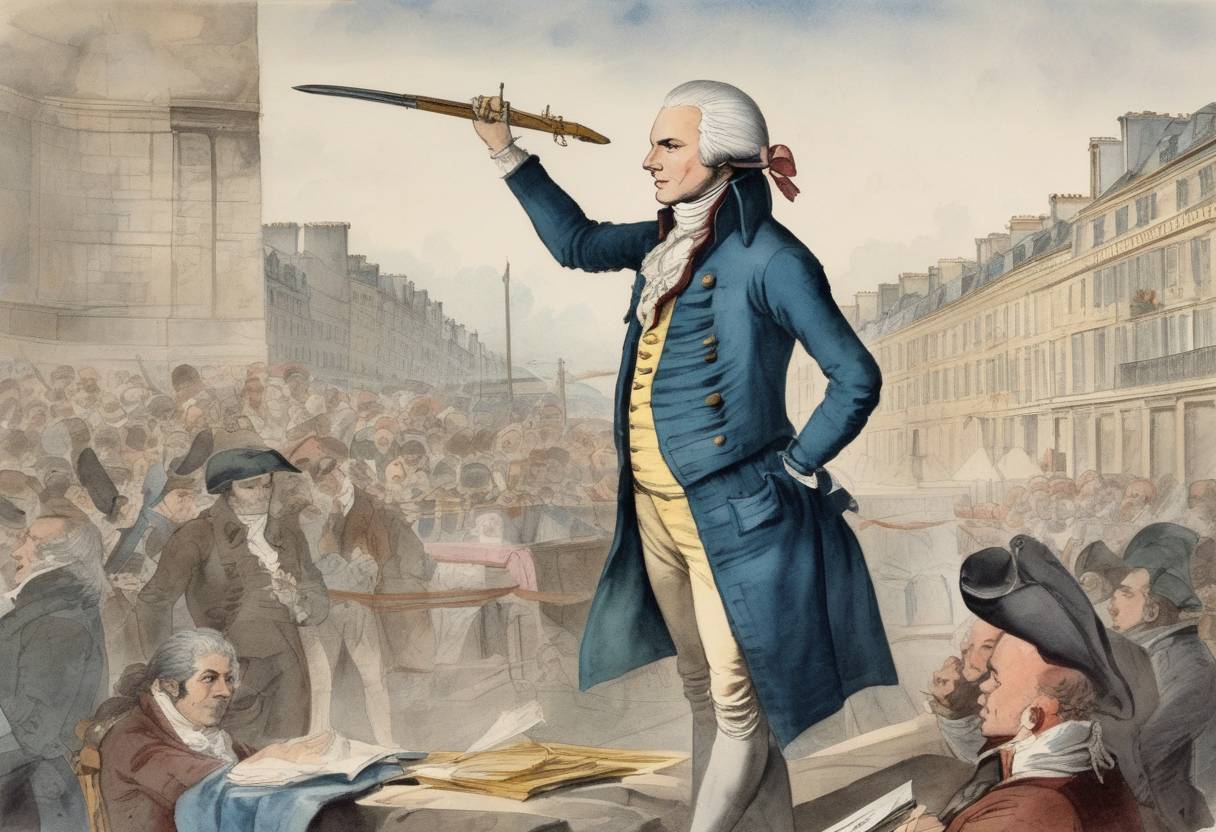
Maximilien Robespierre, a central figure in the French Revolution, was executed by guillotine on July 28, 1794, marking a pivotal moment in the revolutionary period known as the Reign of Terror.
Robespierre was a prominent member of the Jacobin Club and a leading voice in the Committee of Public Safety, which effectively governed France during the Reign of Terror. This period, from September 1793 to July 1794, was characterized by political purges and mass executions aimed at eliminating perceived enemies of the revolution. Robespierre’s influence was instrumental in the implementation of policies that led to the execution of thousands, including King Louis XVI and Queen Marie Antoinette.
The Reign of Terror: Under Robespierre’s leadership, the Committee of Public Safety sought to protect the revolution from internal and external threats. This led to widespread use of the guillotine against those accused of counter-revolutionary activities.
Growing Opposition: By mid-1794, Robespierre’s radical policies and the increasing number of executions began to alienate many, including former allies. His insistence on virtue and moral purity, along with his attacks on fellow revolutionaries, created a climate of fear and suspicion.
The Thermidorian Reaction: On July 27, 1794 (9 Thermidor, Year II in the French Revolutionary Calendar), members of the National Convention, fearing for their own safety, turned against Robespierre. He was arrested along with several of his allies.
Execution: On July 28, 1794, Robespierre and 21 of his associates were executed by guillotine in the Place de la Révolution (now Place de la Concorde) in Paris. His death marked the end of the Reign of Terror.
Consequences: The fall of Robespierre led to the Thermidorian Reaction, a period of political realignment and the dismantling of the revolutionary government structures he had helped establish. The Committee of Public Safety’s power was reduced, and the more moderate Directory took control, leading to a period of relative stability.
Robespierre’s execution was a turning point in the French Revolution, symbolizing the end of radical revolutionary fervor and the beginning of a more conservative phase. It highlighted the dangers of political extremism and the volatility of revolutionary movements. The events of July 28, 1794, remain a powerful reminder of the complexities and contradictions inherent in the pursuit of revolutionary ideals.
Source: en.wikipedia.org