Barack Obama's Second Inauguration - January 20, 2013
2013 · Washington, D.C., United States
Barack Obama was inaugurated for his second term as President of the United States.
January 20, 2009
Barack Obama was inaugurated as the 44th President of the United States, becoming the first African American to hold the office.
Washington, D.C., United States | U.S. Government
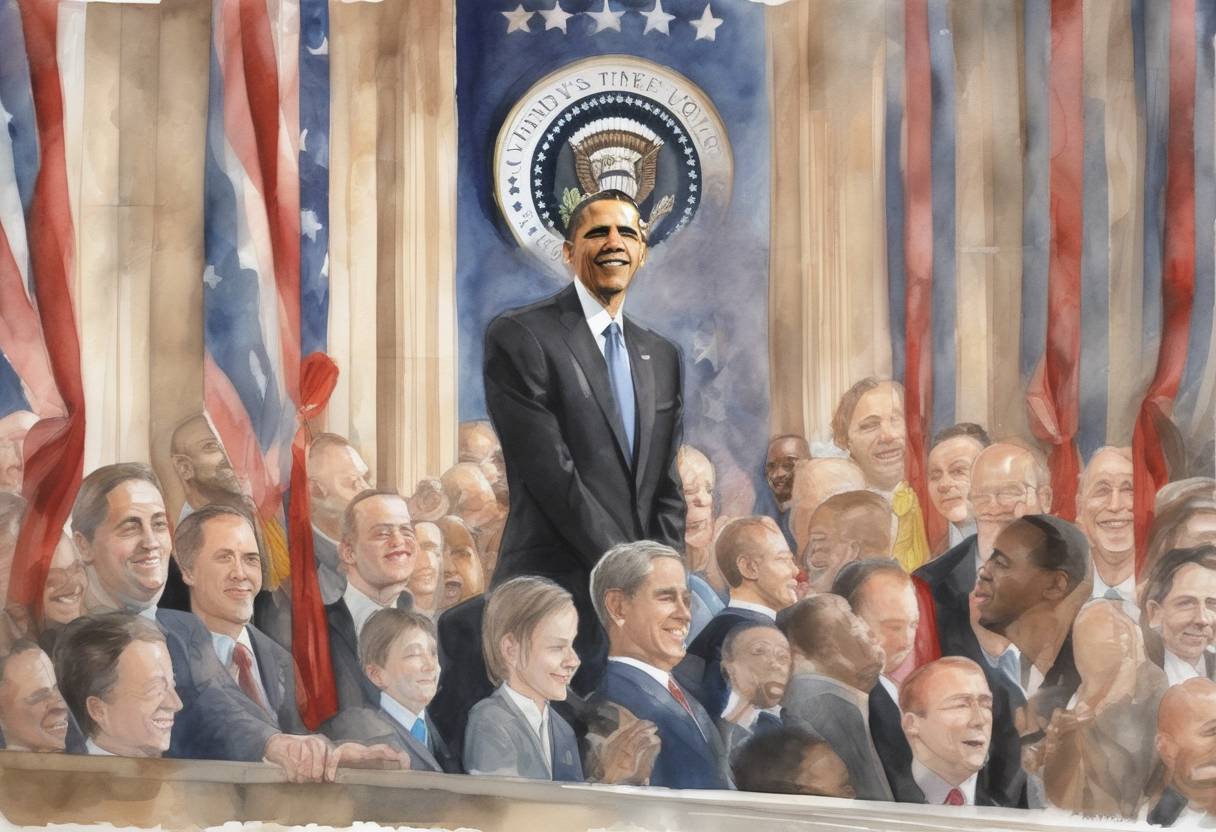
On January 20, 2009, Barack Obama was inaugurated as the 44th President of the United States, marking a historic moment as he became the first African American to hold the nation’s highest office. This event was significant not only for its immediate political implications but also for its profound cultural and historical impact.
Election Victory: Barack Obama, a Democratic senator from Illinois, won the 2008 presidential election against Republican candidate John McCain. His campaign was notable for its message of “hope” and “change,” resonating with a wide array of voters, particularly young people and minorities.
Historical Significance: Obama’s election was a milestone in American history, symbolizing progress in the long struggle for civil rights and racial equality. His candidacy and subsequent victory were seen as a testament to the changing demographics and attitudes in the United States.
Date and Location: The inauguration took place on January 20, 2009, at the United States Capitol in Washington, D.C. The event drew an estimated 1.8 million people to the National Mall, making it one of the largest gatherings in Washington’s history.
Oath of Office: Chief Justice John Roberts administered the oath of office to Obama, who placed his hand on the same Bible used by Abraham Lincoln during his first inauguration in 1861.
Inaugural Address: In his inaugural speech, Obama addressed the challenges facing the nation, including economic turmoil, ongoing wars in Iraq and Afghanistan, and the need for unity and cooperation. He emphasized themes of responsibility, renewal, and the enduring strength of American values.
Policy Initiatives: Following his inauguration, President Obama focused on addressing the global financial crisis through measures such as the American Recovery and Reinvestment Act. His administration also pursued significant reforms in healthcare, culminating in the Affordable Care Act.
Cultural Impact: Obama’s presidency inspired a new generation of political engagement and activism, particularly among minority communities. His election was a pivotal moment in the broader narrative of American civil rights.
Legacy: Barack Obama’s inauguration is remembered as a landmark event in U.S. history, symbolizing both the progress made and the challenges that remain in the pursuit of racial equality and justice.
Obama’s inauguration was not just a political event but a cultural milestone that reflected and influenced the evolving landscape of American society. It underscored the importance of diversity and inclusion in the political process and set the stage for ongoing discussions about race, identity, and democracy in the United States.
In summary, Barack Obama’s inauguration as the 44th President was a momentous occasion that resonated far beyond the political sphere, leaving a lasting imprint on the nation’s history and its collective consciousness.
Source: www.whitehouse.gov