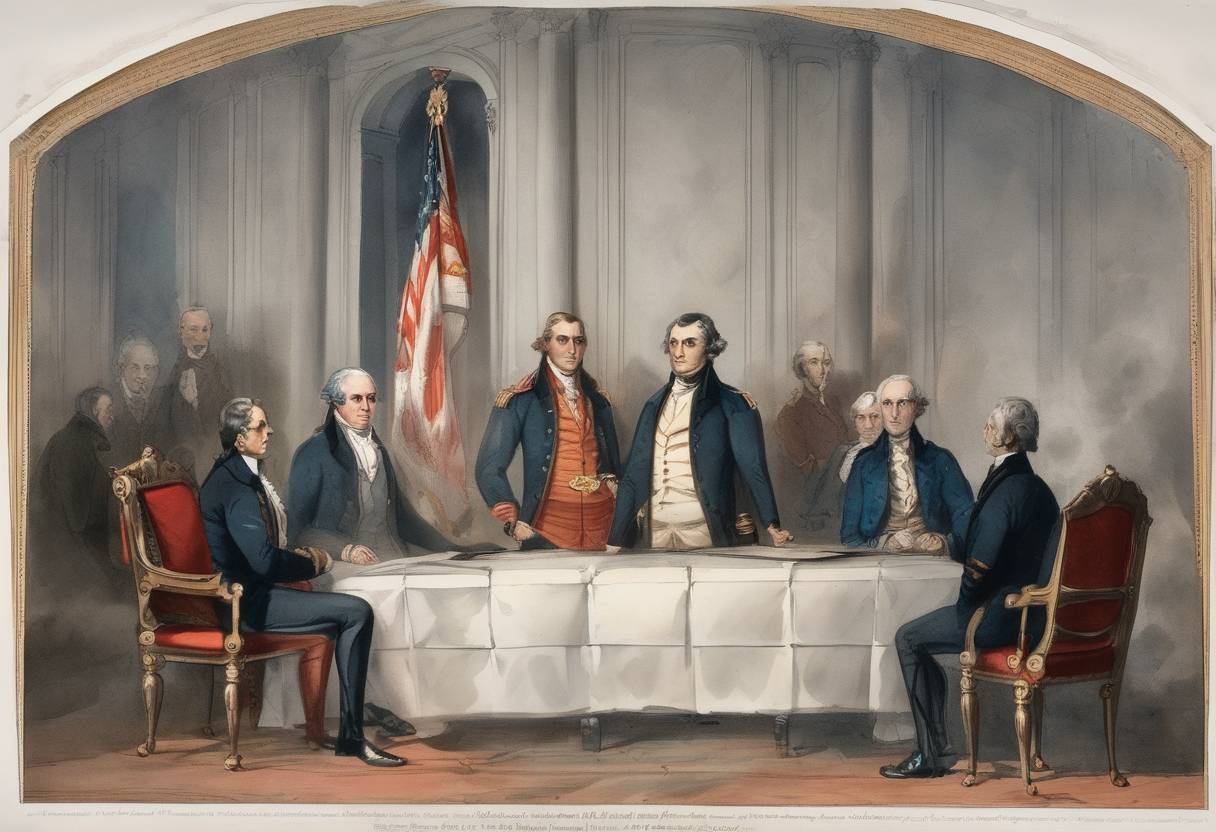
The Adams-Onís Treaty: February 22, 1819
On February 22, 1819, the Adams-Onís Treaty, also known as the Transcontinental Treaty or the Florida Purchase Treaty, was signed between the United States and Spain. This significant agreement resulted in Spain ceding Florida to the United States and defined the boundary between the U.S. and New Spain (now Mexico).
Background
The early 19th century was a period of territorial expansion and negotiation for the United States. Florida, under Spanish control, had become a region of interest due to its strategic location and the challenges it posed:
- Border Disputes: The boundaries between Spanish Florida and the U.S. were poorly defined, leading to tensions.
- Security Concerns: Florida was a haven for runaway slaves and hostile Native American tribes, particularly the Seminoles, who often raided U.S. territories.
- Weak Spanish Control: Spain’s declining power and inability to effectively govern Florida made it difficult to maintain order.
- John Quincy Adams: The U.S. Secretary of State, who played a crucial role in negotiating the treaty.
- Luis de Onís: The Spanish minister to the United States, who represented Spain in the negotiations.
Terms of the Treaty
- Cession of Florida: Spain agreed to cede all of Florida to the United States.
- Boundary Definition: The treaty established a clear boundary between the U.S. and Spanish territories, stretching from the Gulf of Mexico to the Pacific Ocean. This boundary followed the Sabine River, the Red River, the Arkansas River, and the 42nd parallel to the Pacific.
- U.S. Claims: The United States renounced any claims to Texas, which was part of Spanish territory at the time.
- Financial Compensation: The U.S. agreed to assume approximately $5 million in claims by American citizens against Spain.
Significance
- Territorial Expansion: The acquisition of Florida was a major step in the U.S.’s territorial expansion and consolidation of its southeastern borders.
- Diplomatic Success: The treaty demonstrated the effectiveness of diplomacy in resolving international disputes and set a precedent for future negotiations.
- Impact on Spain: The treaty marked a further decline in Spanish influence in the Americas, as Spain continued to lose territories.
Aftermath
The Adams-Onís Treaty was ratified by Spain in 1820 and by the United States in 1821. The formal transfer of Florida took place on July 17, 1821. This acquisition paved the way for the eventual settlement and development of the region, contributing to the United States’ growth as a continental power.
The treaty’s boundary definitions also influenced later territorial negotiations and acquisitions, including the annexation of Texas and the Oregon Trail settlement. Overall, the Adams-Onís Treaty was a pivotal moment in the history of U.S. territorial expansion and diplomacy.