Shahrbaraz Crowned as King of the Sasanian Empire on April 27, 629
629 · Ctesiphon, Sasanian Empire
Shahrbaraz is crowned as king of the Sasanian Empire, marking a brief period of instability and rapid succession in the empire.
March 9, 0590
Bahram Chobin is crowned as King Bahram VI of Persia, marking a significant moment in the Sasanian Empire's history.
Ctesiphon, Sasanian Empire | Sasanian Empire
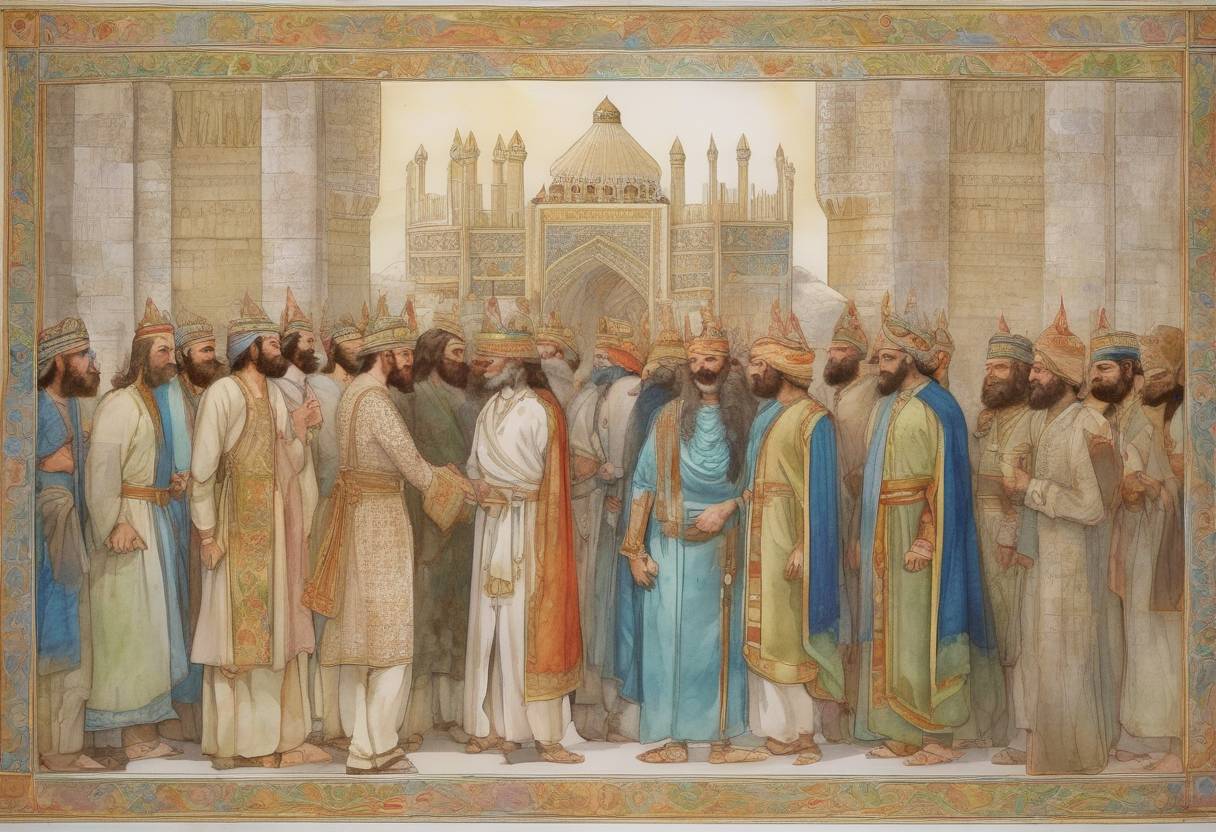
On March 9, 590, Bahram Chobin, a distinguished military leader, was crowned as King Bahram VI of Persia, marking a pivotal moment in the history of the Sasanian Empire. This event was significant due to its impact on the political landscape of the empire and the challenges it posed to the established Sasanian dynasty.
The Sasanian Empire, founded in 224 AD, was one of the leading powers of its time, often in conflict with the Roman-Byzantine Empire. By the late 6th century, the empire was experiencing internal strife and external pressures. Hormizd IV, the reigning monarch before Bahram Chobin’s ascension, faced widespread dissatisfaction due to his harsh policies and military failures.
Bahram Chobin, originally a nobleman from the House of Mihran, rose to prominence as a skilled general. He achieved significant victories against the Byzantines and the Turks, earning him a formidable reputation. However, after a defeat against the Byzantines, Hormizd IV dismissed Bahram, which led to a rebellion.
Bahram Chobin’s rebellion was fueled by discontent among the nobility and the military. He capitalized on this unrest, leading a revolt against Hormizd IV. The coup was successful, and Hormizd IV was overthrown and killed. Bahram Chobin then declared himself king, taking the regnal name Bahram VI.
Bahram VI’s reign was short-lived but significant for several reasons:
Challenge to Dynastic Rule: His ascension marked a rare interruption in the Sasanian dynastic succession, as he was not from the royal family. This challenged the traditional hereditary rule and highlighted the power struggles within the empire.
Military Leadership: Bahram’s military prowess and leadership were central to his ability to seize power, demonstrating the critical role of military support in Sasanian politics.
Civil War: His rule led to a civil war, as Khosrow II, the son of Hormizd IV, sought to reclaim the throne. With Byzantine support, Khosrow II eventually defeated Bahram VI, restoring the Sasanian dynasty.
After his defeat, Bahram VI fled to Central Asia, where he was reportedly assassinated. His brief reign underscored the vulnerabilities within the Sasanian Empire and set the stage for further conflicts and eventual decline. The internal strife weakened the empire, making it more susceptible to external threats, which would later contribute to its downfall in the 7th century.
In summary, Bahram Chobin’s coronation as Bahram VI was a significant episode in the Sasanian Empire’s history, illustrating the complexities of power, military influence, and dynastic politics during this period.
Source: en.wikipedia.org