Annulment of King Henry VIII's Marriage to Anne of Cleves
1540 · London, England
King Henry VIII of England annuls his marriage to his fourth wife, Anne of Cleves.
June 11, 1509
King Henry VIII of England married Catherine of Aragon, his first wife, at a private ceremony in Greenwich.
Greenwich, England | English monarchy
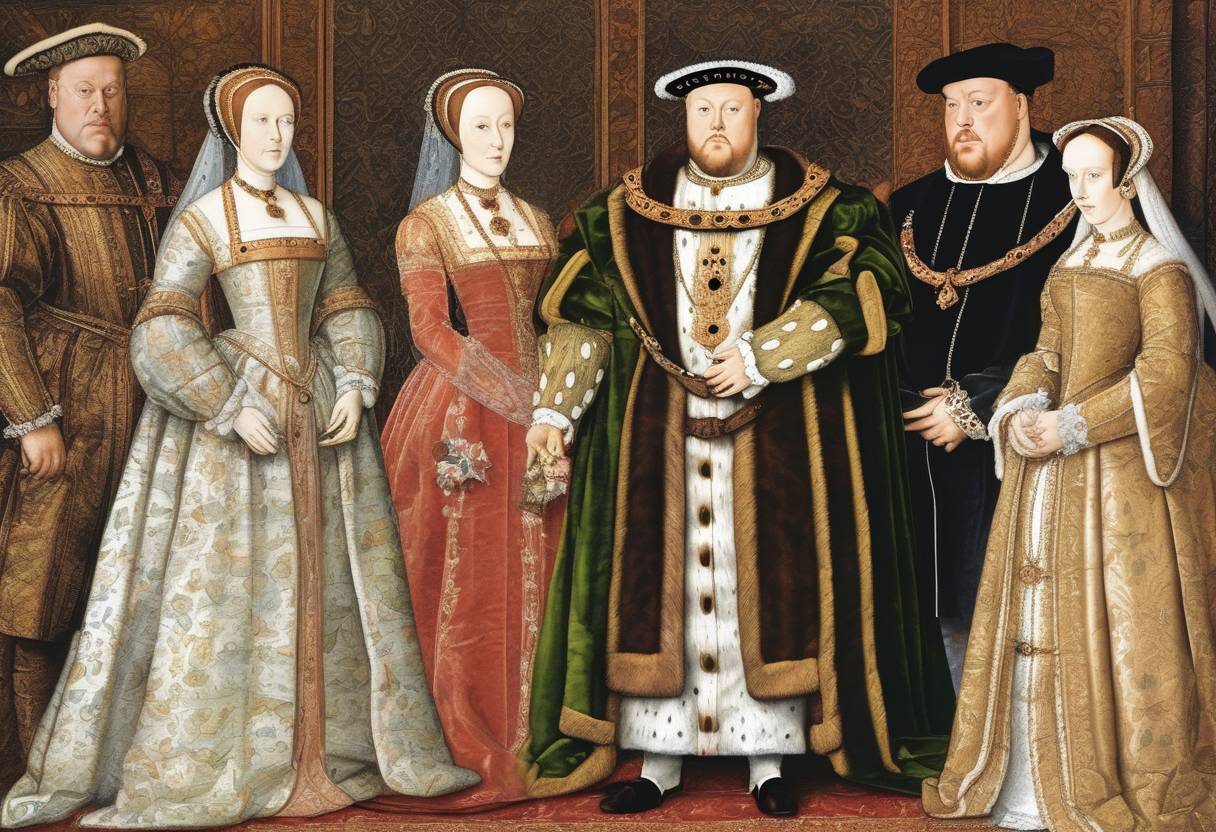
On June 11, 1509, King Henry VIII of England married Catherine of Aragon in a private ceremony held at the Franciscan Church of the Observant Friars in Greenwich. This marriage marked the beginning of a significant chapter in English history, setting the stage for events that would later lead to the English Reformation.
Catherine of Aragon was the daughter of the Catholic Monarchs, King Ferdinand II of Aragon and Queen Isabella I of Castile. She was initially married to Henry’s older brother, Arthur, Prince of Wales, in 1501. However, Arthur died in 1502, leaving Catherine a widow. The marriage between Catherine and Arthur was short-lived, and its consummation was a matter of dispute, which would later become a pivotal issue in Henry’s quest for an annulment.
Following Arthur’s death, Catherine remained in England, and diplomatic negotiations ensued to arrange her marriage to Henry, who was then the Prince of Wales. The political alliance between England and Spain was deemed crucial, and the marriage was supported by both families.
The marriage ceremony on June 11, 1509, was a relatively private affair, reflecting the couple’s personal relationship and the political importance of the union. Henry had ascended to the throne just a few months earlier, on April 21, 1509, following the death of his father, Henry VII. The marriage to Catherine was one of his first significant acts as king.
The marriage between Henry VIII and Catherine of Aragon was initially harmonious and produced one surviving child, Mary, who would later become Queen Mary I of England. However, the lack of a male heir became a source of tension and ultimately led to the couple’s separation.
Henry’s desire for a male heir and his infatuation with Anne Boleyn led him to seek an annulment from Catherine. The Pope’s refusal to grant the annulment resulted in Henry’s break from the Roman Catholic Church and the establishment of the Church of England, a pivotal moment in the English Reformation.
Catherine’s steadfast refusal to accept the annulment and her status as queen consort until her death in 1536 made her a significant figure in English history. Her marriage to Henry VIII and the subsequent events had profound religious, political, and social consequences for England and Europe.
In summary, the marriage of Henry VIII and Catherine of Aragon on June 11, 1509, was a union of great political importance that eventually led to monumental changes in the religious and political landscape of England.
Source: en.wikipedia.org