The Space Shuttle Columbia Disaster: February 1, 2003
2003 · N/A, United States
The Space Shuttle Columbia disintegrated upon reentry into Earth's atmosphere, resulting in the death of all seven crew members.
January 27, 1967
A cabin fire during a launch rehearsal test for the Apollo 1 mission at Cape Kennedy kills astronauts Gus Grissom, Ed White, and Roger B. Chaffee.
Cape Kennedy, United States | NASA
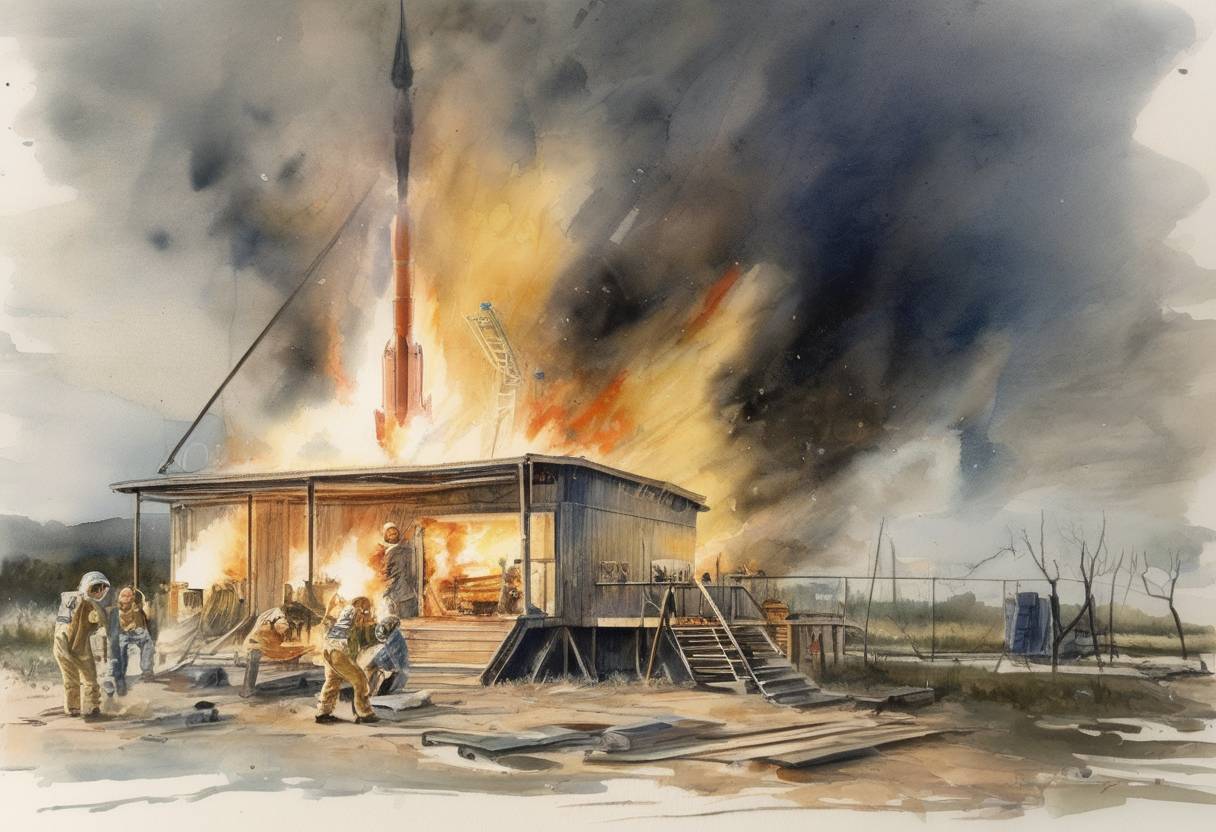
On January 27, 1967, a tragic accident occurred during a pre-launch test for the Apollo 1 mission at Cape Kennedy Air Force Station (now Kennedy Space Center) in Florida. This incident resulted in the deaths of three astronauts: Virgil “Gus” Grissom, Edward H. White II, and Roger B. Chaffee. The event marked a somber moment in NASA’s Apollo program, which aimed to land humans on the Moon.
The Apollo 1 mission, initially designated AS-204, was part of NASA’s ambitious Apollo program, which sought to achieve a manned lunar landing and return safely to Earth. The mission was intended to be the first crewed flight of the Apollo spacecraft, testing its systems in low Earth orbit.
During a routine “plugs-out” test, which involved the spacecraft being powered by its own internal systems, a fire broke out inside the command module. The test was conducted with the spacecraft sealed and pressurized with pure oxygen, a standard practice at the time that inadvertently contributed to the rapid spread of the fire.
The Apollo 1 disaster had profound implications for NASA and the future of the Apollo program:
The Apollo 1 accident remains a poignant reminder of the inherent risks of space exploration and the importance of rigorous safety measures. The sacrifice of the three astronauts is honored and remembered as a critical turning point in the pursuit of human spaceflight.
Source: en.wikipedia.org