Luna 9: The First Soft Landing on the Moon
1966 · Moscow, Soviet Union
The Soviet Union's Luna 9 became the first spacecraft to achieve a soft landing on the Moon and transmit photographic data to Earth.
May 17, 1965
The Soviet spacecraft Luna 5 crash-landed on the Moon, highlighting continuing efforts and challenges of the Soviet space program in the era of space exploration.
Moon, Soviet Union (space program) | Soviet Space Program
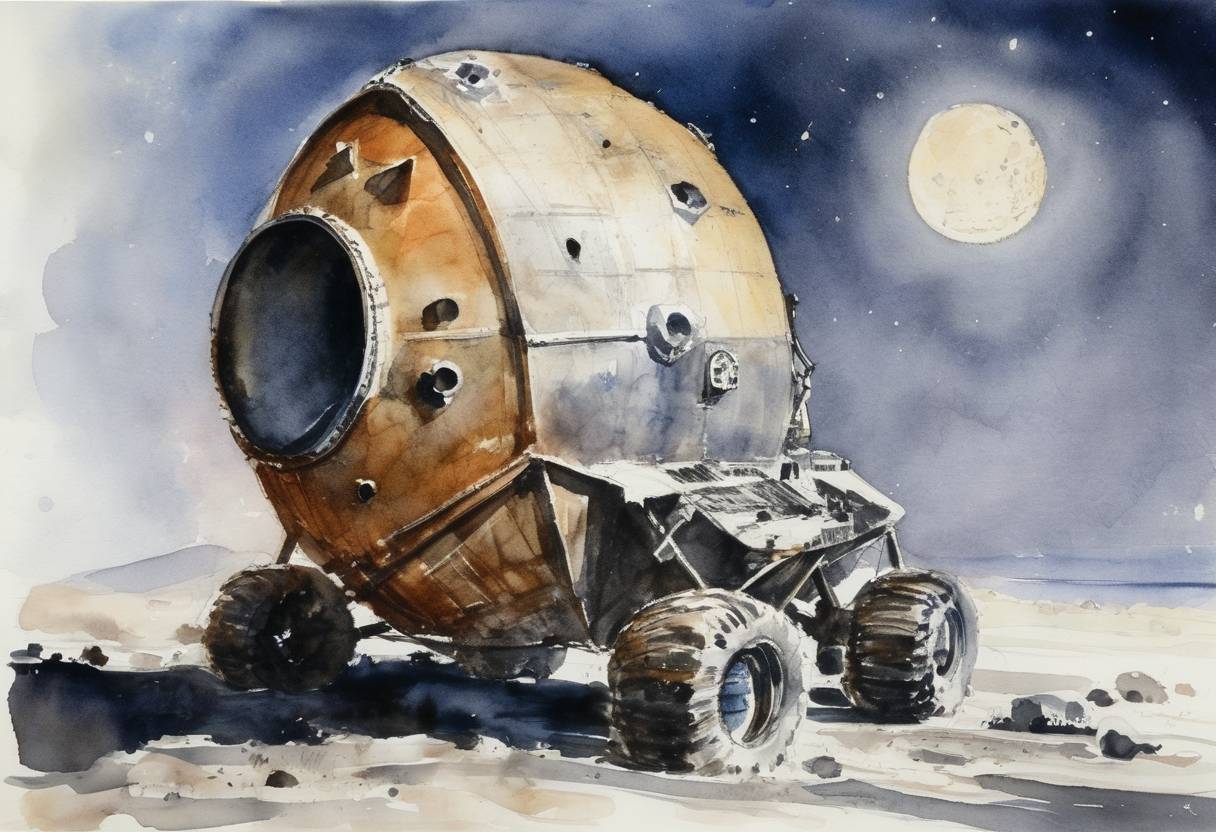
On May 17, 1965, the Soviet spacecraft Luna 5 crash-landed on the Moon, marking another ambitious but ultimately unsuccessful attempt in the Soviet Union’s lunar exploration agenda. This event was part of the intense Space Race during the 1960s, a period marked by rapid advancements and competitive milestones between the United States and the Soviet Union.
Luna 5 was part of the Soviet Union’s Luna program, which aimed to achieve various unmanned lunar missions for scientific and exploratory purposes. The specific objective of Luna 5 was to perform a soft landing on the Moon’s surface — a challenging task that the Soviets had not yet accomplished. The spacecraft was launched on May 9, 1965, from the Baikonur Cosmodrome, Kazakhstan, aboard a Molniya-M rocket.
Despite a successful launch, Luna 5 encountered several technical difficulties. As it approached the Moon, the spacecraft’s onboard systems malfunctioned, preventing it from making the necessary course corrections for a soft landing. The control system failed to orient the spacecraft properly, resulting in an uncontrolled descent.
On May 17, Luna 5 crash-landed on the lunar surface, near the Sea of Clouds (Mare Nubium). The Soviet engineers’ inability to achieve a soft landing was attributed to guidance system failures as well as potential miscalculations during the automated sequences required for landing.
The failure of Luna 5 was one of several setbacks the Soviet space program experienced in their lunar exploration efforts. Despite these challenges, the program continued to pursue its objectives with tenacity. The Luna series had seen both previous successes, like the Luna 2 mission, which was the first spacecraft to reach the Moon in 1959, and Luna 3, which captured the first photographs of the Moon’s far side, also in 1959. These achievements showcased the Soviet Union’s capabilities in space exploration.
The Luna 5 incident illustrated the immense technical hurdles faced by space-faring nations during the 1960s. The race to the Moon was not merely about national prestige but also about advancing scientific understanding and technological prowess. Each mission, successful or otherwise, contributed valuable data that guided subsequent attempts.
The perseverance demonstrated by the Soviets, alongside the simultaneous American efforts through NASA’s Apollo program, underscored the determination of both superpowers to lead in space exploration. These missions collectively paved the way for future successes, culminating in the first human landing on the Moon with Apollo 11 in 1969.
In retrospect, the Luna 5 mission is a testament to the iterative nature of space exploration, where each attempt serves as a critical learning experience, regardless of its immediate outcome.
Source: nssdc.gsfc.nasa.gov