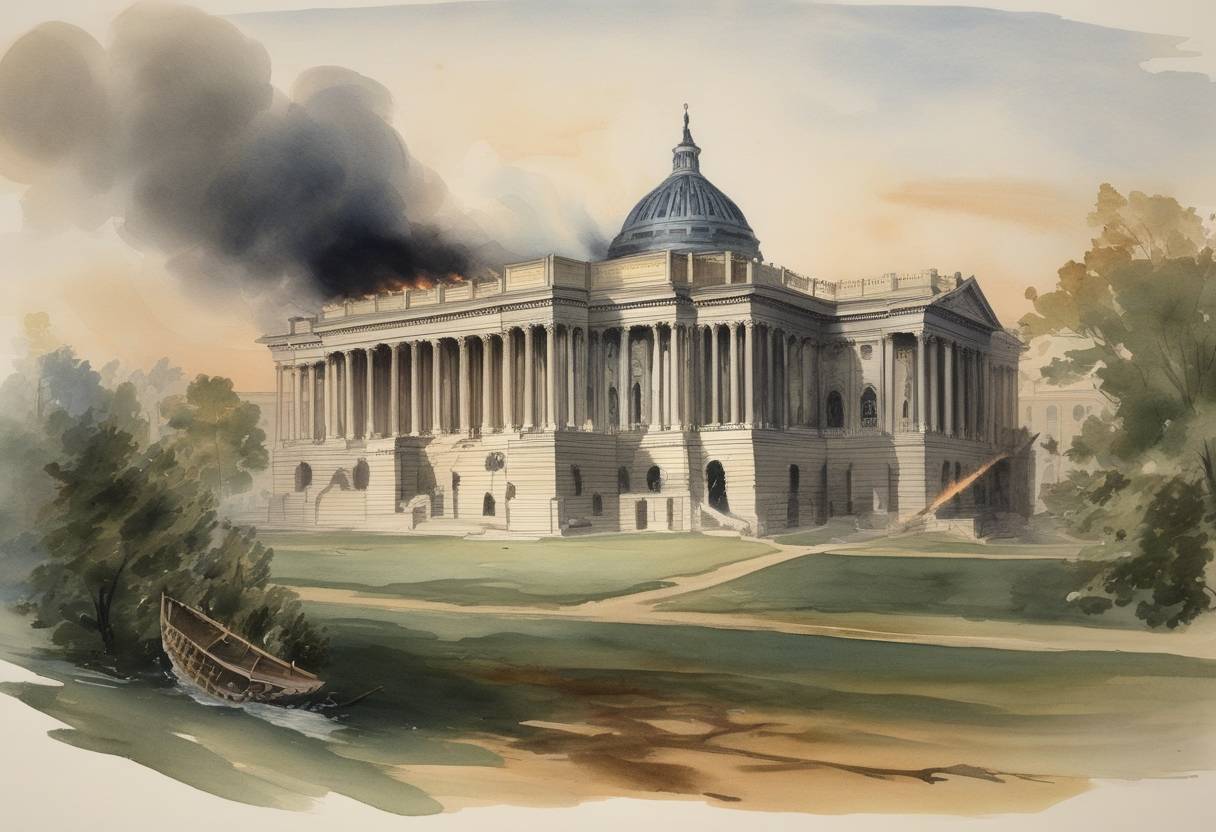
The Destruction of the Library of Congress - January 30, 1841
On January 30, 1841, a devastating fire broke out in the Library of Congress located in Washington, D.C., severely damaging its collection. This catastrophic event led to the destruction of approximately 35,000 books, which constituted about two-thirds of the library’s holdings at that time.
Context
The Library of Congress was initially established in 1800 to serve the newly-formed United States Congress. Over the years, it had amassed a significant collection of legal texts, reference materials, and other works deemed valuable for legislative purposes, reflecting the growing intellectual aspirations of the young nation.
The Fire
The fire on January 30, 1841, began in the Capitol building, where the library was housed at that time. Records suggest that the fire may have started due to a faulty chimney flue, a common hazard during that era. With fire-fighting technology in its nascent stages and the flammable nature of the materials, the fire quickly grew, engulfing the library and reducing much of its collection to ashes.
Aftermath
In the aftermath of the blaze, the loss was substantial, as many rare and irreplaceable works were consumed by the flames. The need to replenish the Library of Congress’s collection became urgent. The destruction underscored the vulnerability of the nation’s key cultural and intellectual resources.
Thomas Jefferson, who had previously sold his personal collection to the library after the British burned it during the War of 1812, once again became a key contributor to the rebuilding efforts, advocating for a broader selection of works to inform legislators.
Historical Significance
The 1841 fire highlighted the critical importance of investing in the preservation and expansion of national literary treasures. It prompted discussions on better housing for the library’s materials and led to enhanced measures to protect such collections from similar disasters in the future. The incident also emphasized the role of the Library of Congress not just as a repository for legislators but as a central element of the nation’s cultural and intellectual identity.
The fire served as a catalyst for future expansions and ultimately resulted in the establishment of a more fire-resistant structure, one that would safeguard the growing collection and ensure its availability for future generations.