Assassination of Odoacer: February 25, 493
On February 25, 493, a pivotal moment in the transition of power in Italy occurred with the assassination of Odoacer, a Germanic chieftain and the first non-Roman ruler of the Italian peninsula. This event marked the end of Odoacer’s reign and the commencement of Ostrogothic dominance in Italy under Theodoric the Great.
Background
Odoacer came to prominence in the late fifth century during the waning years of the Western Roman Empire. In 476, he deposed the last Roman emperor of the West, the young Romulus Augustulus, and declared himself the ruler of Italy. Though he refrained from assuming the title of emperor, Odoacer effectively controlled Italy, managing its affairs and dealing with other tribes and remnants of the Roman administration.
Prelude to Assassination
Theodoric the Great was an Ostrogothic king who sought to expand his influence in the western territories. With the backing of the Eastern Roman Empire, he was given the mandate to dethrone Odoacer and establish control over Italy. After a series of military campaigns, in which neither side could claim a decisive victory, Theodoric and Odoacer negotiated peace.
As part of their agreement, both leaders decided to rule Italy jointly, a plan that was doomed to failure due to mutual distrust and the ambitions of Theodoric to consolidate power.
The Banquet and Aftermath
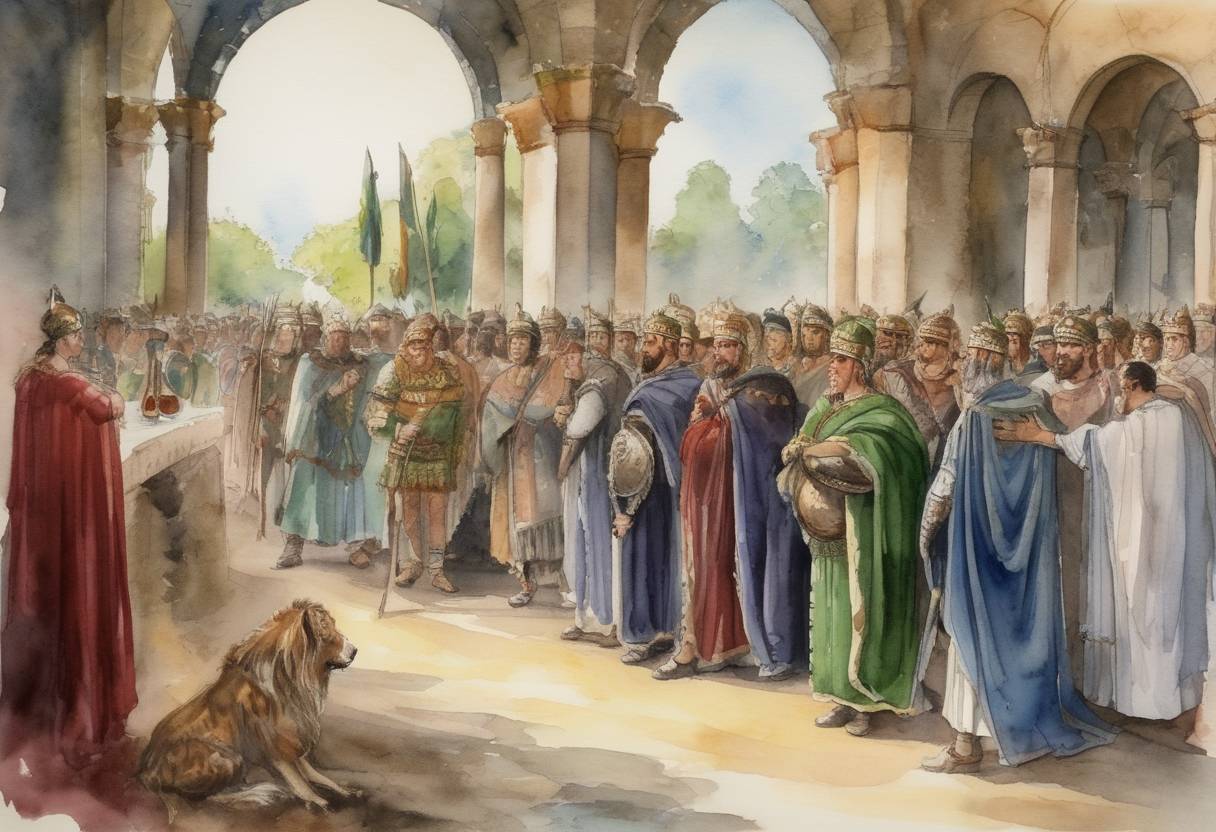
The culmination of the conflict occurred at a banquet meant to celebrate the treaty and establish a semblance of camaraderie. The banquet, held on February 25, 493, turned lethal for Odoacer. He was assassinated by Theodoric himself, reportedly killed with a single sword thrust. According to historical sources, Theodoric remarked that Odoacer could not have his life spared after all the grievances persisted.
This assassination cleared the path for Theodoric to consolidate Ostrogothic power, establishing his reign over Italy and ensuring Germanic influence reached its peak. It formally ended any contiguous line to the Roman authority in Italy, shifting the region’s dynamics toward a new era of Ostrogothic leadership.
Significance
The assassination of Odoacer is significant as it marked a definitive end to Roman rule in Italy. The reign of Theodoric the Great inaugurated a new chapter in Italian history, blending Roman traditions with Germanic customs. His rule is often noted for its relative stability, fostering a period of peace and cultural integration that left lasting influences on the region. Accordingly, this event highlighted the shifting powers in Europe during the early Middle Ages, illustrating the growing complexity and amalgamation of cultures that characterized the era.