The Defeat of the Hungarian Revolution of 1956
1956 · Budapest, Hungary
The Hungarian Revolution of 1956 is defeated after Soviet forces crush the national uprising.
November 24, 1848
Lajos Kossuth, Hungarian nobleman and statesman, imprisons Samuel Kossuth, initiating a conflict during the Hungarian Revolution.
Budapest, Hungary | Hungarian Revolutionary Forces
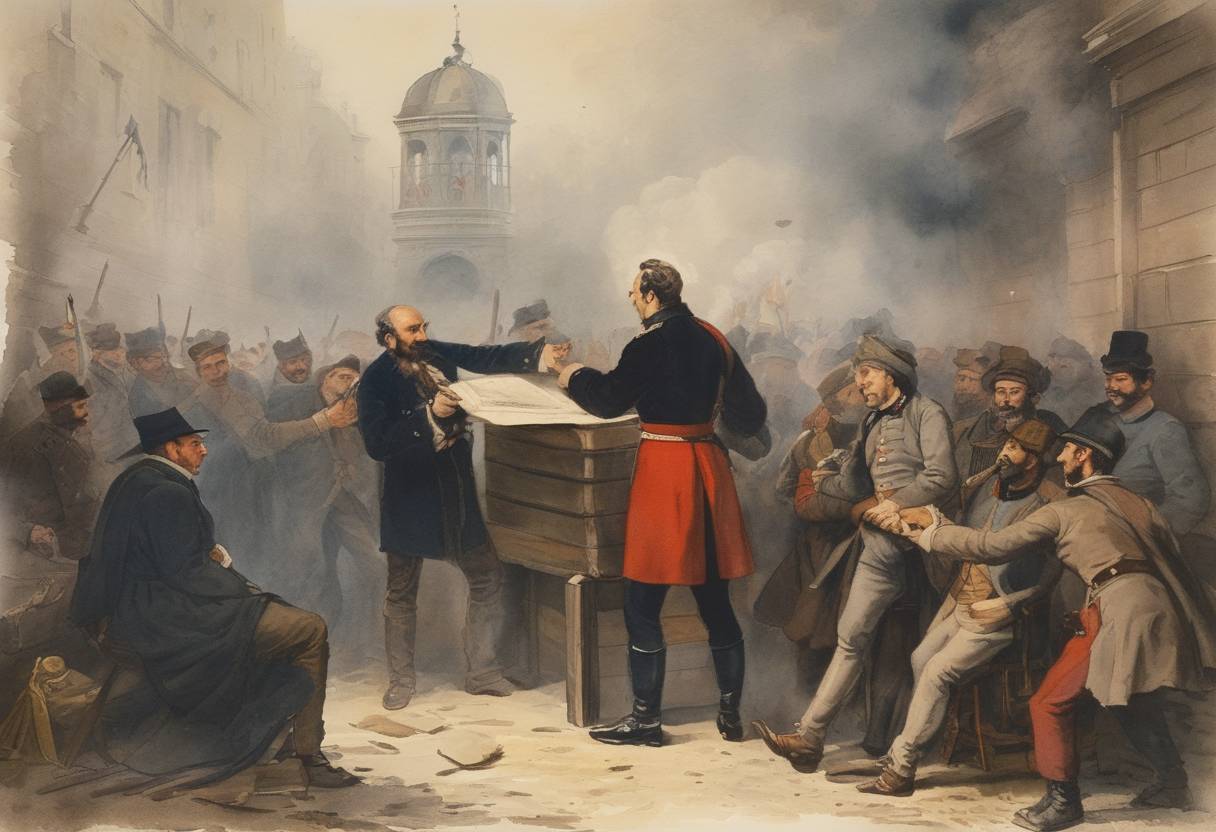
On November 24, 1848, during the turbulent period of the Hungarian Revolution, a situation involving Lajos Kossuth, a prominent Hungarian nobleman and statesman, took place which underscored the internal conflicts facing Hungary at the time.
The Hungarian Revolution of 1848 was closely tied to the broader wave of European revolutions that sought national independence, constitutional governance, and social reform. Lajos Kossuth emerged as a leading figure in Hungary’s fight for autonomy from the Austrian Empire. As the Minister of Finance and later Governor-President of the Kingdom of Hungary, Kossuth was instrumental in driving the revolutionary agenda that aimed at reducing Austrian influence and promoting Hungarian self-governance.
The specific event of November 24, 1848, involved internal dissent within the revolutionary forces rather than an act of external aggression or direct combat with the Austrian forces. On this date, Samuel Kossuth, whose relation and role in the revolution are less documented when compared to Lajos, reportedly faced imprisonment which may highlight divisions or disciplinary challenges within the reformist camp.
Internal Conflicts: The incident exemplified some of the internal struggles within the Hungarian revolutionary side, illustrating the complexities of maintaining unity during such a multifaceted national effort.
Leadership Challenges: Lajos Kossuth’s actions were significant not only in leading military and political initiatives against the Austrian Empire but also in handling dissent and maintaining cohesion among various nationalist factions.
The Hunarian Revolution itself was part of a larger movement across Europe that mostly ended in temporary setbacks for nationalists due to the power of conservative forces. Ultimately, despite these internal and external challenges, the revolution laid the groundwork for future efforts towards Hungarian independence, which was eventually realized in 1867 through the Austro-Hungarian Compromise.
Lajos Kossuth remains a national hero in Hungarian history, symbolizing the quest for national sovereignty and the fight against imperial domination. The events of 1848-1849 are pivotal in understanding Hungary’s subsequent path to autonomy and its role within the Habsburg monarchy. The revolution highlighted the complex fabric of 19th-century nationalist movements, where internal unity was as crucial as external confrontation.
Source: www.britannica.com