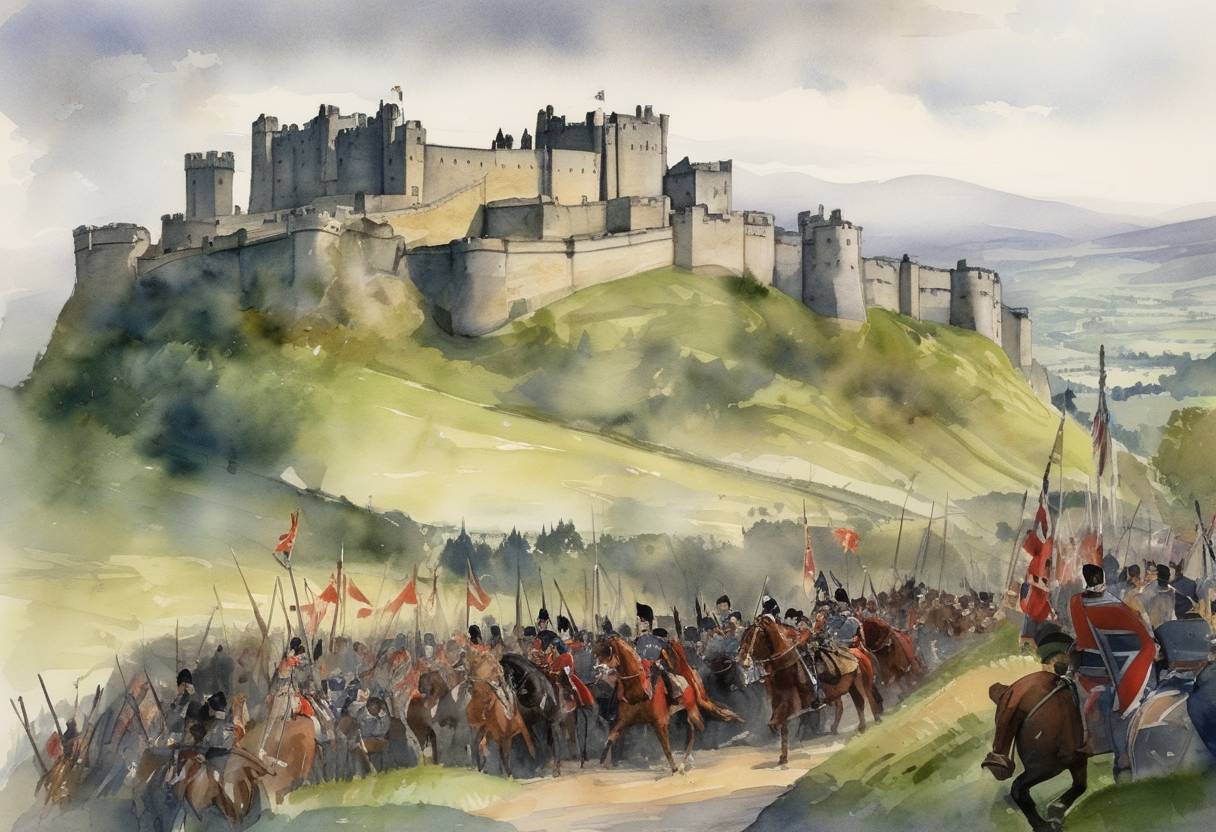
The Siege of Stirling Castle: July 20, 1304
The Siege of Stirling Castle, a pivotal event during the First War of Scottish Independence, reached its final stages on July 20, 1304. The conflict saw King Edward I of England leading English forces in their effort to capture Stirling Castle, one of the last remaining strongholds held by the Scots.
Context Leading to the Siege
The First War of Scottish Independence began in 1296 following England’s attempt to assert control over Scotland. By 1304, King Edward I, known as “Hammer of the Scots,” had already recaptured most of Scotland, with Stirling Castle standing as one of the last bastions of Scottish resistance. Recognizing its strategic importance, Edward aimed to bring the castle under English control to consolidate his grip on the region.
The Siege Tactics
Edward I was renowned for his military strategies and engineering prowess. During the siege, he employed a wide array of siege implements, including trebuchets and battering rams, to bring down the castle’s formidable defenses. Among the most notable weapons deployed was the massive trebuchet, war wolf (or “Lupus Guerre”), reputedly among the largest constructed during the medieval period.
Final Stages and Surrender
By July 20, 1304, the siege had become intense, with both sides suffering casualties. The persistent bombardment of the castle’s defenses significantly weakened its fortifications. Recognizing the futility of further resistance against the overwhelming English force and technological superiority, the castle’s commandants, including Sir William Oliphant, negotiated terms of surrender.
Consequences
The fall of Stirling Castle marked a significant moment in the First War of Scottish Independence. The surrender strategically crippled Scottish resistance and allowed Edward I to bolster his control over Scotland. Despite this setback, efforts for Scottish independence continued, culminating in Robert the Bruce’s eventual resurgence and victory at Bannockburn in 1314.
The siege exemplified medieval military engineering and the brutal nature of warfare during this tumultuous period in Scottish history, underscoring the strategic importance of strongholds like Stirling Castle in medieval conflicts.