The Battle of Manila Begins - February 3, 1945
1945 · Manila, Philippines
The Battle of Manila begins between American and Filipino forces and the Japanese during World War II, lasting until March 3.
January 9, 1945
The United States began an invasion of the Philippines' main island of Luzon by landing on the beaches of Lingayen Gulf during World War II.
Lingayen Gulf, Philippines | United States Armed Forces
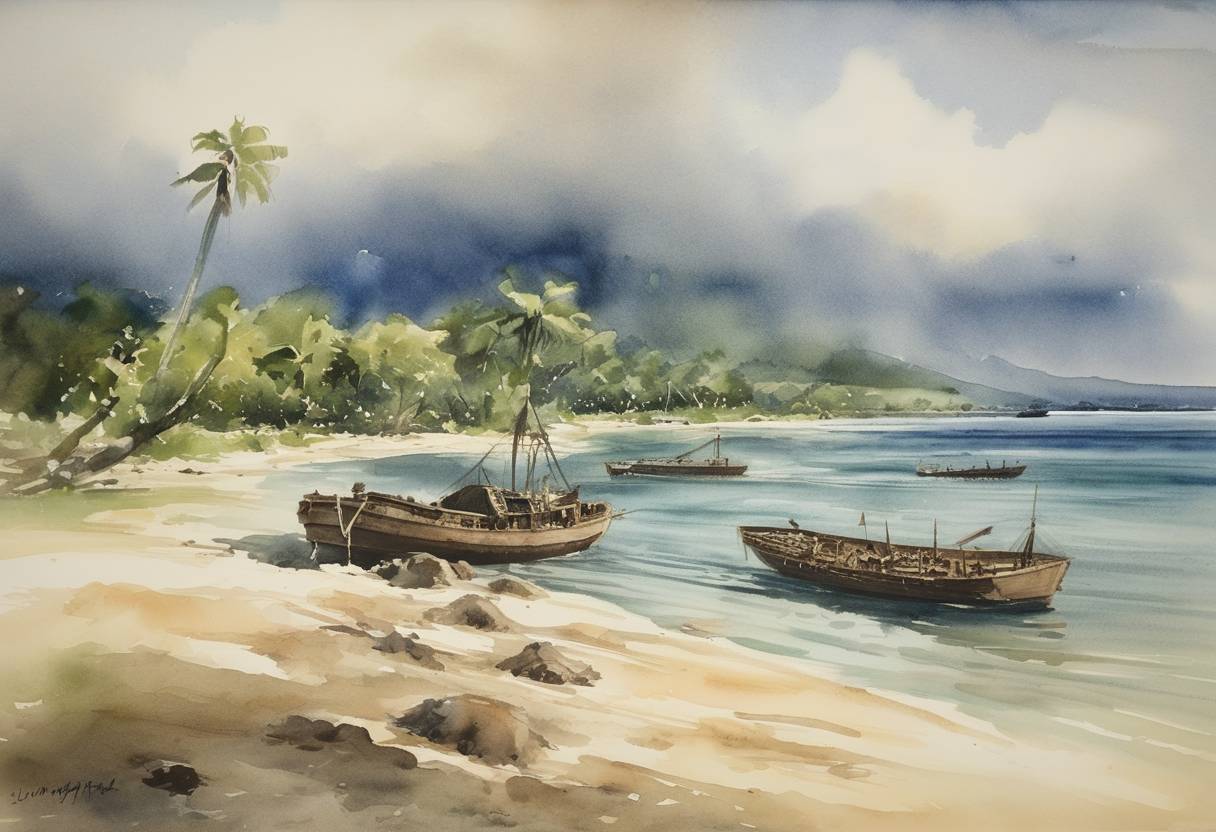
On January 9, 1945, one of the critical military operations of World War II commenced as the United States launched the invasion of Luzon, the largest island in the Philippines, targeting its strategic northwestern front through the Lingayen Gulf. This operation was part of the broader Allied campaign to liberate the Philippines from Japanese occupation.
The Philippines had been under Japanese control since early in the war, following their invasion in 1942. The liberation of the Philippines was a priority for the Allied forces, primarily due to its strategic location in the Pacific and its symbolic significance, as it was a U.S. territory before the war.
General Douglas MacArthur, who famously vowed to return to the Philippines after the fall of Bataan and Corregidor in 1942, was the commander of the Allied forces in the Southwest Pacific Area. His strategic plan involved retaking the Philippines, cutting Japanese supply lines, and setting the stage for future assaults on the Japanese mainland.
Operation Details: The amphibious assault involved a massive naval support fleet and air cover, marking one of the largest Allied invasions in the Pacific. Approximately 175,000 troops from the Sixth Army, led by Lieutenant General Walter Krueger, participated in the initial landings.
Lingayen Gulf: The selected beaches of Lingayen Gulf were ideal for the landing due to their relative accessibility and the ability to support a large-scale invasion. The gulf had been heavily fortified by Japanese forces, but intense pre-landing bombardment by American naval and air forces minimized their defensive capabilities.
Initial Landings: The landings commenced at dawn, and thanks to meticulous planning and the efforts of naval and Marine air support, the troops faced relatively light resistance compared to other amphibious operations. By nightfall, the U.S. forces had established a significant beachhead.
Liberation Campaign: The successful landings on Luzon initiated a prolonged campaign across the island that eventually led to the capital, Manila, and the full liberation of the Philippines from Japanese occupation.
Strategic Advantage: Retaking Luzon provided the Allies with vital airfields and naval bases, allowing for further military operations in the Pacific theater. Additionally, it significantly disrupted the Japanese supply and communication lines.
Impact on Civilians: The invasion and subsequent battles had significant impacts on the civilian population, both in terms of casualties and displacement, although it ultimately contributed to ending Japanese occupation and oppression.
The invasion of Luzon stands as a pivotal moment in the Pacific theater of World War II, demonstrating the scale and logistical prowess of Allied military operations and marking another step towards the eventual surrender of Japanese forces in August 1945.
Source: en.wikipedia.org