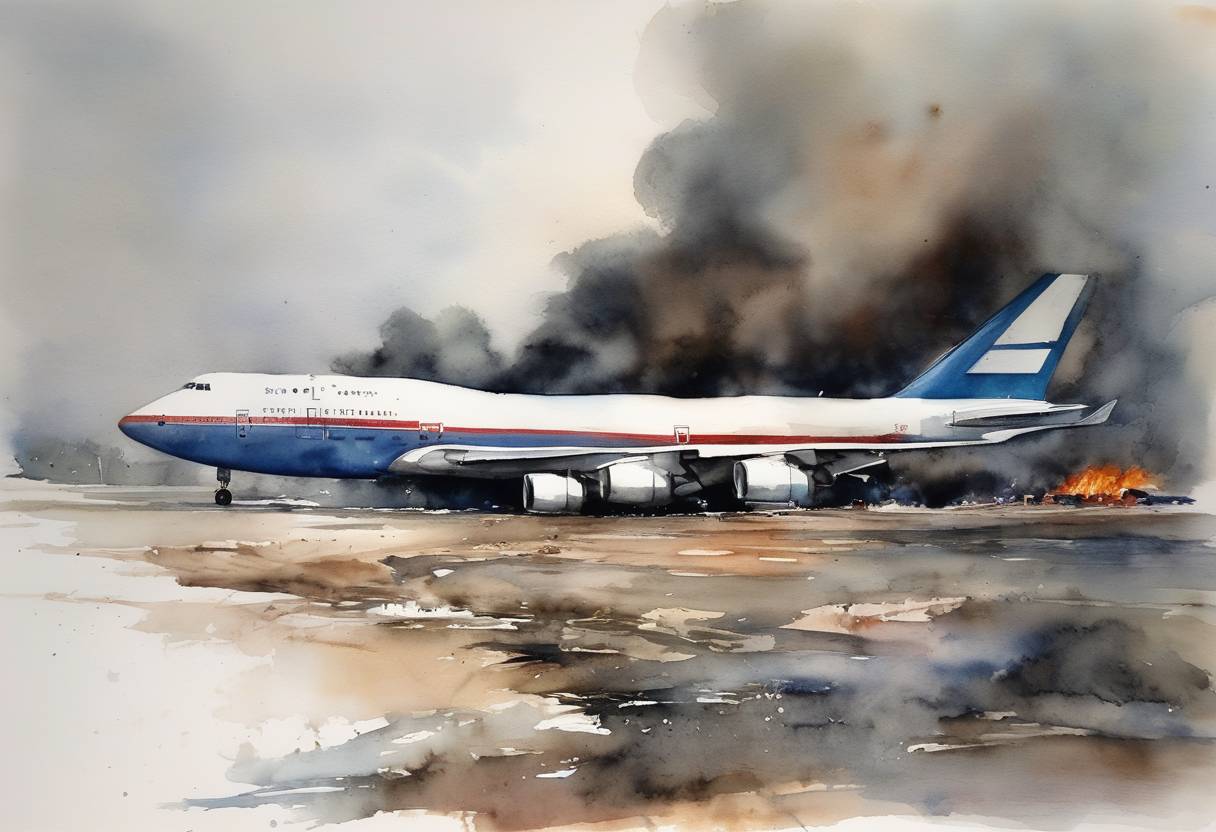
TWA Flight 800: July 17, 1996
On July 17, 1996, TWA Flight 800, a Boeing 747-131, tragically crashed shortly after taking off from John F. Kennedy International Airport in New York. The disaster resulted in the loss of all 230 people on board, including passengers and crew.
Background
TWA Flight 800 was a regularly scheduled flight from New York City to Paris, France. On the evening of the incident, the aircraft took off from JFK Airport around 8:19 p.m. local time. Just 12 minutes after departure, the plane exploded in midair over the Atlantic Ocean, near East Moriches, New York.
Investigation and Findings
The National Transportation Safety Board (NTSB) conducted an extensive four-year investigation into the causes of the crash. It concluded that the tragedy was due to an explosion in the center wing fuel tank. Investigators determined that the likely ignition source was a spark from the wiring.
Key Findings
Fuel Tank Explosion: The explosion’s origin was pinpointed to the center wing fuel tank, which was heated by air conditioning units located under the tanks, increasing the volatility of the fuel vapors inside.
Electrical System Faults: A short circuit outside the fuel tank might have produced a spark that ignited the vapors.
Preventive Measures: In the aftermath, the investigation led to significant changes in aircraft safety standards. Recommendations were made to alter the design and operation of fuel tank systems, as well as to improve maintenance and inspection regimes for electrical systems aboard aircraft.
Impact and Legacy
The TWA Flight 800 crash profoundly affected aviation safety regulations globally. This incident underscores the critical nature of aircraft design and maintenance in preventing aviation disasters. Enhanced safety measures and improved investigative techniques have been implemented to prevent a recurrence of such tragedies.