Hosni Mubarak's Resignation: February 11, 2011
2011 · Cairo, Egypt
Egyptian President Hosni Mubarak resigned after 18 days of mass protests, ending his 30-year rule.
February 5, 2011
The beginning of the most intense marching along al-Ahram in Giza occurs as part of the Egyptian revolution calling for political reform.
Cairo, Egypt | Protesters
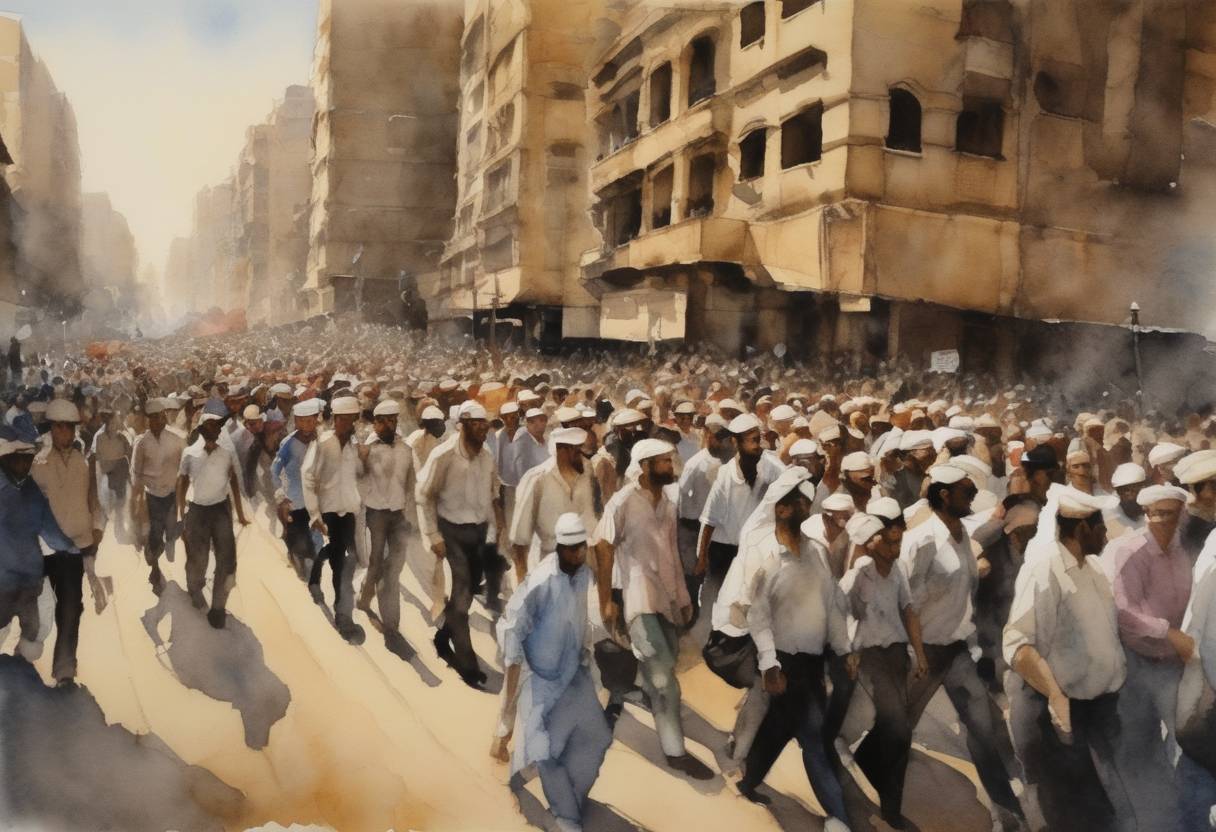
On February 5, 2011, one of the most fervent protests of the Egyptian Revolution unfolded on Al-Ahram Street in Giza, Egypt. This period marked a critical phase in a series of nationwide demonstrations demanding comprehensive political reforms, which had erupted earlier on January 25, 2011.
The Egyptian Revolution of 2011 was part of the broader Arab Spring, a wave of protests across the Arab world that sought to challenge authoritarian regimes and demand greater democratic freedoms. In Egypt, the revolution was fueled by widespread discontent with the nearly 30-year rule of President Hosni Mubarak, grievances over corruption, police brutality, and poverty.
While Tahrir Square in Cairo was the focal point for many protesters, the demonstration on Al-Ahram Street in Giza showcased the widespread nature of the revolutionary fervor across major Egyptian cities. On this date, tens of thousands of Egyptians continued their determined push for Mubarak’s resignation, reforming laws related to elections, and alleviating social injustices.
Al-Ahram Street, an essential artery in Giza and close to many iconic landmarks, turned into a vibrant scene of civil resistance. Protesters marched with banners and chanted slogans calling for freedom and the disbandment of the ruling regime. These demonstrations were peaceful but determined, exemplifying the people’s resilience and the unity among various societal groups, including students, professionals, and families.
The marches and protests, not only in Cairo and Giza but across the nation, intensified the pressure on the Mubarak regime, leading to a series of concessions from the government. Despite attempts to quell the unrest through promises of reform and investigations into corruption, the persistent street demonstrations eroded the regime’s stability and international standing.
The persistent activism against the regime eventually led to Mubarak’s resignation on February 11, 2011, just six days after the Giza march. The events of this day were a testament to the revolutionary spirit that was sweeping through Egypt, carrying significant implications for the country’s political landscape.
The 2011 Egyptian Revolution marked a turning point in Egypt’s history, leading to the resignation of Hosni Mubarak and ushering in new political dynamics, including subsequent elections and a constitution-revision process. However, the years following saw continued political unrest, debates over the balance of power, and challenges in achieving lasting reforms.
The events in Giza on February 5, 2011, highlighted the determination of the Egyptian populace to claim their rights and redefine their political system. It serves as a significant reminder of the power of collective civil action in effecting change and inspiring movements worldwide.
Source: en.wikipedia.org