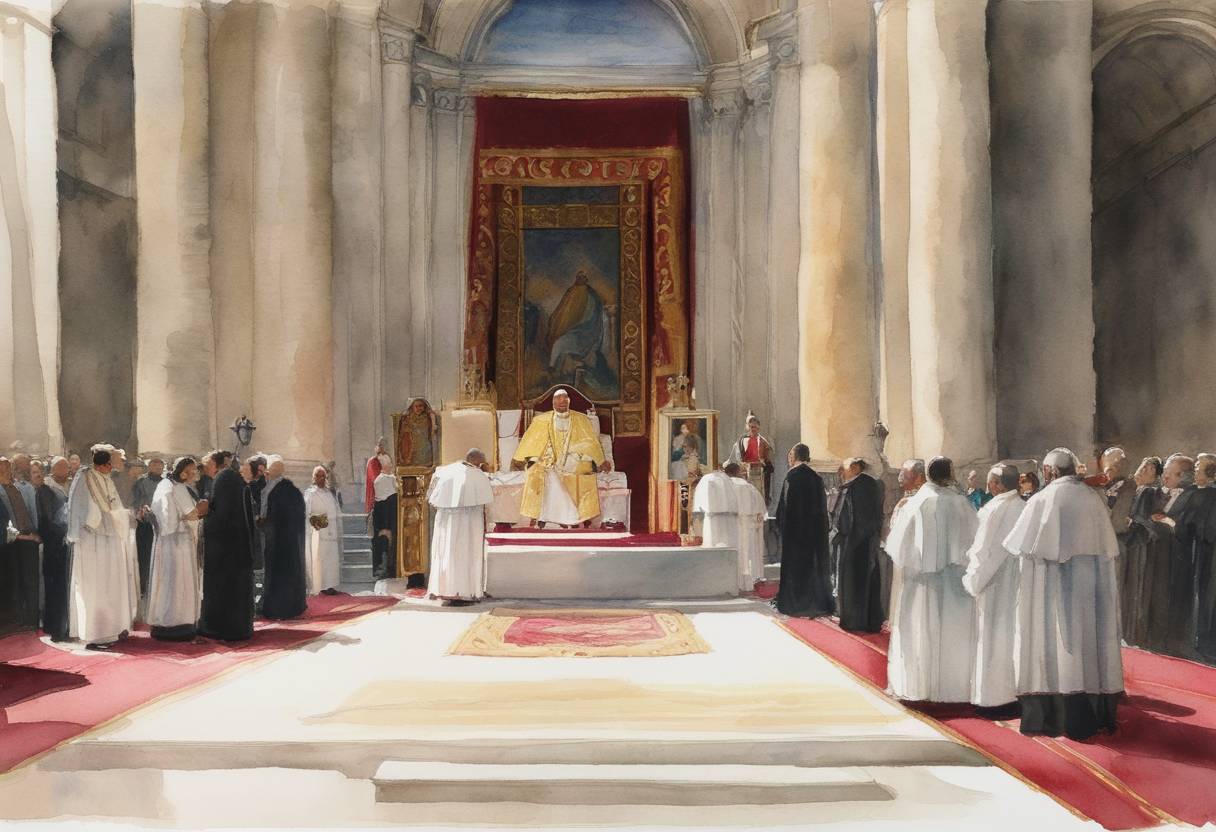
The Papacy of Pope-Elect Stephen (Stephen II)
On March 22, 752, a significant and unusual event in the history of the Catholic Church occurred with the election of Pope-elect Stephen. Following the death of Pope Zachary, the clergy and faithful in Rome quickly selected Stephen to be the next pontiff. However, Stephen’s tenure as pope-elect remains one of the shortest and least typical in papal history.
Context and Election
- Preceding Events: The period was marked by significant political instability as the Lombards exerted pressure on the Italian territories controlled by the Byzantine Empire and the Papacy. Pope Zachary had navigated these challenges adeptly, and his death necessitated quick action to ensure continued leadership.
- Election: Stephen was elected by the people and clergy of Rome due to his qualifications and recognized piety. However, he was never consecrated as bishop, a crucial step for his formal confirmation as pope according to Church law at the time.
Death and Consequence
- Death: Tragically, Stephen fell seriously ill just days after his election and died on March 25, 752, before his consecration. This premature death led to significant ecclesiastical and historical debate.
- Impact on Papal Lists: The absence of consecration raised questions around Stephen’s status. Traditionally, the authenticity of a pope’s legitimacy required consecration. Due to this unique scenario, Stephen is not always listed in official papal records.
Historical Significance
The brief papacy of Pope-elect Stephen set a historical precedent concerning papal legitimacy. It clarified the critical importance of consecration in confirming a pope-elect’s position, impacting subsequent canon law and contributing to the formal protocols surrounding papal ascension.
Aftermath
- Subsequent Developments: Following Stephen’s death, Stephen II was chosen as pope (also known as Stephen III in some sources due to historical inconsistencies). Stephen II assumed office and was consecrated, becoming a pivotal figure in negotiating alliances with the Frankish Empire, which ultimately shaped the future of Western Europe.
- Long-term Effects: The distinction made in papal lists about Stephen’s election emphasized the necessity of solidifying procedural integrity within the papal electoral process and reinforced the essential combination of election and consecration for papal legitimacy.
The brief episode of Pope-elect Stephen serves as an illustrative case for the complexities surrounding the papal office in historical contexts, highlighting the influence of ceremonial and procedural elements in religious and political spheres.