Ellen Johnson Sirleaf Sworn in as President of Liberia
2006 · Monrovia, Liberia
Ellen Johnson Sirleaf is sworn in as President of Liberia, becoming the first elected female head of state in Africa.
January 22, 1992
Rebel forces led by the National Patriotic Front of Liberia captured the capital city, Monrovia, during the First Liberian Civil War.
Monrovia, Liberia | National Patriotic Front of Liberia
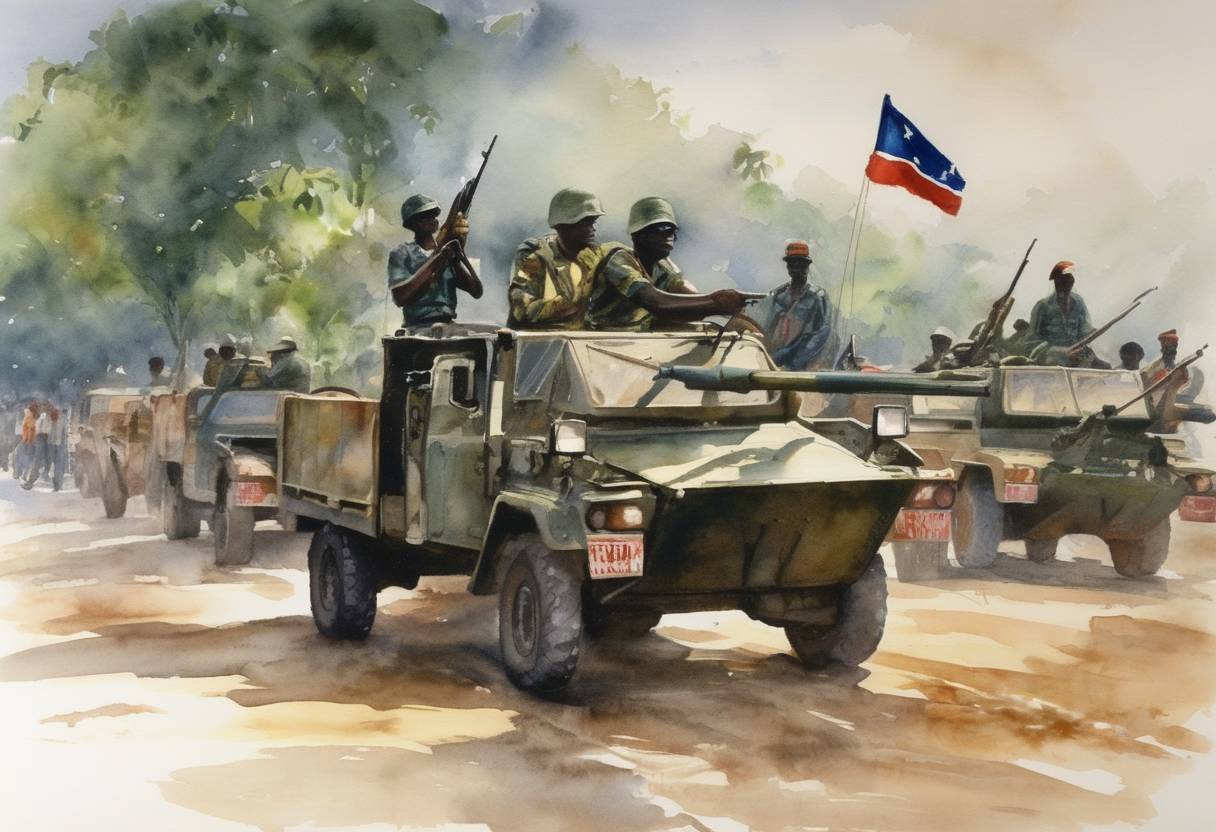
On January 22, 1992, during the First Liberian Civil War, rebel forces led by the National Patriotic Front of Liberia (NPFL), under the leadership of Charles Taylor, made a significant attempt to capture Monrovia, the capital of Liberia. The city’s control was a strategic objective due to its political and economic significance.
The First Liberian Civil War began in December 1989 when Charles Taylor launched a rebellion against the government of President Samuel Doe. The conflict quickly escalated, drawing a range of factions into a brutal conflict that would last until 1997. The NPFL, primarily consisting of ethnic Gio and Mano peoples, opposed Doe’s government, which was dominated by the Krahn ethnic group.
Prior to the attempt on Monrovia, Liberia had been engulfed in chaos and violence, with various factions jostling for control over territories. The Economic Community of West African States Monitoring Group (ECOMOG), a West African peacekeeping force, had already intervened in the conflict, trying to maintain peace and support the Doe government.
The push towards Monrovia was part of Taylor’s strategy to consolidate power by seizing the nation’s political center. The attack intensified a brutal civil war that involved indiscriminate violence against civilians and numerous human rights abuses.
As the NPFL forces assaulted the city, intense fighting broke out between Taylor’s rebels and the ECOMOG forces stationed to defend Monrovia. This confrontation added another layer of complexity to an already multifaceted conflict, transforming Monrovia into a site of acute warfare and humanitarian distress.
The attempt to capture Monrovia in January 1992 did not result in the immediate fall of the city but demonstrated the ongoing volatility and the potential for further escalations in the Liberian Civil War. The attack underscored the limitations of ECOMOG’s capabilities against a determined insurgency.
The struggle for Monrovia was emblematic of the broader chaos in Liberia during the early 1990s. The civil war led to an estimated 250,000 deaths and displaced a significant portion of the population. This event further solidified Charles Taylor’s role as a central figure in the conflict, eventually leading to his presidency after a peace agreement and elections in 1997.
The First Liberian Civil War also highlighted international challenges in peacekeeping and intervention, reflecting on the complexities of conflict in post-colonial African states beset by ethnic divisions and power struggles.
Although Monrovia remained contested throughout the war, the protracted conflict exhausted all sides, eventually leading to negotiations and a peace agreement. However, the fragile peace and subsequent national issues would lead to a second civil war by 1999, illustrating the ongoing instability and challenges faced by Liberia beyond 1992.
Source: www.globalsecurity.org