The Adoption of the First Republican Constitution in France - June 24, 1793
1793 · Paris, France
The first republican constitution in France is adopted by the National Convention during the French Revolution, although it was never implemented.
May 11, 1792
The Society of Friends of the Constitution or Jacobin Club was established in the United States.
Philadelphia, United States | Jacobin Club
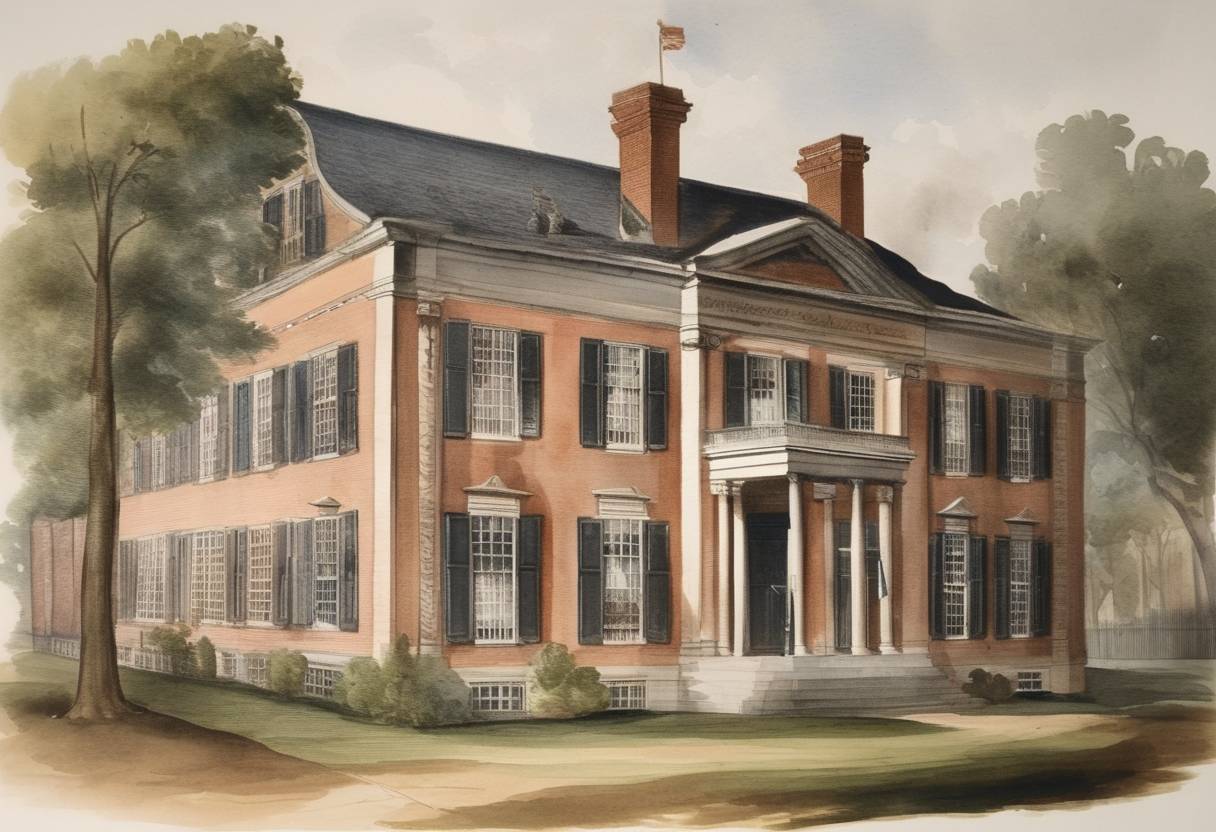
On May 11, 1792, the revolutionary fervor that had swept through France with the formation of the Society of Friends of the Constitution, commonly known as the Jacobin Club, found its echo across the Atlantic in the United States. This date marks the establishment of the American branch inspired by its French counterpart. While direct implantation of the French Jacobin organization did not occur, supporters and sympathizers of revolutionary France and its principles began forming clubs and societies that shared similar ideologies and goals.
French Inspiration: The original Jacobin Club in France was pivotal during the French Revolution, promoting Enlightenment ideals, republicanism, and radical political reforms. By 1792, the French society had become central to the politics of the Revolution, gaining notoriety for its radical views and influential members such as Maximilien Robespierre.
Transatlantic Influence: Ideas from the French Revolution resonated strongly in the United States, a country recently founded on republican ideals and individual liberties. As France experienced turmoil, many Americans were drawn to the revolutionary cause, seeing it as a continuation of their own fight for liberty and democracy.
Formation: While no formal Jacobin Club was founded directly on May 11, 1792, various societies across the United States began aligning themselves with the principles of the Jacobins, engaging in similar revolutionary discourse and activism. These clubs served as a platform for discussions on democracy and provided support for the French cause.
Political Influence: These societies often consisted of pro-Revolution American citizens, who advocated for a robust relationship between the United States and revolutionary France. Their activities included public debates, political advocacy, and the dissemination of revolutionary ideas through publications.
Democratic-Republican Societies: The influence of Jacobin ideals contributed to the rise of Democratic-Republican Societies in the late 18th century, which shared the Jacobin emphasis on civic virtue, political participation, and opposition to aristocratic elements in government.
Political Tensions: The admiration for the French Revolution in certain American circles intensified political tensions domestically, contributing to the larger Federalist-Republican divide. Federalists, wary of excesses seen in France, opposed these radical elements, favoring a more conservative interpretation of governance.
Long-term Influence: The emergence of societies sympathetic to Jacobin ideals underlined an enduring transatlantic political and cultural exchange, where revolutionary ideas traveled, adapted, and influenced political landscapes beyond their original borders.
The American enthusiasm for the French revolutionary spirit, demonstrated by the establishment of such societies, remained a significant chapter in early U.S. political life, highlighting the intricate relationship between American and French revolutionary ideologies.
Source: en.wikipedia.org