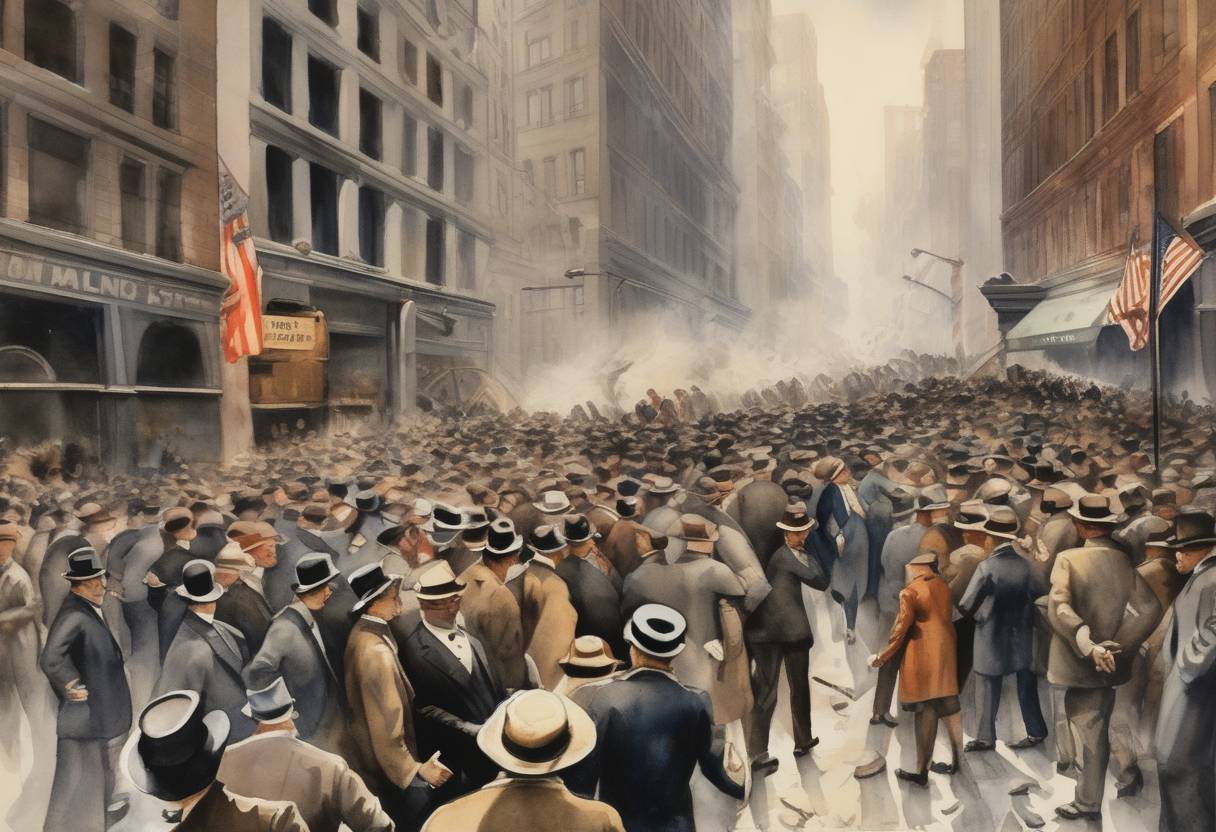
The Wall Street Crash of 1929: Black Tuesday
Overview
On October 29, 1929, known as Black Tuesday, the United States stock market experienced a catastrophic collapse, marking the beginning of the Great Depression. This event is one of the most significant financial disasters in history, leading to widespread economic turmoil across the globe.
Context and Lead-Up
The 1920s, often referred to as the “Roaring Twenties,” was a period of economic prosperity in the United States. The stock market saw unprecedented growth, with many Americans investing heavily in stocks. This speculative bubble was fueled by easy credit and a widespread belief that the market would continue to rise indefinitely.
However, by the late 1920s, signs of economic instability began to emerge. Production had outpaced consumption, and there was an uneven distribution of wealth. Additionally, many investors were buying stocks on margin, meaning they borrowed money to purchase shares, which increased their vulnerability to market fluctuations.
Key Events
Black Thursday (October 24, 1929): The stock market began to show signs of distress, with a significant drop in stock prices. Panic selling ensued, and although a group of bankers attempted to stabilize the market by buying large blocks of shares, confidence was shaken.
Black Monday (October 28, 1929): The market continued its downward spiral, with the Dow Jones Industrial Average falling nearly 13%.
Black Tuesday (October 29, 1929): The panic reached its peak. Over 16 million shares were traded, and the market lost billions of dollars in value. The Dow Jones Industrial Average fell another 12%, cementing the crash.
Aftermath and Consequences
The Wall Street Crash of 1929 had profound and far-reaching effects:
Economic Impact: The crash led to a severe contraction in the U.S. economy. Banks failed, businesses closed, and unemployment soared. By 1933, nearly 25% of the American workforce was unemployed.
Global Repercussions: The economic downturn spread worldwide, exacerbating financial instability in Europe and other regions, leading to a global depression.
Policy Changes: The crash prompted significant changes in U.S. financial regulations, including the establishment of the Securities and Exchange Commission (SEC) to regulate the stock market and prevent future crashes.
Social and Political Effects: The Great Depression led to widespread poverty and hardship, influencing political movements and policies, including the New Deal programs implemented by President Franklin D. Roosevelt to stimulate economic recovery.
Historical Significance
The Wall Street Crash of 1929 serves as a stark reminder of the dangers of speculative bubbles and the importance of financial regulation. It reshaped the global economic landscape and had lasting impacts on economic policy and theory, influencing how governments respond to financial crises to this day.