Nuclear Rocket Propulsion Milestone: May 21, 1946
1946 · Los Alamos, United States
The first U.S. nuclear rocket fuel test occurred, marking a significant early step in nuclear propulsion research.
January 25, 1995
Norwegian and American scientists launch a Black Brant XII rocket, causing a Russian nuclear false alarm.
Andøya, Norway | Norwegian Space Centre
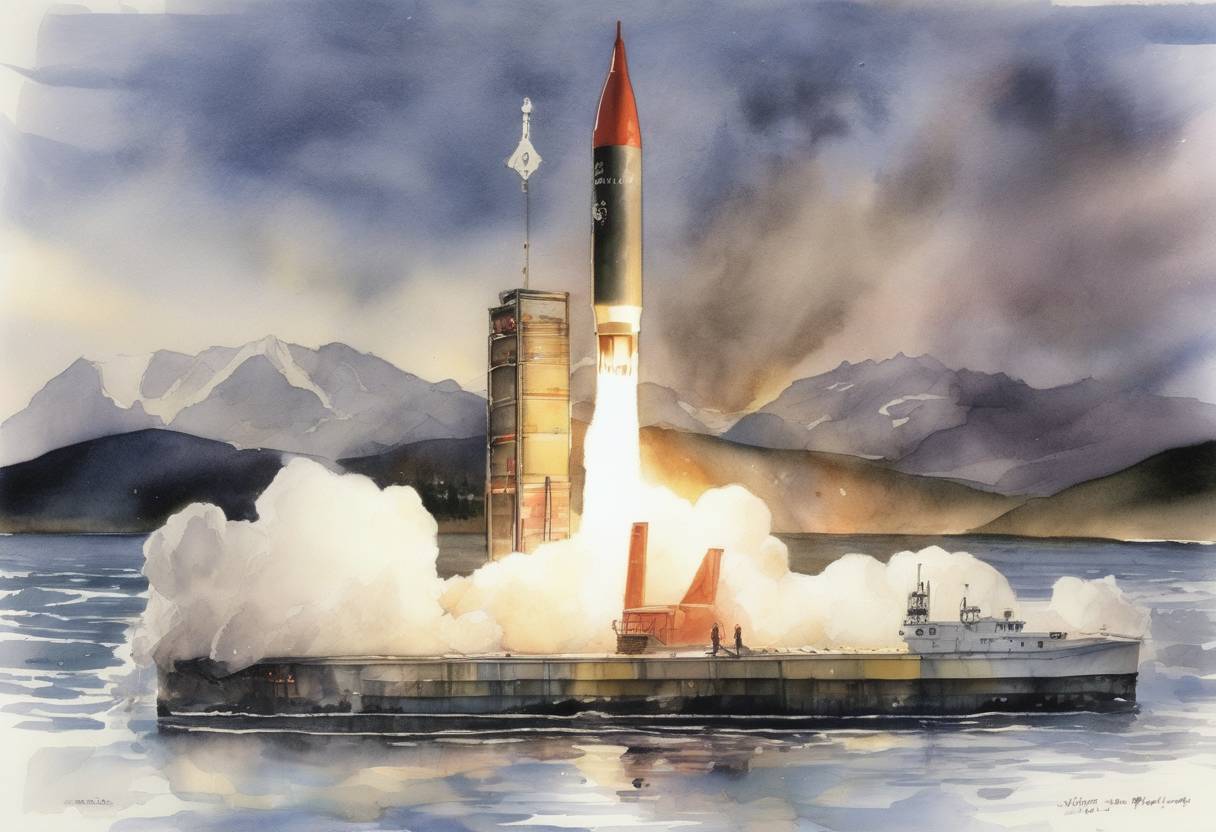
On January 25, 1995, a scientific research mission inadvertently led to a significant international incident, known as the “Norwegian Rocket Incident” or the “Black Brant XII Incident.” This event nearly escalated into a nuclear confrontation between the United States and Russia due to a misunderstanding.
The Cold War had officially ended with the dissolution of the Soviet Union in 1991, but tensions and mistrust between Russia and the West persisted. Russia, under President Boris Yeltsin, was navigating a challenging post-Soviet transition, and its early warning systems were still on high alert for potential threats.
On the morning of January 25, 1995, a team of Norwegian and American scientists launched a Black Brant XII rocket from the Andøya Rocket Range in Norway. The purpose of the launch was purely scientific: to study the aurora borealis and gather data on atmospheric conditions. The rocket was equipped with scientific instruments and was intended to reach an altitude of approximately 1,500 kilometers (930 miles).
The rocket’s trajectory took it over the Barents Sea, heading towards Russian airspace. Russian radar systems detected the launch and, due to its speed and trajectory, misidentified it as a potential Trident missile launched from a submarine. This triggered a nuclear alert in Russia.
The incident reached the highest levels of the Russian government. President Boris Yeltsin was informed and, for the first time in history, activated the Russian nuclear briefcase, known as the “Cheget.” This briefcase is part of the command and control system for launching nuclear weapons.
Fortunately, the situation was resolved without escalation. Russian military officials quickly determined that the rocket posed no threat. The scientific nature of the launch was confirmed, and the alert was called off. The incident lasted approximately eight minutes, during which the world unknowingly stood on the brink of a nuclear crisis.
The Black Brant XII incident highlighted the dangers of miscommunication and the importance of transparency in military and scientific activities. It underscored the need for improved communication channels between countries to prevent accidental escalations.
In response to the incident, Norway had previously notified 35 countries, including Russia, about the planned launch, but the information had not been properly disseminated within the Russian military. This incident led to improvements in notification procedures for scientific launches and emphasized the importance of maintaining robust communication channels to avoid similar misunderstandings in the future.
The event serves as a stark reminder of the fragile nature of international security and the potential for misunderstandings to escalate into global crises, even in the post-Cold War era.
Source: www.britannica.com