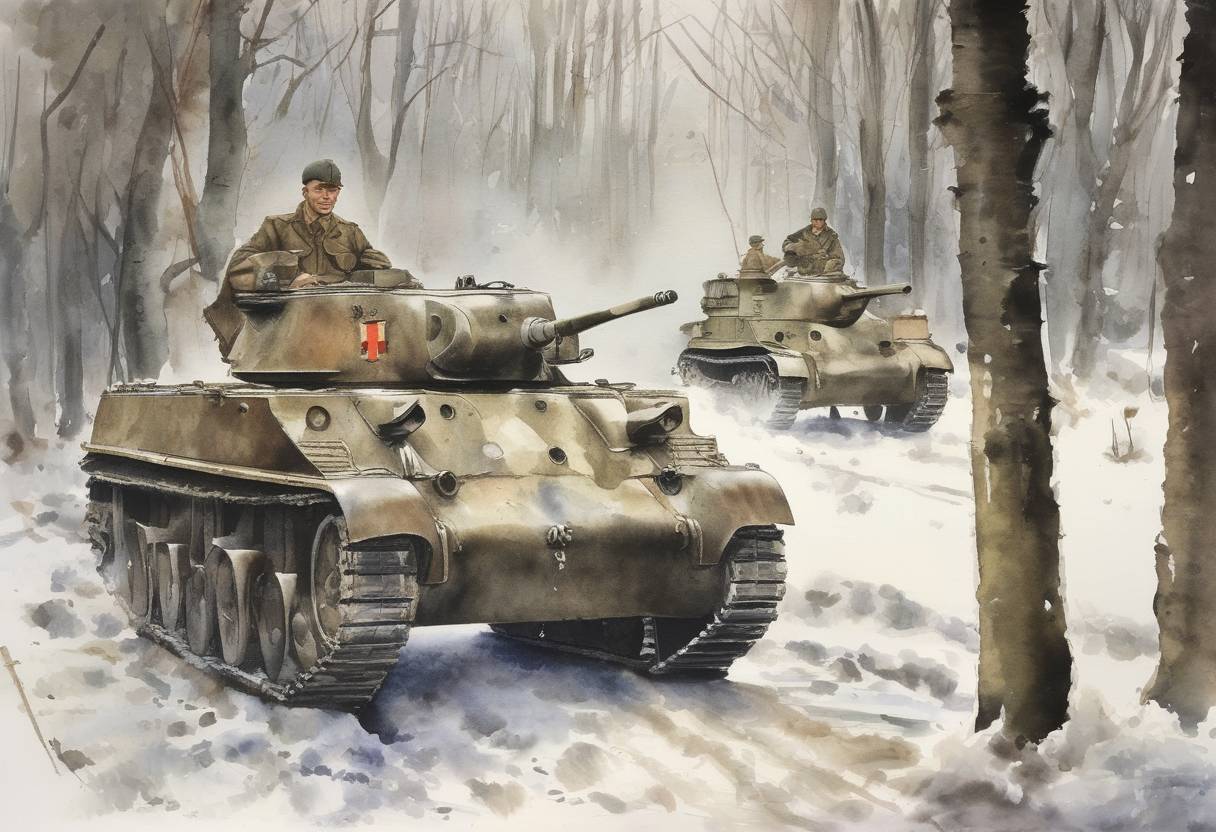
The Battle of the Bulge: “Nuts!” - December 22, 1944
During World War II, the Battle of the Bulge was a major German offensive campaign launched through the densely forested Ardennes region of Wallonia in Belgium. The battle began on December 16, 1944, and was Adolf Hitler’s last major offensive in the West, aiming to split the Allied forces and capture the vital Belgian port of Antwerp.
Context Leading to December 22, 1944
- Strategic Surprise: The Germans achieved complete surprise due to the Allies’ overconfidence, preoccupation with offensive plans, and poor aerial reconnaissance due to bad weather.
- Bastogne’s Importance: The town of Bastogne was strategically significant due to its road network, which was crucial for the movement of troops and supplies. Holding Bastogne was vital for the Allies to prevent the Germans from advancing further.
December 22, 1944: The Demand for Surrender
- Encirclement of Bastogne: By December 21, Bastogne was encircled by German forces. The 101st Airborne Division, along with elements of other units, was defending the town under the command of Brigadier General Anthony McAuliffe.
- German Ultimatum: On December 22, German forces sent a delegation under a white flag to deliver a written demand for the surrender of the American troops in Bastogne.
General McAuliffe’s Famous Reply
- The Response: General McAuliffe, upon reading the German demand, reportedly exclaimed, “Nuts!” His staff suggested that this succinct and defiant response be sent back to the Germans.
- Delivery of the Message: The reply was delivered to the German delegation, who were initially confused by the slang but eventually understood it as a refusal to surrender.
Aftermath and Significance
- Relief and Victory: The siege of Bastogne continued until December 26, when elements of General George Patton’s Third Army broke through the German lines, relieving the besieged town.
- Symbol of American Resolve: McAuliffe’s reply became a symbol of American determination and defiance. The successful defense of Bastogne was a turning point in the Battle of the Bulge, contributing to the eventual failure of the German offensive.
- Broader Impact: The Battle of the Bulge was the largest and bloodiest single battle fought by the United States in World War II. It marked the depletion of German resources and manpower, hastening the end of the war in Europe.
The events at Bastogne, particularly McAuliffe’s famous retort, remain a celebrated example of American resilience and leadership under pressure during one of the most challenging periods of the war.