December 7, 1972

Apollo 17, the final mission of NASA's Apollo program, is launched. It is the last manned mission to the Moon.


Cape Canaveral, United States | NASA
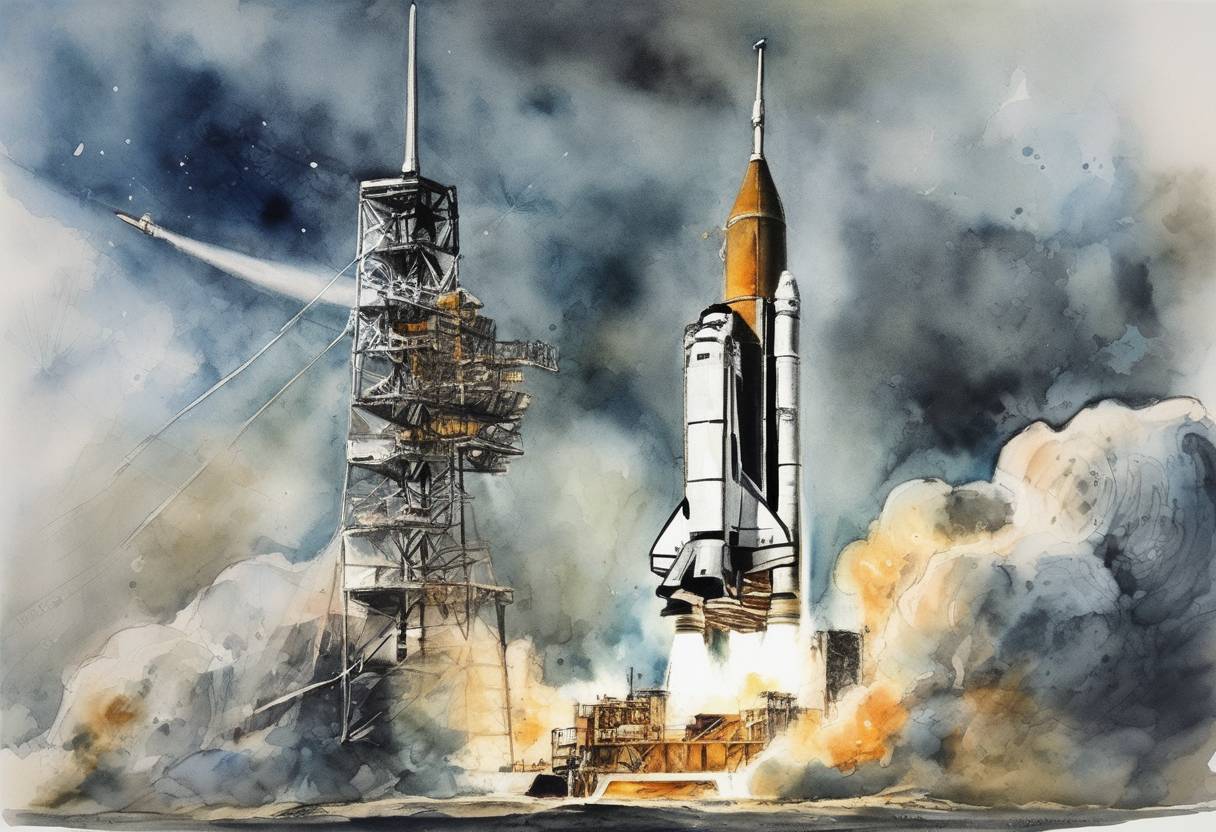
Watercolor painting based depiction of Apollo 17, the final mission of NASA's Apollo program, is launched. It is the last manned mission to the Moon. (1972)

Apollo 17: The Final Manned Mission to the Moon

Overview

On December 7, 1972, NASA launched Apollo 17, marking the final manned mission of the Apollo program and the last time humans traveled beyond low Earth orbit. The mission was notable for its scientific achievements and for being the first night launch of a U.S. human spaceflight.

Key Details

  • Launch Date: December 7, 1972
  • Launch Site: Kennedy Space Center, Florida
  • Spacecraft Components: Command Module (CM) “America” and Lunar Module (LM) “Challenger”
  • Crew:
    • Eugene Cernan (Commander)
    • Harrison Schmitt (Lunar Module Pilot)
    • Ronald Evans (Command Module Pilot)

Mission Objectives

Apollo 17 aimed to conduct extensive scientific exploration of the lunar surface, focusing on geological surveying and sampling. It also sought to deploy scientific instruments and conduct experiments both on the Moon and during the return journey to Earth.

Key Events

  • Launch: The mission launched at 12:33 a.m. EST, marking the first night launch of a U.S. human spaceflight.
  • Lunar Landing: On December 11, 1972, Cernan and Schmitt landed in the Taurus-Littrow valley, an area chosen for its diverse geological features.
  • Extravehicular Activities (EVAs): The astronauts conducted three EVAs, spending over 22 hours on the lunar surface. They collected 110.4 kilograms (243.7 pounds) of lunar samples, the largest amount of any Apollo mission.
  • Scientific Experiments: The mission deployed the Lunar Surface Experiments Package (ALSEP) to study seismic activity, heat flow, and other lunar phenomena.

Notable Achievements

  • Geological Discoveries: Harrison Schmitt, a trained geologist, played a crucial role in identifying and collecting diverse rock samples, including the famous “orange soil,” which provided insights into the Moon’s volcanic history.
  • Longest Lunar Stay: Apollo 17 set records for the longest lunar surface stay (over 75 hours) and the longest total lunar surface extravehicular activities.

Return and Legacy

  • Splashdown: The mission concluded with a successful splashdown in the Pacific Ocean on December 19, 1972.
  • Historical Significance: Apollo 17 remains the last manned mission to the Moon. Eugene Cernan, the last human to walk on the lunar surface, famously remarked, “We leave as we came, and, God willing, as we shall return, with peace and hope for all mankind.”

Broader Impact

Apollo 17’s success underscored the scientific and exploratory achievements of the Apollo program. The mission’s findings continue to influence lunar science and have paved the way for future exploration endeavors, including NASA’s Artemis program, which aims to return humans to the Moon.

Apollo 17 stands as a testament to human ingenuity and the spirit of exploration, marking the end of an era in space exploration while inspiring future generations to reach for the stars.

Source: www.nasa.gov