Founding of Rio de Janeiro: March 1, 1565
1565 · Rio de Janeiro, Brazil
The city of Rio de Janeiro was founded by the Portuguese as a strategic defense against French privateers who were attempting to control the area.
January 25, 1575
Luanda, the capital of Angola, is founded by the Portuguese navigator Paulo Dias de Novais.
Luanda, Angola | Portuguese Empire
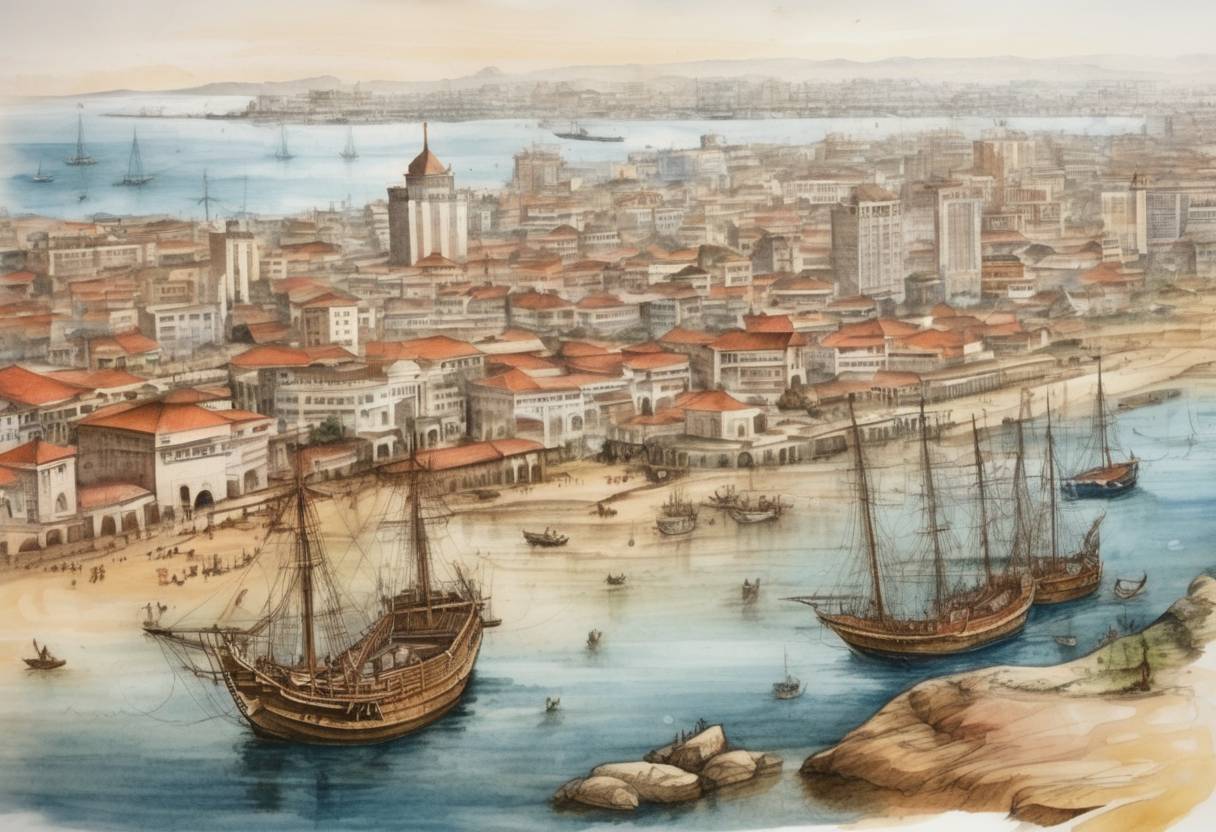
On January 25, 1575, the city of Luanda, which would become the capital of Angola, was founded by the Portuguese navigator Paulo Dias de Novais. This event marked a significant moment in the history of Portuguese exploration and colonial expansion in Africa.
Portuguese Exploration: By the 16th century, Portugal had established itself as a leading maritime power, exploring and colonizing parts of Africa, Asia, and South America. The Portuguese were particularly interested in Africa for its potential trade routes and resources, including gold, ivory, and slaves.
Paulo Dias de Novais: A grandson of the famous explorer Bartolomeu Dias, Paulo Dias de Novais was granted a charter by King Sebastian of Portugal to colonize and govern parts of the African coast. His mission was to establish a Portuguese presence and facilitate trade.
Location: Luanda was strategically located on the Atlantic coast, providing an excellent harbor for ships. This made it an ideal location for a trading post and a base for further inland exploration.
Initial Settlement: Dias de Novais arrived with a group of settlers, including soldiers, priests, and artisans. They established a fort and a settlement, which laid the groundwork for the future city of Luanda.
Relations with Indigenous Peoples: The Portuguese encountered the Ndongo Kingdom, ruled by the Ngola (king). Initial relations were complex, involving both cooperation and conflict, as the Portuguese sought to expand their influence and control over the region.
Slave Trade: Luanda quickly became a central hub for the transatlantic slave trade. The Portuguese exported large numbers of enslaved Africans from Angola to Brazil and other parts of the Americas, profoundly impacting the region’s demographics and economy.
Colonial Administration: Over time, Luanda grew into a major colonial administrative center. It served as the capital of Portuguese Angola and played a crucial role in the administration and governance of the colony.
Cultural and Economic Impact: The establishment of Luanda facilitated cultural exchanges and economic interactions between Europe and Africa. However, it also led to significant social disruptions and exploitation of local populations.
Legacy: Today, Luanda is the largest city in Angola and remains the country’s capital. Its history as a colonial city is reflected in its architecture, culture, and demographics.
Independence: Angola gained independence from Portugal in 1975, exactly 400 years after the founding of Luanda. The city has since evolved into a vibrant urban center, despite facing challenges related to its colonial past and civil conflicts.
The founding of Luanda by Paulo Dias de Novais is a pivotal event in the history of Angola, illustrating the broader themes of exploration, colonization, and cultural exchange that characterized the Age of Discovery.
Source: en.wikipedia.org