The Battle of Benevento: February 26, 1266
1266 · Benevento, Italy
The Battle of Benevento took place, marking a decisive victory for Charles of Anjou over Manfred of Sicily, leading to the end of Hohenstaufen rule in southern Italy.
March 16, 0934
The Battle of Fiorenzuola took place between the forces of King Hugh of Italy and those of the rebellious Margrave of Ivrea, Berengar II.
Fiorenzuola, Italy
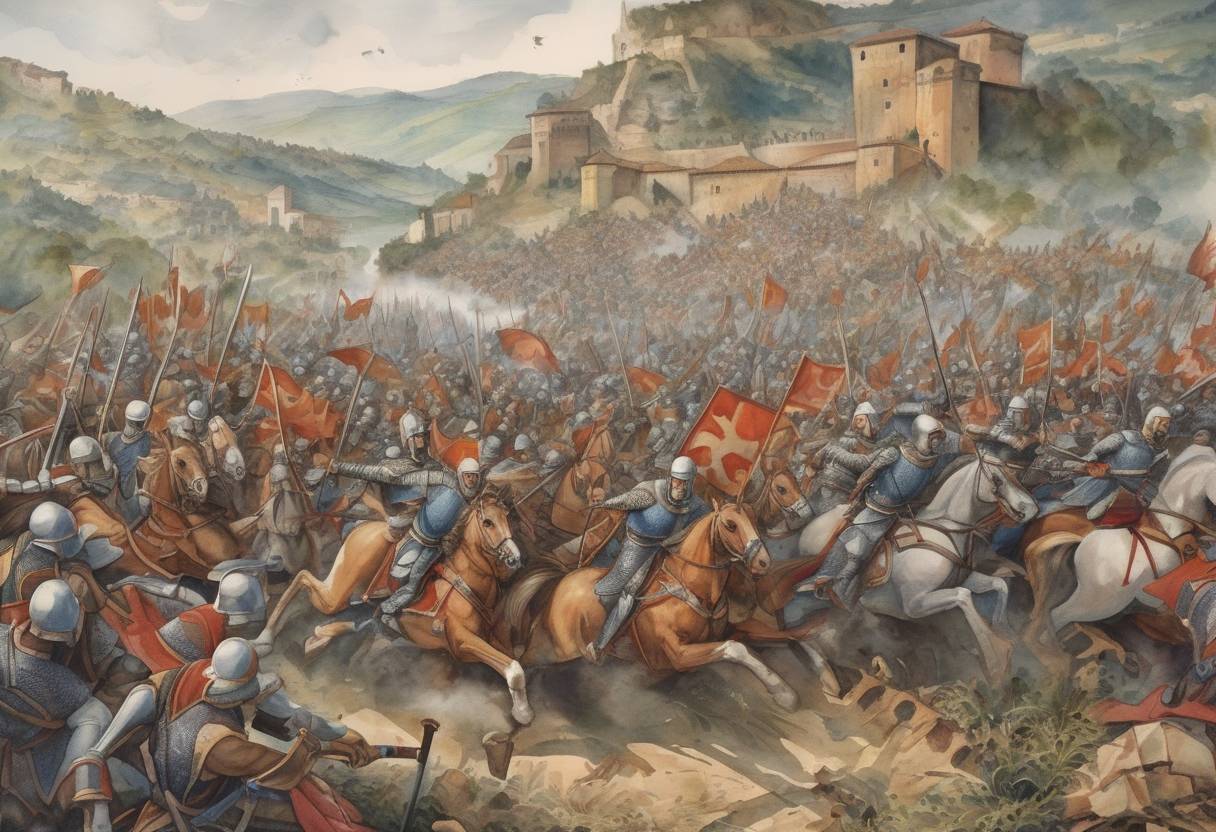
The Battle of Fiorenzuola, fought on March 16, 934, was a significant conflict in the power struggles of early medieval Italy. This battle was a confrontation between King Hugh of Italy and the rebellious Margrave of Ivrea, Berengar II. The clash was part of the broader context of political instability and shifting allegiances that characterized the Italian peninsula during this period.
King Hugh of Italy: Hugh of Arles, originally from Provence, became King of Italy in 926. His reign was marked by efforts to consolidate power and control over the fragmented Italian territories. Hugh’s rule faced opposition from various nobles who were dissatisfied with his policies and foreign origins.
Berengar II of Ivrea: Berengar II was a member of the influential Anscarid family and the Margrave of Ivrea. He emerged as a leading figure among the Italian nobility who opposed King Hugh’s rule. Berengar’s rebellion was fueled by both personal ambition and widespread discontent with Hugh’s administration.
The Battle of Fiorenzuola took place in the region of Emilia-Romagna, near the town of Fiorenzuola d’Arda. The confrontation was a direct result of Berengar’s challenge to Hugh’s authority. The battle was characterized by the following:
Forces: King Hugh’s forces were composed of loyalists from various parts of Italy, including Lombard and Frankish elements. Berengar’s army consisted of his supporters from the northern Italian territories, particularly from Ivrea and surrounding regions.
Outcome: The battle ended in a decisive victory for King Hugh. Berengar II’s forces were defeated, and he was forced to flee the battlefield. This victory solidified Hugh’s control over Italy, at least temporarily, and weakened the position of his opponents.
Berengar’s Exile: Following his defeat, Berengar II sought refuge with Rudolf II of Burgundy, another rival of Hugh. This exile marked a temporary setback for Berengar, but he would later return to Italy and continue his opposition to Hugh.
Hugh’s Reign: The victory at Fiorenzuola allowed King Hugh to maintain his hold on the Italian throne. However, his reign continued to be troubled by internal dissent and external threats, reflecting the ongoing instability of the region.
Legacy: The battle is a reflection of the complex feudal dynamics and the struggle for power among the Italian nobility during the 10th century. It underscores the challenges faced by rulers in maintaining control over a fragmented and contested political landscape.
In summary, the Battle of Fiorenzuola was a pivotal moment in the reign of King Hugh of Italy, illustrating the turbulent nature of Italian politics during this era and the persistent challenges to centralized authority.