The Byzantine Capture of Antioch - October 28, 969
969 · Antioch, Byzantine Empire
The Byzantine Empire captured Antioch from the Hamdanid dynasty, marking a significant territorial gain during the Byzantine-Arab Wars.
November 8, 0960
The Battle of Andrassos took place, where the Byzantine Empire, under the command of Leo Phokas the Younger, defeated the Hamdanid Emirate of Aleppo led by Sayf al-Dawla. This battle was part of the Byzantine-Arab Wars and marked a significant victory for the Byzantines, consolidating their control over the eastern frontier.
Andrassos, Byzantine Empire | Byzantine Empire
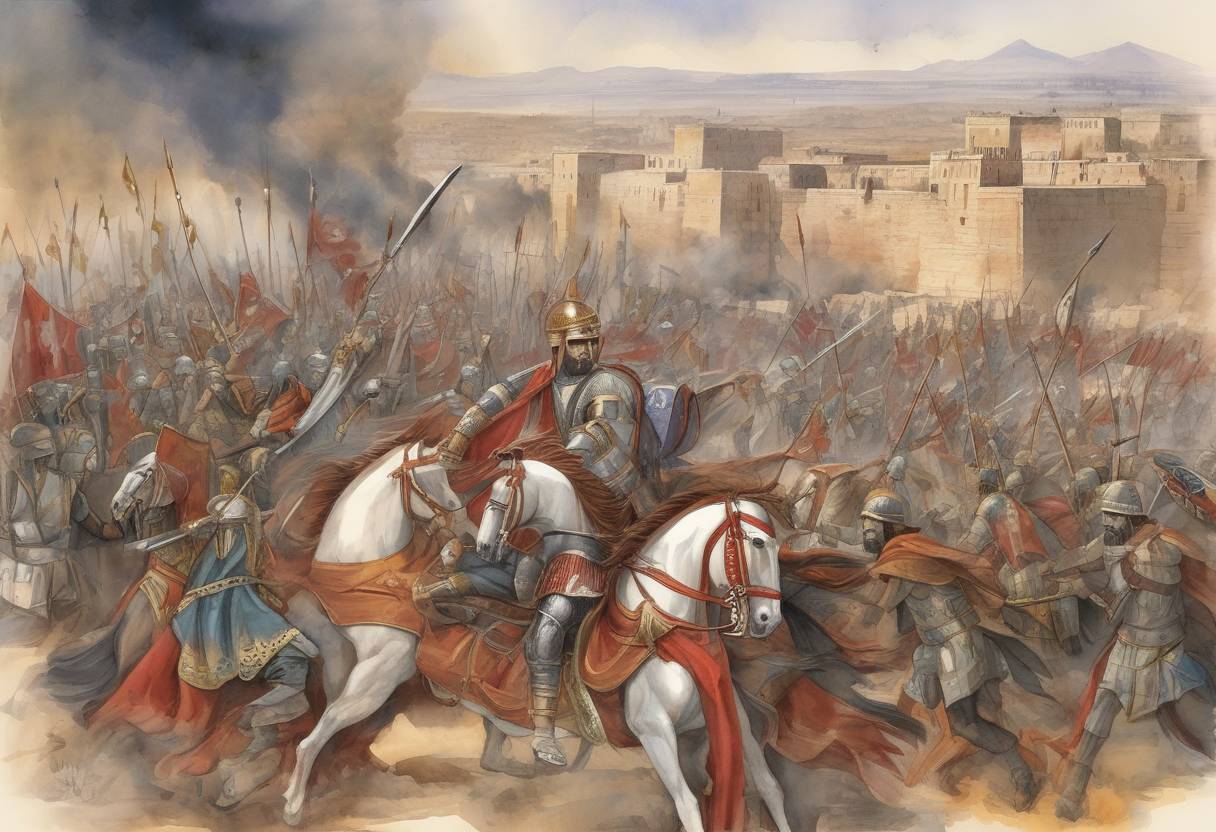
The Battle of Andrassos, fought on November 8, 960, was a pivotal engagement between the Byzantine Empire and the Hamdanid Emirate of Aleppo. This battle was part of the protracted Byzantine-Arab Wars, which saw numerous confrontations over control of territories in the eastern Mediterranean and Near East.
The Byzantine Empire, during the 10th century, was in a phase of military resurgence and territorial expansion. Under the leadership of the Macedonian dynasty, the Byzantines sought to reclaim lands lost to Arab conquests in previous centuries. The Hamdanid Emirate of Aleppo, led by the formidable Sayf al-Dawla, was one of the principal Muslim powers in the region, frequently engaging in raids and military campaigns against Byzantine territories.
Sayf al-Dawla had been a persistent adversary, launching numerous incursions into Byzantine lands. His campaigns were characterized by swift cavalry raids that aimed to destabilize Byzantine control and plunder resources.
The Byzantine forces were commanded by Leo Phokas the Younger, a skilled general and member of the influential Phokas family. Leo Phokas devised a strategic plan to counter the Hamdanid raids. He set a trap for Sayf al-Dawla’s forces in the mountainous region of Andrassos, located in modern-day Turkey.
On November 8, 960, as Sayf al-Dawla’s army advanced through the narrow passes of Andrassos, they were ambushed by the Byzantine forces. The terrain played a crucial role in the Byzantine strategy, as the narrow passes limited the maneuverability of the Hamdanid cavalry, which was their main strength. The Byzantines, well-prepared and strategically positioned, launched a surprise attack that overwhelmed the Hamdanid forces.
The Battle of Andrassos resulted in a decisive victory for the Byzantine Empire. Sayf al-Dawla’s army suffered significant losses, and the defeat marked a turning point in the Byzantine-Arab Wars. This victory not only secured the Byzantine eastern frontier but also bolstered the empire’s military reputation.
The success at Andrassos allowed the Byzantines to consolidate their control over the region and paved the way for further campaigns into Arab-held territories. It also weakened the Hamdanid Emirate, diminishing its capacity to launch future raids against Byzantine lands.
In the broader historical context, the Battle of Andrassos exemplified the Byzantine military’s strategic acumen and adaptability, contributing to the empire’s resurgence during the 10th century. This period of Byzantine strength and expansion would continue under subsequent emperors, further stabilizing and extending the empire’s borders.
Source: en.wikipedia.org