The Edict of Nantes: A Milestone in Religious Tolerance
1600 · Paris, France
Henry IV of France issued the Edict of Nantes, which granted a measure of religious freedom to Huguenots.
January 17, 1562
The Edict of Saint-Germain was issued, granting limited toleration to the Huguenots in France.
Saint-Germain-en-Laye, France | French Monarchy
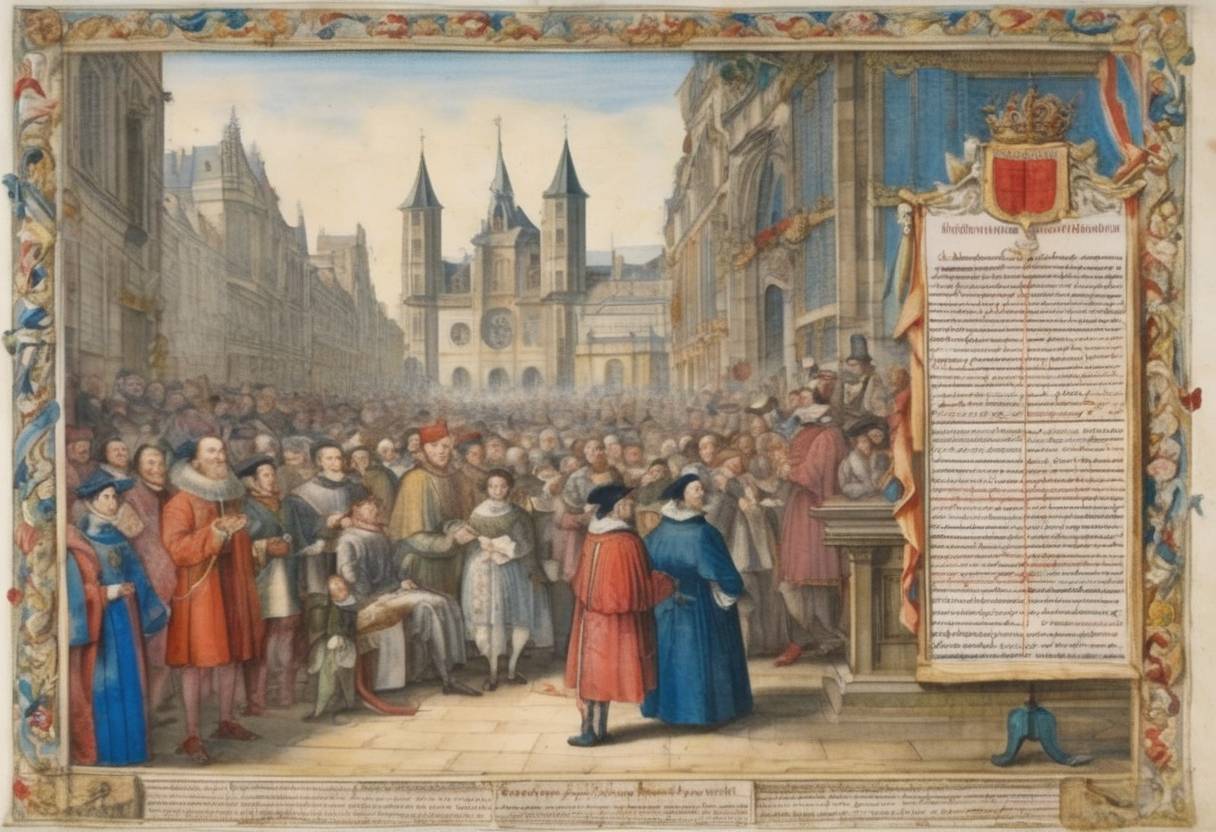
The Edict of Saint-Germain, issued on January 17, 1562, was a significant decree in the history of France, marking a pivotal moment in the French Wars of Religion. This edict granted limited toleration to the Huguenots, the French Protestants, amidst a period of intense religious conflict between Catholics and Protestants.
During the 16th century, France was embroiled in religious turmoil as Protestantism, particularly Calvinism, gained followers. The Huguenots, as French Protestants were known, faced severe persecution from the Catholic majority. The tensions between these religious groups often erupted into violence, leading to a series of conflicts known as the French Wars of Religion, which spanned from 1562 to 1598.
The Edict of Saint-Germain, also known as the Edict of January, was an attempt by the French crown to quell the rising tensions and prevent further bloodshed. Issued by Catherine de’ Medici, the regent for her son King Charles IX, the edict sought to provide a temporary solution to the religious strife. Its main provisions included:
Despite its intentions, the Edict of Saint-Germain failed to establish lasting peace. It was met with resistance from staunch Catholics who viewed it as too lenient, leading to further unrest. The edict’s limitations and the ongoing hostilities eventually culminated in the outbreak of the first of the French Wars of Religion later that year, beginning with the Massacre of Vassy in March 1562.
The edict’s issuance was a precursor to subsequent attempts at religious tolerance, including the more famous Edict of Nantes in 1598, which granted broader rights to the Huguenots and brought temporary peace to France.
The Edict of Saint-Germain is significant as it represents one of the early efforts by a European state to manage religious diversity through legal means. It highlights the complexities of religious coexistence in early modern Europe and the challenges faced by rulers in balancing the demands of different religious groups. The edict’s legacy is a testament to the long and arduous path towards religious tolerance and the eventual secularization of European states.
Source: en.wikipedia.org