The Signing of the Anglo-Irish Treaty
1921 · London, United Kingdom
The Anglo-Irish Treaty was signed, ending the Irish War of Independence and establishing the Irish Free State as a self-governing dominion within the British Empire.
September 14, 1752
The British Empire adopts the Gregorian calendar, skipping 11 days (September 2 was followed by September 14).
London, United Kingdom | British Government
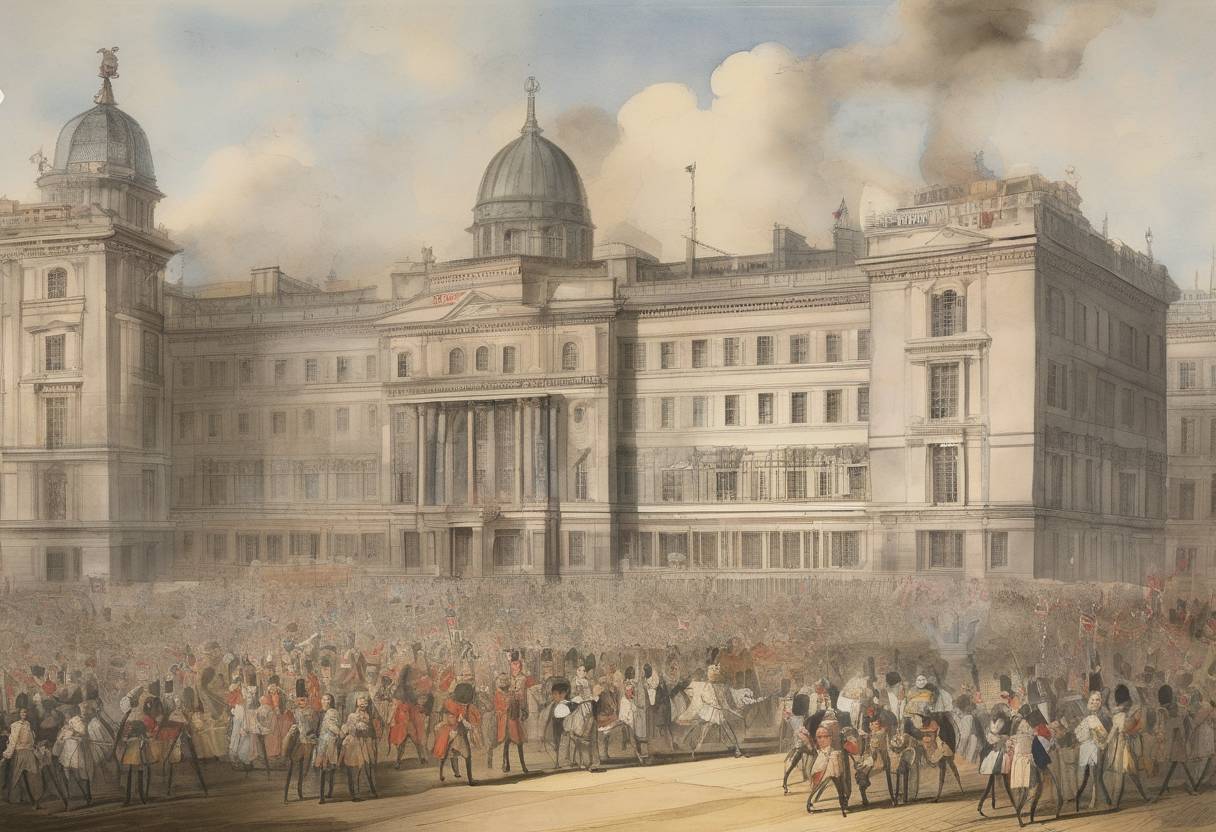
On September 14, 1752, the British Empire officially adopted the Gregorian calendar, a significant reform that aligned its dating system with much of Western Europe. This transition involved skipping 11 days, as September 2, 1752, was immediately followed by September 14, 1752. This change was part of a broader effort to correct inaccuracies in the previously used Julian calendar.
Julian Calendar: Introduced by Julius Caesar in 45 BCE, the Julian calendar was based on a 365.25-day year, with a leap year every four years. Over centuries, this system accumulated errors because the actual solar year is approximately 365.2425 days long.
Gregorian Reform: By the 16th century, the Julian calendar was out of sync with the solar year by about 10 days. To address this, Pope Gregory XIII introduced the Gregorian calendar in 1582. This reform adjusted the leap year rule and realigned the calendar with the equinoxes.
Initial Adoption: Catholic countries such as Spain, Portugal, and Italy quickly adopted the Gregorian calendar. However, Protestant and Orthodox countries were slower to make the change due to religious and political resistance.
Calendar (New Style) Act 1750: The British Parliament passed this act to adopt the Gregorian calendar. It stipulated that the day after September 2, 1752, would be September 14, 1752, effectively “losing” 11 days to correct the calendar drift.
Leap Year Adjustment: The Act also adjusted the rules for leap years, aligning them with the Gregorian system, which omitted leap years in century years not divisible by 400.
Public Reaction: The change was met with some confusion and resistance. There are apocryphal stories of riots demanding the return of the “lost” 11 days, though these are likely exaggerated.
Economic and Social Effects: The calendar reform affected various aspects of daily life, including legal contracts, agricultural schedules, and religious observances.
Global Synchronization: The adoption of the Gregorian calendar by the British Empire facilitated international trade and communication, as it brought Britain in line with most of Europe and its colonies.
Wider Adoption: Over time, other countries also transitioned to the Gregorian calendar. Russia and Greece were among the last European countries to adopt it in the early 20th century.
Legacy: Today, the Gregorian calendar is the most widely used civil calendar worldwide, underscoring the lasting impact of this 18th-century reform.
The adoption of the Gregorian calendar by the British Empire marked a crucial step in the standardization of timekeeping practices, reflecting broader trends of scientific and cultural synchronization during the Age of Enlightenment.
Source: www.history.com