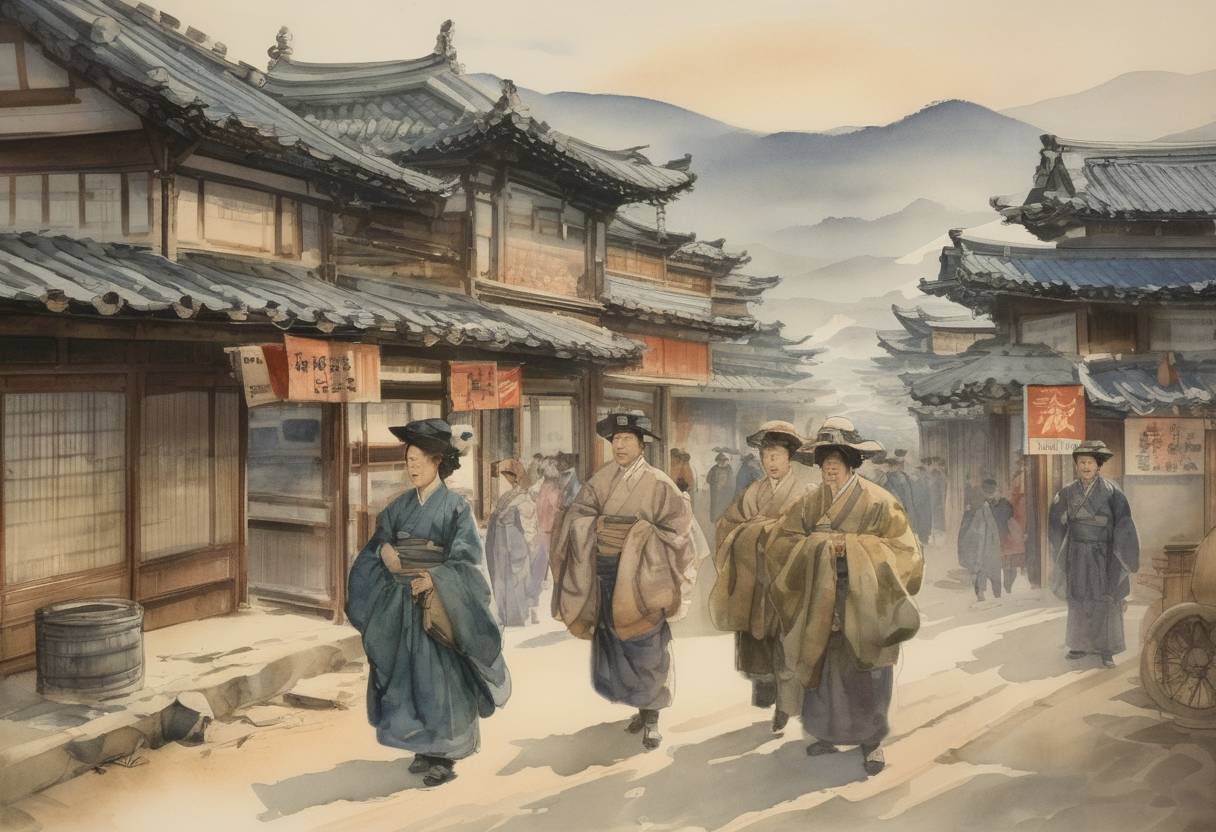
Annexation of Korea by Japan: August 22, 1910
On August 22, 1910, the Japan-Korea Annexation Treaty was signed, marking the official annexation of Korea by Japan. This event initiated a period of Japanese rule over Korea that lasted until the end of World War II in 1945. The annexation was a culmination of Japan’s increasing influence over Korea, which had been growing since the late 19th century.
Historical Context
Prelude to Annexation
- Treaty of Ganghwa (1876): Japan’s influence in Korea began with the Treaty of Ganghwa, which forced Korea to open up to Japanese trade and marked the start of Japanese intervention in Korean affairs.
- Sino-Japanese War (1894-1895): Japan’s victory over China in the Sino-Japanese War further increased its influence in Korea, leading to the Treaty of Shimonoseki, which recognized Korea’s independence from China but effectively placed it under Japanese influence.
- Russo-Japanese War (1904-1905): Japan’s victory over Russia further solidified its dominance in Korea. The subsequent Treaty of Portsmouth granted Japan control over Korea’s foreign affairs.
Path to Annexation
- Protectorate Status (1905): Following the Russo-Japanese War, Korea was declared a Japanese protectorate through the Eulsa Treaty, which was signed under duress and without the consent of Emperor Gojong of Korea.
- Dissolution of the Korean Empire (1907): In 1907, Emperor Gojong was forced to abdicate, and his successor, Emperor Sunjong, had little power. Japan further tightened its control by disbanding the Korean army and suppressing resistance.
The Annexation Treaty
- Signing of the Treaty: The Japan-Korea Annexation Treaty was signed by representatives of both nations, though under significant coercion. The treaty was not ratified by the Korean Emperor, raising questions about its legitimacy.
- Terms of the Treaty: The treaty effectively dissolved the Korean Empire, transferring all sovereign powers to Japan. It marked the beginning of direct Japanese governance over Korea.
Japanese Rule in Korea (1910-1945)
- Cultural Suppression: The Japanese colonial government implemented policies aimed at assimilating Koreans, including the suppression of Korean culture, language, and identity.
- Economic Exploitation: Japan exploited Korea’s natural resources and labor for its own economic benefit, leading to significant changes in Korean society and economy.
- Resistance and Independence Movements: Throughout the period of Japanese rule, there were numerous uprisings and movements advocating for Korean independence, most notably the March 1st Movement in 1919.
Aftermath and Historical Significance
- End of Japanese Rule: Japanese rule in Korea ended with Japan’s defeat in World War II in 1945. Korea was subsequently divided into two zones of occupation by the United States and the Soviet Union, leading to the eventual establishment of North and South Korea.
- Legacy: The period of Japanese rule left a lasting impact on Korea, influencing its political, economic, and cultural landscape. The annexation and subsequent colonial rule remain sensitive and significant topics in Korean-Japanese relations today.
The annexation of Korea by Japan in 1910 was a pivotal moment in East Asian history, setting the stage for significant geopolitical changes in the region throughout the 20th century.