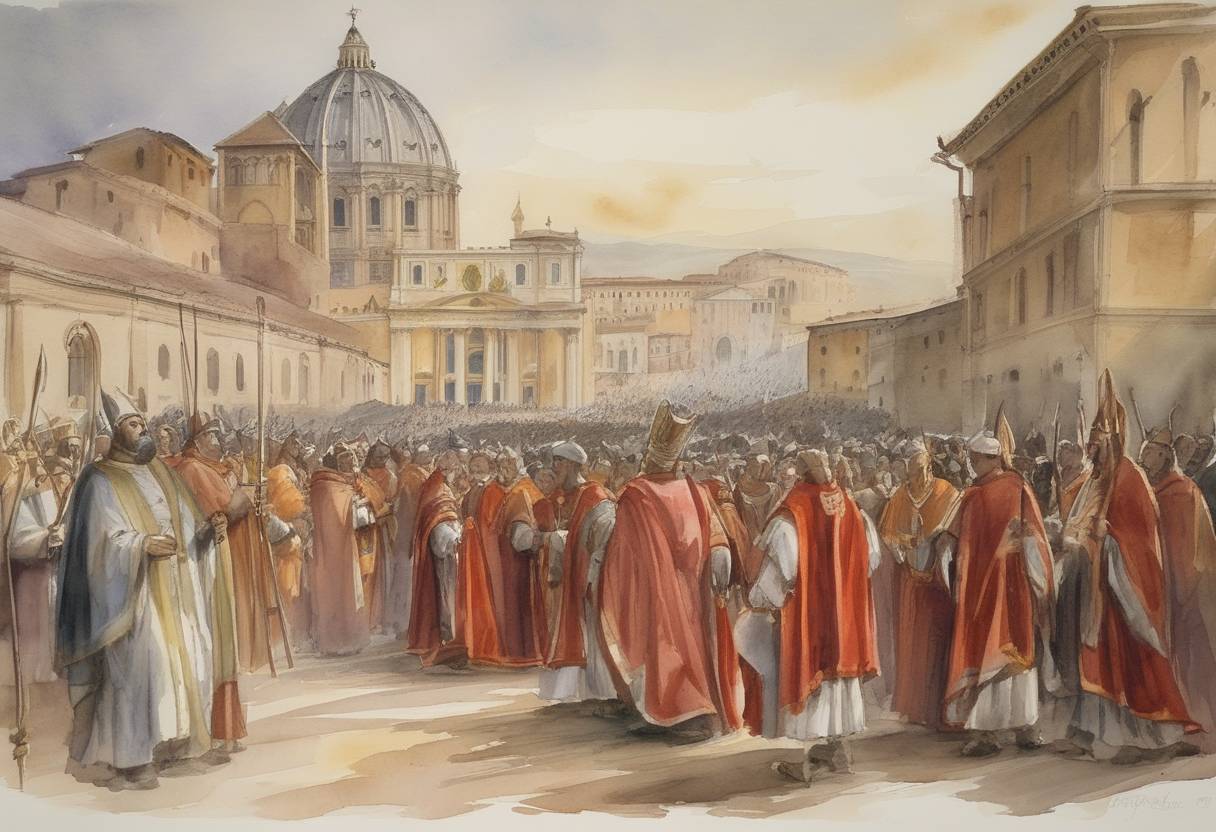
Death of Pope Honorius III and Subsequent Papal Transition
Overview
On November 30, 1227, Pope Honorius III passed away, marking the end of a papacy that began in 1216. Honorius III, born Cencio Savelli, was elected pope following the death of Pope Innocent III. His tenure was characterized by efforts to sustain the momentum of the Fifth Crusade and maintain Church reform.
Context Leading to His Papacy
Upon his election, Pope Honorius III focused on the consolidation of papal authority and the bolstering of religious structures throughout Europe. His papacy is noted for its emphasis on diplomatic missions and the enforcement of Church doctrine. One of his significant concerns was the reconquest of the Holy Land, picking up where Innocent III left off with the Crusader efforts.
Key Contributions and Challenges
During his reign, Honorius III worked extensively on:
- The Fifth Crusade: Despite several setbacks, Honorius was steadfast in advocating for Crusader efforts, ultimately resulting in mixed outcomes after his death.
- Monastic Orders: He endorsed and approved the Dominican and Franciscan Orders, understanding their potential to spread Christian teachings and influence.
- Relations with European Monarchs: Known for his negotiating skills, Honorius maintained relatively stable relationships with the monarchs of Europe to promote the Church’s aims.
Papal Succession
His demise on November 30, 1227, triggered a papal conclave required to elect his successor. The conclave eventually elected Cardinal Ugolino di Conti, who took the name Pope Gregory IX in March 1227. Gregory IX, Honorius’s immediate successor, is recognized for canonizing Francis of Assisi and continuing the policies of Honorius regarding the Crusades and Church reform.
Historical Significance
Pope Honorius III’s papacy is marked by his dedication to ecclesiastical reform and ambition in promoting the Crusades, influencing his successor’s policies. His approval of the monastic orders like the Dominicans and Franciscans significantly impacted the theological landscapes in Europe in the ensuing centuries.