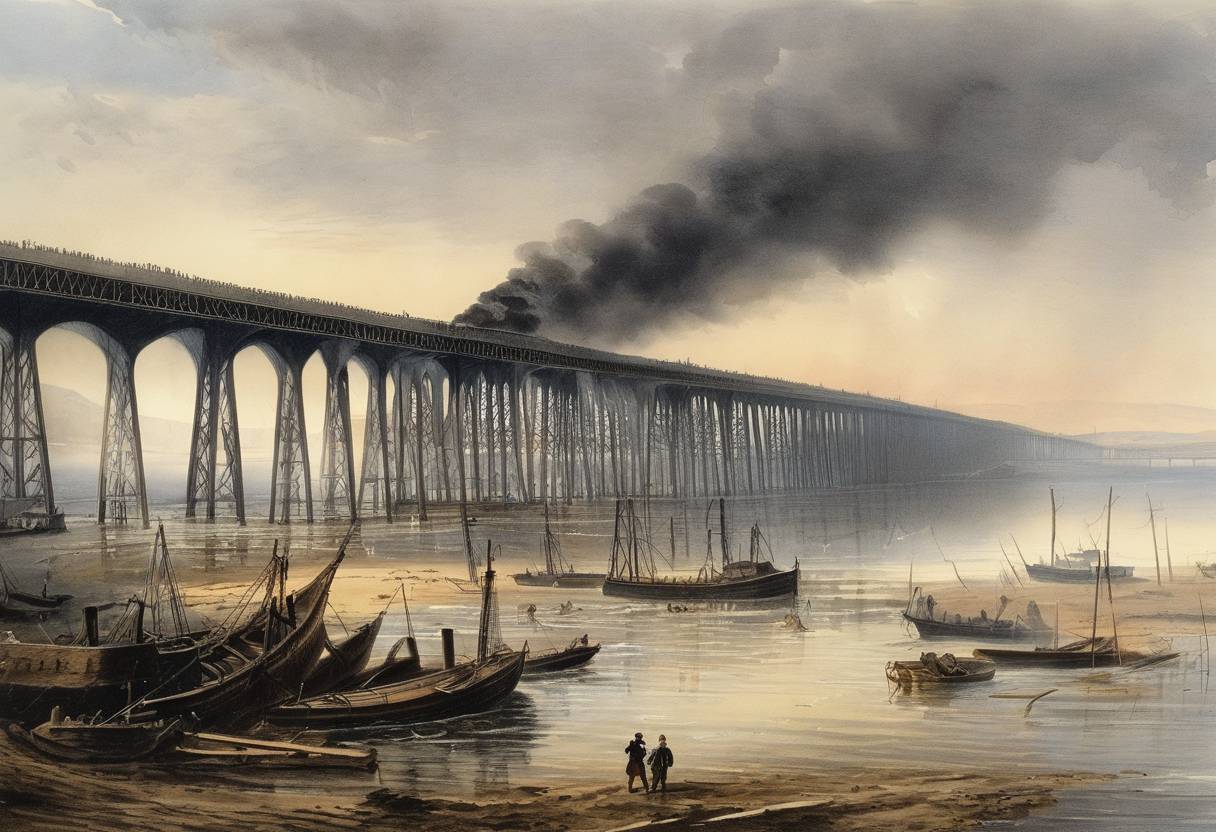
The Tay Bridge Disaster: December 28, 1879
The Tay Bridge Disaster is remembered as one of the most catastrophic engineering failures of the 19th century. On the evening of December 28, 1879, the newly completed Tay Rail Bridge in Scotland collapsed under the weight of a passing train during a severe storm, resulting in the deaths of all those aboard.
Background
The Tay Bridge was constructed to connect the city of Dundee with the southern bank of the Firth of Tay, facilitating quicker and more efficient rail travel across the region. Designed by Sir Thomas Bouch, the bridge stretched nearly two miles and, at its time, was considered an engineering marvel, being the longest railway bridge in the world.
The Disaster
On the fateful evening, a fierce storm was sweeping through the area with exceptionally strong winds. At approximately 7:15 PM, as the North British Railway’s 5:20 PM train from Burntisland to Dundee was crossing the bridge, the structure gave way. The central spans of the bridge collapsed into the icy waters below, taking with them the train and its passengers.
Casualties
The exact number of fatalities remains uncertain due to incomplete records and missing passengers, but it’s estimated that approximately 75 people lost their lives in the disaster. The tragic event not only claimed human lives but also sent shockwaves through the engineering community and the public.
Investigations and Consequences
An immediate investigation followed the disaster, leading to the determination that the bridge had been inadequately designed to withstand high winds. It was also found that the metal used was of poor quality, and there were significant issues with the construction materials and methods. Sir Thomas Bouch’s reputation was irreversibly damaged, and he died a year later, reportedly heartbroken by the disaster.
Legacy
The remains of the original bridge were eventually replaced by a second, sturdier structure that opened in 1887. The disaster prompted widespread reforms in engineering standards and bridge-building practices, emphasizing the need for rigorous testing and safety protocols. The Tay Bridge Disaster remains a poignant reminder of the potential consequences of engineering oversight and the imperative for safety in construction projects.