The Holocaust: The Tragic Murder of 800 Romani Children at Auschwitz on October 10, 1944
1944 · Auschwitz, Nazi-occupied Poland
The Holocaust: 800 Romani children were murdered at the Auschwitz concentration camp.
October 7, 1944
The uprising at the Auschwitz-Birkenau extermination camp occurs as Jewish prisoners attempt to destroy the crematoriums.
Auschwitz, Nazi-occupied Poland | Jewish prisoners
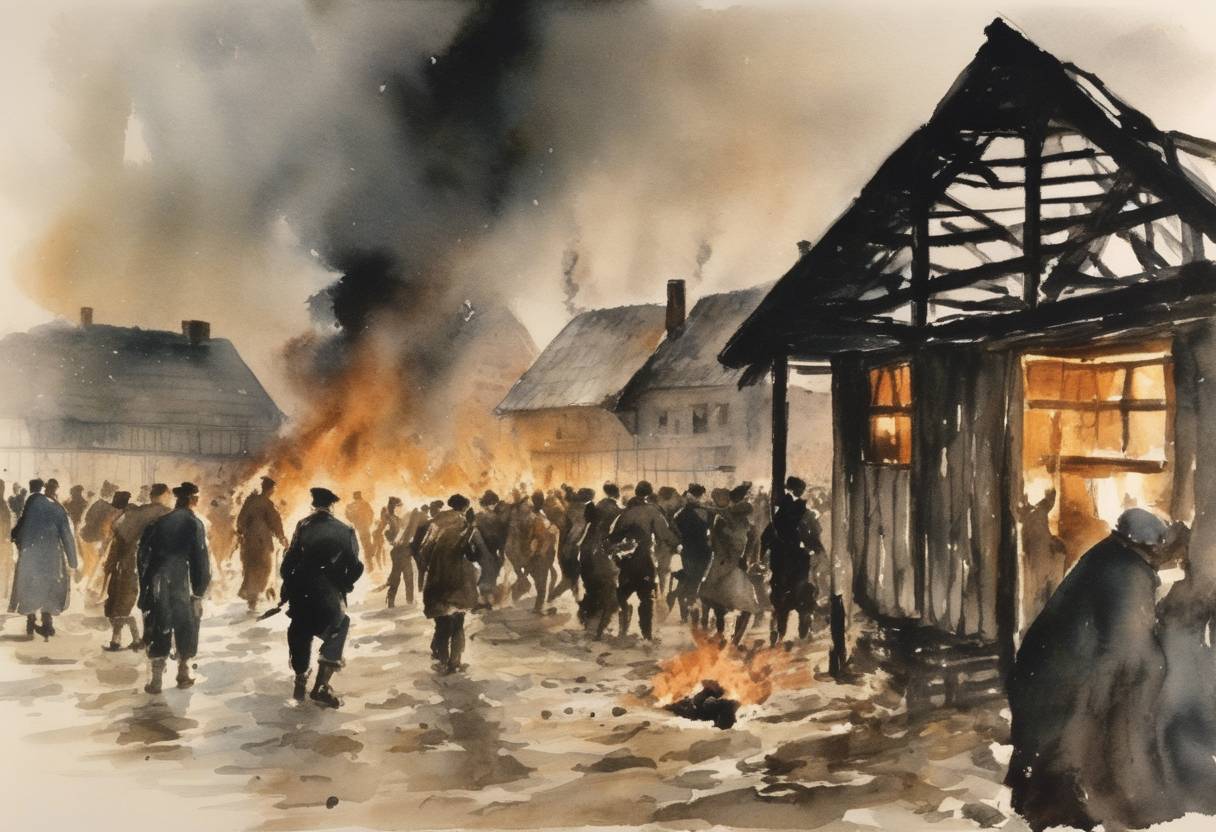
On October 7, 1944, a significant act of resistance occurred at the Auschwitz-Birkenau extermination camp, one of the most infamous Nazi concentration and extermination camps during World War II. This event was a desperate yet courageous revolt spearheaded by Jewish prisoners working in the Sonderkommando units.
The Sonderkommando were units composed primarily of Jewish prisoners forced to work in the crematoria of the camp, disposing of the bodies of fellow prisoners who had been murdered in the gas chambers. Aware that they were likely to be killed soon to erase witnesses of the atrocities, these prisoners learned of their grim fate from a variety of sources, including intercepted communications and accounts from escaped inmates.
In response to this knowledge, the Sonderkommando at Auschwitz planned a rebellion. They had been gathering small amounts of gunpowder smuggled in over time by young Jewish women working in a nearby munitions factory, including individuals like Roza Robota, Ala Gertner, Regina Safirsztain, and Estera Wajcblum.
The culmination of these plans came on October 7, when an unexpected liquidation of the Sonderkommando was announced, hastening their planned rebellion. In a sudden and coordinated uprising, the prisoners rose against the SS guards, armed with small weapons and the resolve born from their desperate situation.
The revolt involved detonating an explosive to severely damage Crematorium IV, temporarily disrupting the camp’s operations. The prisoners attacked their Nazi captors with makeshift weapons, including stones, axes, and a few firearms they had managed to acquire. Despite their valiant efforts, the uprising was ultimately quelled by the heavily armed and better-equipped SS guards. Outnumbered and outgunned, approximately 250 prisoners were killed during the fighting or captured and subsequently executed.
The Nazis quickly suppressed the uprising and executed several hundred additional prisoners in retribution. The young women from the munitions factory who had supplied the gunpowder were brutally tortured and later executed in January 1945.
Although the revolt did not induce a widespread liberation or halt the atrocities, it stands as a powerful symbol of resistance against overwhelming oppression. It highlighted the extraordinary courage and resilience of the human spirit in facing systematic dehumanization and imminent death.
The rebellion at Auschwitz-Birkenau underscores the broader narrative of resistance within the Holocaust, where even in the darkest moments, acts of defiance illuminated the unyielding determination of its victims to strike against their oppressors and affirm their dignity in the face of indescribable brutality.
Source: en.wikipedia.org