Admission of The Bahamas, East Germany, and West Germany to the United Nations on September 18, 1973
1973 · New York City, United States
The Bahamas, East Germany, and West Germany are admitted to the United Nations.
September 30, 1977
The final permanent member of the UN Security Council, Vietnam, begins voting following its admission earlier that year.
New York City, United States | United Nations
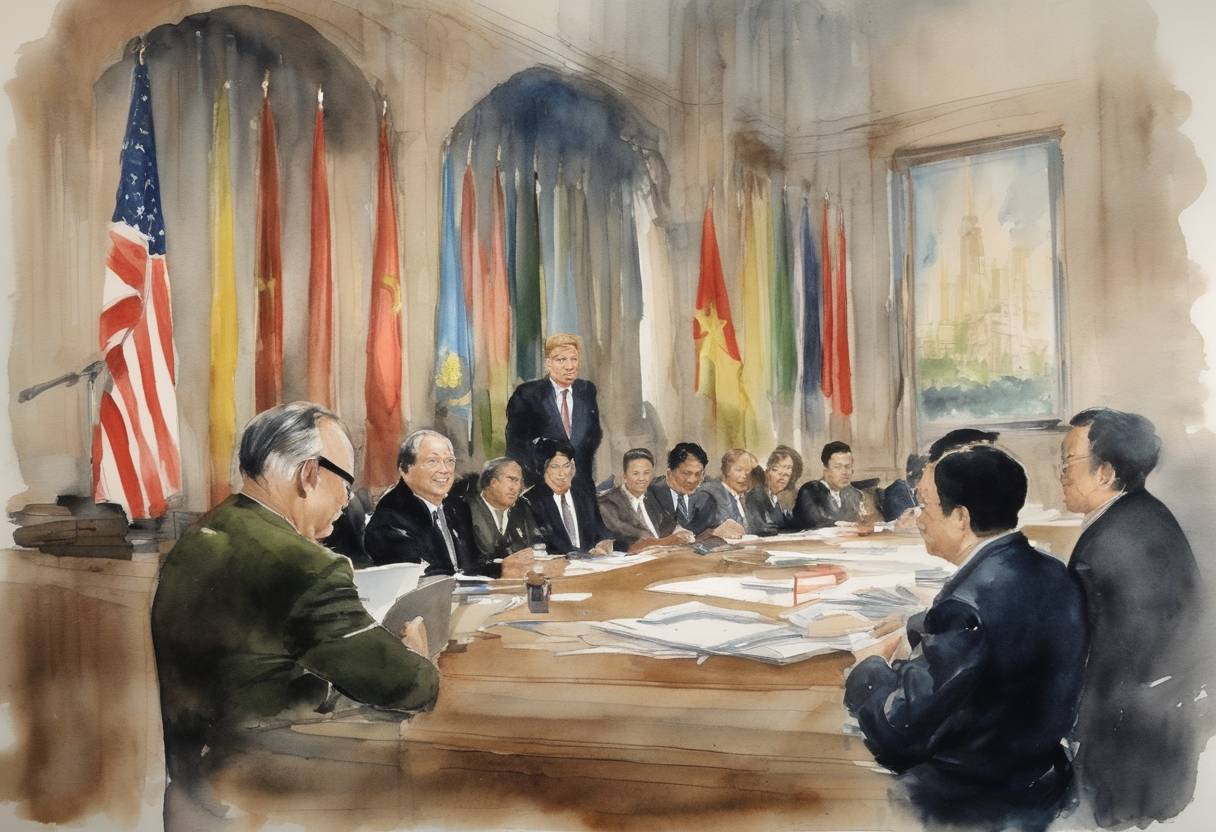
On September 30, 1977, Vietnam participated in its first voting session as a member of the United Nations (UN) following its admission earlier that year. This marked a significant moment in international diplomacy as Vietnam became part of the global community during a complex period of post-war rebuilding and geopolitical realignment.
Vietnam’s journey to UN membership began in earnest after the conclusion of the Vietnam War in 1975, which saw the reunification of North and South Vietnam under a communist government. The admission process reflected the Cold War tensions of the era, as the UN membership represented a diplomatic victory for communist states within the organization.
Efforts to admit Vietnam were initially met with resistance from some Western countries due to political and ideological reasons. However, global dynamics were gradually changing during the 1970s, allowing for greater international cooperation and recognition of nations previously isolated due to ideological divisions.
Vietnam was officially admitted to the UN on September 20, 1977, during the 32nd session of the UN General Assembly. Its acceptance into the organization was part of a larger push for more inclusivity within the UN, recognizing newly independent countries and those emerging from conflict.
Upon joining, Vietnam became an active participant in the UN, contributing to discussions and decisions affecting international peace, security, and development. Its participation marked a new chapter for Vietnam on the global stage, emphasizing its commitment to international cooperation and peace.
Vietnam’s membership in the UN held broader implications beyond its own borders. It was a step towards normalizing relations with the international community and enhancing its diplomatic influence. This period also saw Vietnam strengthening its relationships with other socialist countries while gradually reaching out to non-communist states.
Vietnam’s inclusion in the UN represented a meaningful shift towards inclusivity and a reflection of the complex geopolitical landscape of the time. It highlighted the evolving nature of international relations as countries sought to reconcile differences through dialogue and multilateral engagement.
The September 30th voting session was not just a procedural event; it symbolized Vietnam’s integration into the world’s diplomatic framework, underscoring the importance of dialogue and cooperation in addressing global challenges.
Source: www.un.org