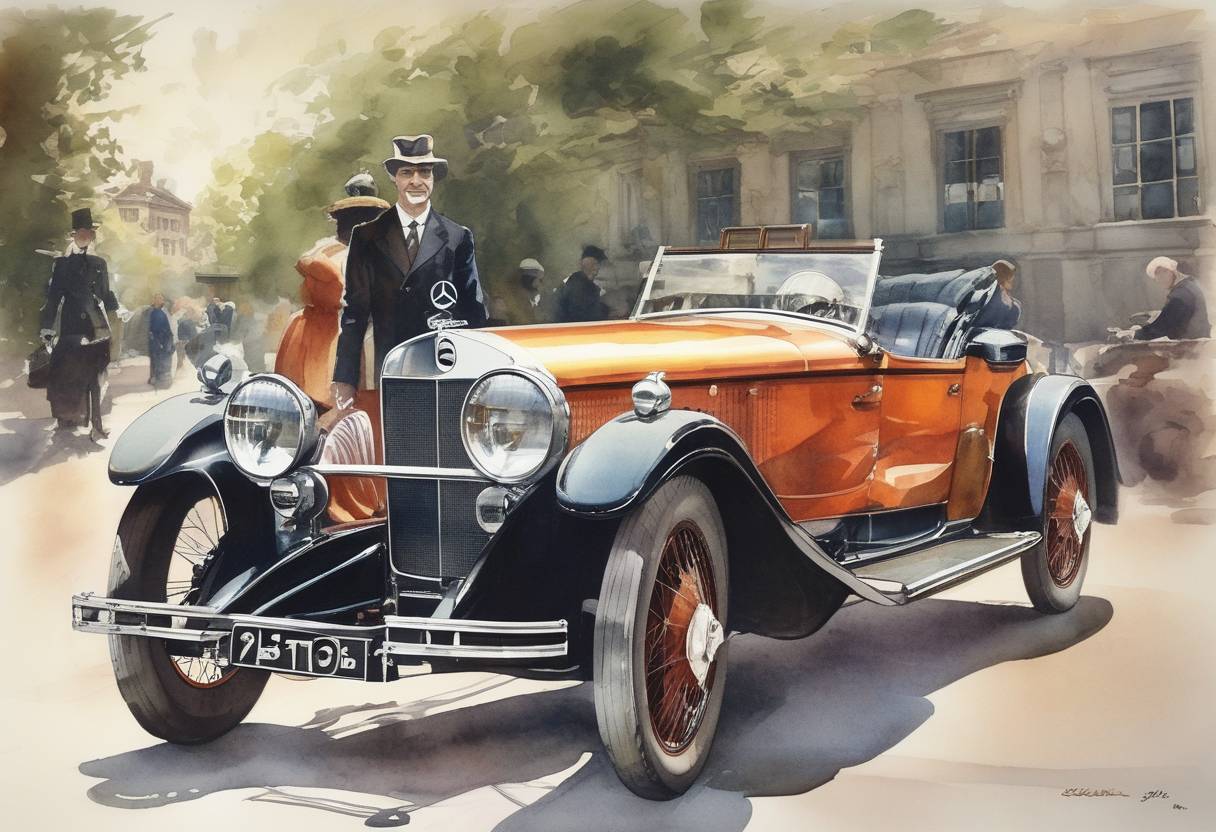
On June 28, 1926, a significant event in the history of the automotive industry took place: the merger of two pioneering companies, Benz & Cie and Daimler-Motoren-Gesellschaft (DMG), resulting in the formation of Mercedes-Benz. This merger marked the creation of one of the most renowned automobile manufacturers in the world, known for its luxury vehicles and engineering excellence.
Background
Karl Benz and Benz & Cie
- Karl Benz: A visionary engineer, Karl Benz is credited with inventing the first true automobile powered by an internal combustion engine. In 1885, he built the Benz Patent-Motorwagen, which is considered the first automobile designed to generate its own power.
- Benz & Cie: Founded in 1883, Benz & Cie quickly became one of the largest automobile manufacturers in the world by the early 20th century. The company was known for its innovation and quality in automotive engineering.
Gottlieb Daimler and Daimler-Motoren-Gesellschaft (DMG)
- Gottlieb Daimler: Alongside his partner Wilhelm Maybach, Daimler was instrumental in developing the high-speed petrol engine. His work laid the groundwork for the modern automotive engine.
- Daimler-Motoren-Gesellschaft (DMG): Established in 1890, DMG was a leader in producing engines and vehicles. The company gained fame for its Mercedes brand, named after the daughter of Emil Jellinek, an influential automobile entrepreneur and diplomat.
The Merger
The merger of Benz & Cie and DMG was driven by economic necessity and the desire to consolidate resources in the face of post-World War I economic challenges. The automotive industry was undergoing rapid changes, and competition was intensifying. By joining forces, the two companies aimed to strengthen their market position and leverage their combined expertise in automotive technology.
- Formation of Mercedes-Benz: The new company was named Daimler-Benz AG, and its products were branded as Mercedes-Benz. This name combined the prestigious Mercedes brand from DMG with the Benz name, symbolizing the union of two automotive giants.
Significance and Legacy
- Innovation and Quality: Mercedes-Benz quickly became synonymous with luxury, innovation, and quality. The company continued to push the boundaries of automotive engineering, setting standards for safety, performance, and design.
- Global Influence: Over the decades, Mercedes-Benz has played a crucial role in shaping the global automotive industry. Its vehicles are celebrated for their engineering excellence and have become a status symbol worldwide.
- Continued Impact: Today, Mercedes-Benz remains a leader in the automotive industry, pioneering advancements in electric vehicles, autonomous driving technology, and sustainable mobility solutions.
The merger of Benz & Cie and DMG not only created a powerhouse in the automotive world but also laid the foundation for a brand that continues to influence and inspire the industry to this day.