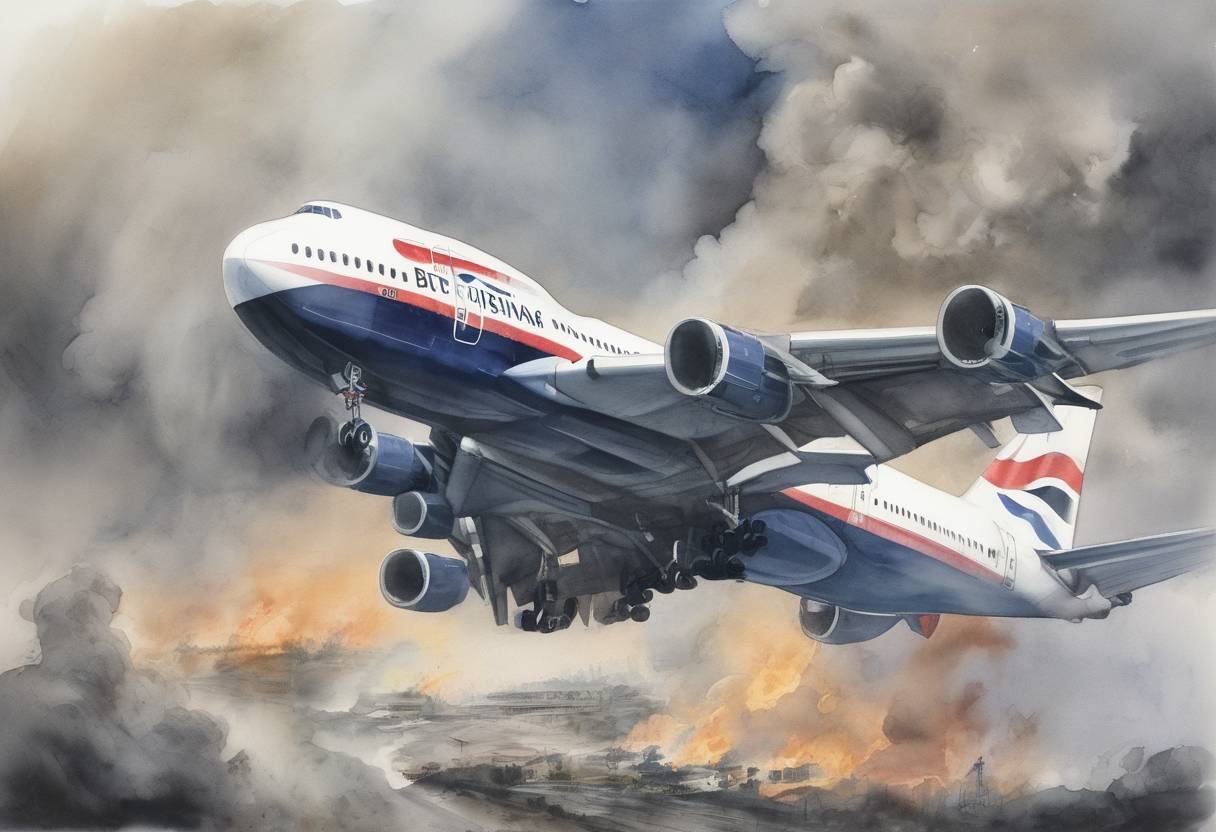
British Airways Flight 9 Incident - June 24, 1982
On June 24, 1982, British Airways Flight 9, also known as the “Jakarta Incident,” experienced a critical in-flight emergency when it encountered a volcanic ash cloud. This incident is notable for the temporary failure of all four engines of the Boeing 747 aircraft, which was en route from London Heathrow to Auckland, with several stopovers, including Kuala Lumpur and Perth.
Background
- Aircraft: The aircraft involved was a Boeing 747-236B, registered as G-BDXH, and was named “City of Edinburgh.”
- Flight Path: The flight was on a scheduled route from London to Auckland, with stopovers in Bombay, Kuala Lumpur, Perth, and Melbourne.
- Crew: The flight was under the command of Captain Eric Moody, with First Officer Roger Greaves and Flight Engineer Barry Townley-Freeman.
The Incident
- Volcanic Eruption: The incident occurred due to the eruption of Mount Galunggung in Indonesia. The volcano had been active, but the ash cloud was not detected by the aircraft’s weather radar.
- Engine Failure: At approximately 37,000 feet over the Indian Ocean, the aircraft entered the ash cloud. Volcanic ash caused all four engines to fail, resulting in a complete loss of thrust.
- Glide Descent: The crew initiated a glide descent from their cruising altitude, maintaining calm and professionalism. During this time, the cabin filled with smoke, and the exterior lights of the aircraft were obscured by the ash.
Resolution
- Restarting Engines: After descending to about 12,000 feet, the crew successfully restarted the engines. The ash had cooled sufficiently to allow the engines to reignite, although one engine failed again shortly after.
- Safe Landing: The aircraft diverted to Jakarta’s Halim Perdanakusuma International Airport, where it landed safely despite limited visibility and damage to the windscreen and engines.
Aftermath and Significance
- Investigation: The incident led to increased awareness of the dangers posed by volcanic ash to aviation. It highlighted the need for improved detection and reporting of volcanic activity.
- Safety Measures: As a result, aviation authorities and airlines developed better procedures for avoiding volcanic ash clouds, including more sophisticated radar technology and communication protocols.
- Legacy: The crew’s handling of the situation is often cited as an exemplary display of airmanship and crisis management. Captain Moody’s calm announcement to passengers, “Ladies and gentlemen, this is your captain speaking. We have a small problem. All four engines have stopped. We are doing our damnedest to get them going again. I trust you are not in too much distress,” has become legendary in aviation history.
The British Airways Flight 9 incident remains a significant case study in aviation safety, demonstrating the importance of preparedness and effective crew resource management in the face of unexpected challenges.