Overthrow of Michael V Kalaphates: December 11, 1041
1041 · Constantinople, Byzantine Empire (modern-day Istanbul, Turkey)
Michael V Kalaphates was overthrown as Byzantine Emperor following a popular uprising in Constantinople.
November 11, 1028
Although slightly beyond the year 1000, it is notable that on this date, future Byzantine Emperor Romanos III Argyros was married to Empress Zoe, marking a significant political alliance.
Constantinople, Byzantine Empire | Byzantine Empire
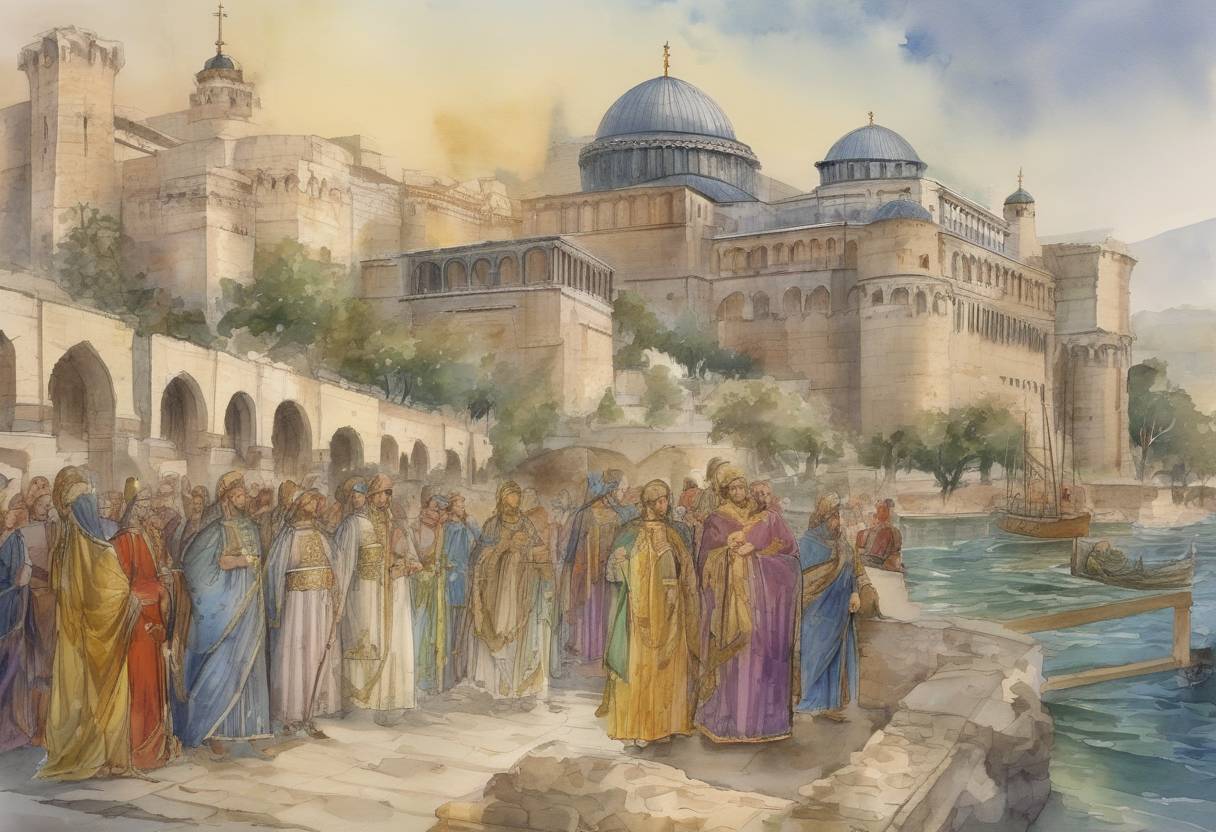
On November 11, 1028, a significant political marriage took place in the Byzantine Empire, marking a pivotal moment in its history. Romanos III Argyros, a distinguished nobleman and future Byzantine Emperor, was wed to Empress Zoe, the daughter of Emperor Constantine VIII. This union was not only a personal alliance but also a strategic political maneuver.
Byzantine Empire in the Early 11th Century: At this time, the Byzantine Empire was a dominant power in the Mediterranean, known for its rich culture and complex political landscape. The empire was ruled by the Macedonian dynasty, which had brought stability and prosperity.
Empress Zoe: Born around 978, Zoe was the second daughter of Emperor Constantine VIII. As the empire lacked a male heir, Zoe’s marriage was crucial for securing the dynasty’s continuation.
Romanos III Argyros: Romanos was a member of the influential Argyros family, which held significant power and influence within the empire. His marriage to Zoe was seen as a way to strengthen the ruling dynasty’s ties with the aristocracy.
Political Alliance: The marriage was orchestrated by Constantine VIII, who sought to ensure a smooth succession and maintain stability within the empire. By marrying Zoe to Romanos, Constantine aimed to consolidate power and secure the loyalty of the powerful Argyros family.
Ceremony and Significance: The wedding was a grand affair, reflecting the importance of the union. It symbolized the merging of two powerful factions within the Byzantine political sphere, aiming to fortify the empire’s leadership.
Romanos III’s Reign: Romanos III Argyros ascended to the throne shortly after the marriage, following Constantine VIII’s death in November 1028. His reign, however, was marked by challenges, including military defeats and economic difficulties.
Zoe’s Influence: Empress Zoe played a significant role in the political life of the empire. Despite her marriage to Romanos, she remained a central figure in Byzantine politics, later marrying two more emperors and ruling as empress in her own right.
Legacy: The marriage set the stage for a turbulent period in Byzantine history, characterized by political intrigue and power struggles. It highlighted the importance of strategic marriages in maintaining dynastic continuity and political stability.
In conclusion, the marriage of Romanos III Argyros and Empress Zoe on November 11, 1028, was a key event in Byzantine history, reflecting the intricate interplay of power, politics, and personal alliances that defined the empire’s leadership.
Source: en.wikipedia.org