Tiberius II Constantine Crowned as Byzantine Emperor
582 · Constantinople, Byzantine Empire
Tiberius II Constantine is crowned as the Byzantine Emperor, succeeding Justin II.
July 13, 0574
The Byzantine Emperor Justin II, suffering from mental illness, abdicates the throne in favor of his general, Tiberius II Constantine, who is crowned as co-emperor.
Constantinople, Byzantine Empire | Byzantine Empire
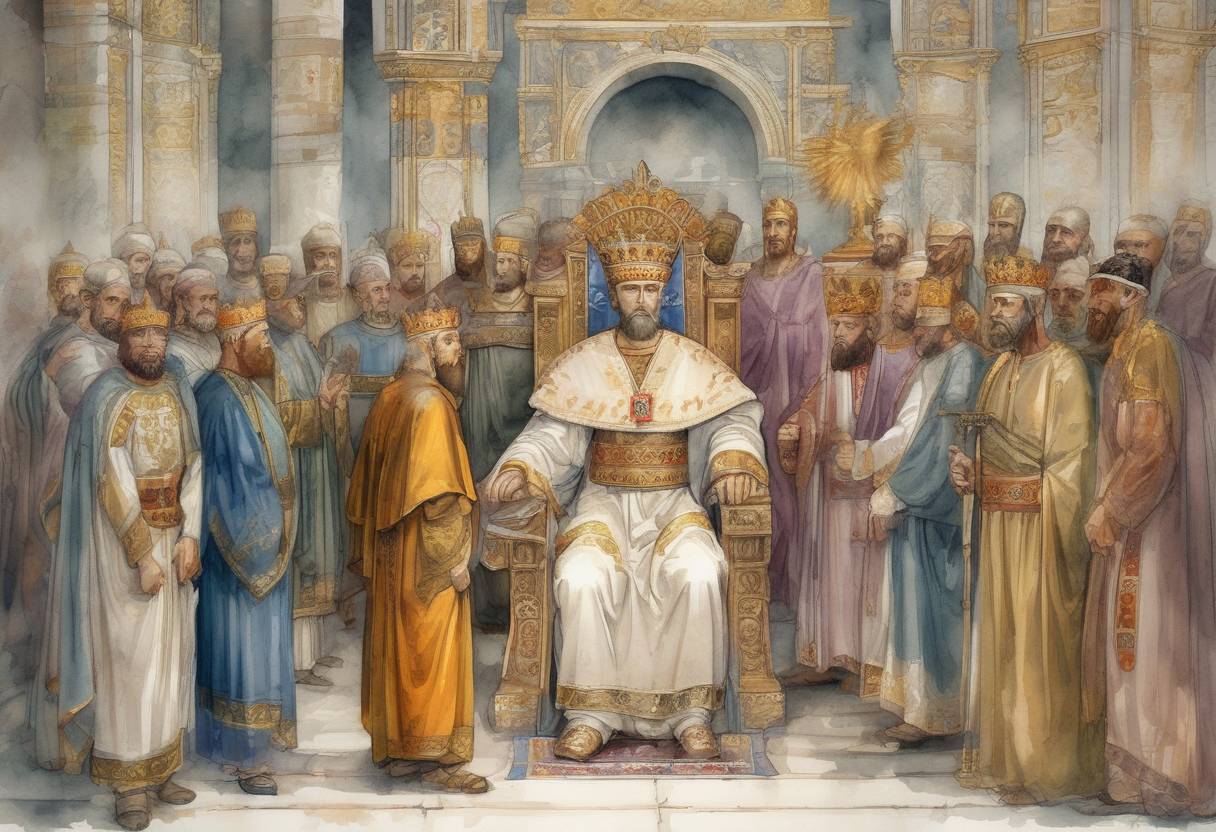
On July 13, 574, a significant transition occurred in the Byzantine Empire when Emperor Justin II, plagued by mental illness, abdicated the throne in favor of his general, Tiberius II Constantine. This event marked a pivotal moment in the Byzantine Empire’s history, reflecting both the challenges of leadership and the mechanisms of power transition in the empire.
Justin II ascended to the throne in 565, succeeding his uncle, Emperor Justinian I. His reign was initially marked by efforts to consolidate power and continue the policies of his predecessor. However, Justin II faced numerous challenges, including military pressures from the Lombards in Italy and the Persians in the East, as well as religious tensions within the empire.
As his reign progressed, Justin II began to exhibit signs of mental instability, which increasingly impaired his ability to govern effectively. Historical accounts suggest that his condition may have been exacerbated by the immense pressures of leadership and the empire’s ongoing conflicts.
Recognizing his deteriorating mental state and the need for stable governance, Justin II made the decision to abdicate. He appointed Tiberius II Constantine, a trusted general and capable administrator, as his co-emperor. This move was intended to ensure continuity and stability within the empire.
Tiberius II Constantine was crowned as co-emperor on July 13, 574. His appointment was a strategic decision, as he was well-regarded for his military prowess and administrative skills. Tiberius II’s leadership was expected to bring renewed vigor to the Byzantine administration and address the pressing issues facing the empire.
The abdication of Justin II and the rise of Tiberius II Constantine had several important implications:
Stabilization of Leadership: Tiberius II’s ascension helped stabilize the Byzantine leadership during a period of internal and external challenges. His reign saw efforts to strengthen the empire’s defenses and improve its financial situation.
Precedent for Power Transition: The peaceful transition of power set a precedent for future successions in the Byzantine Empire, demonstrating that abdication could be a viable option in times of crisis.
Legacy of Justin II: Despite his struggles, Justin II’s decision to abdicate in favor of a competent successor reflected a commitment to the welfare of the empire, a legacy that would be remembered in Byzantine history.
In summary, the abdication of Justin II and the crowning of Tiberius II Constantine on July 13, 574, was a crucial event that underscored the complexities of leadership and succession in the Byzantine Empire. It highlighted the importance of adaptability and strategic decision-making in maintaining the stability and continuity of imperial rule.
Source: en.wikipedia.org