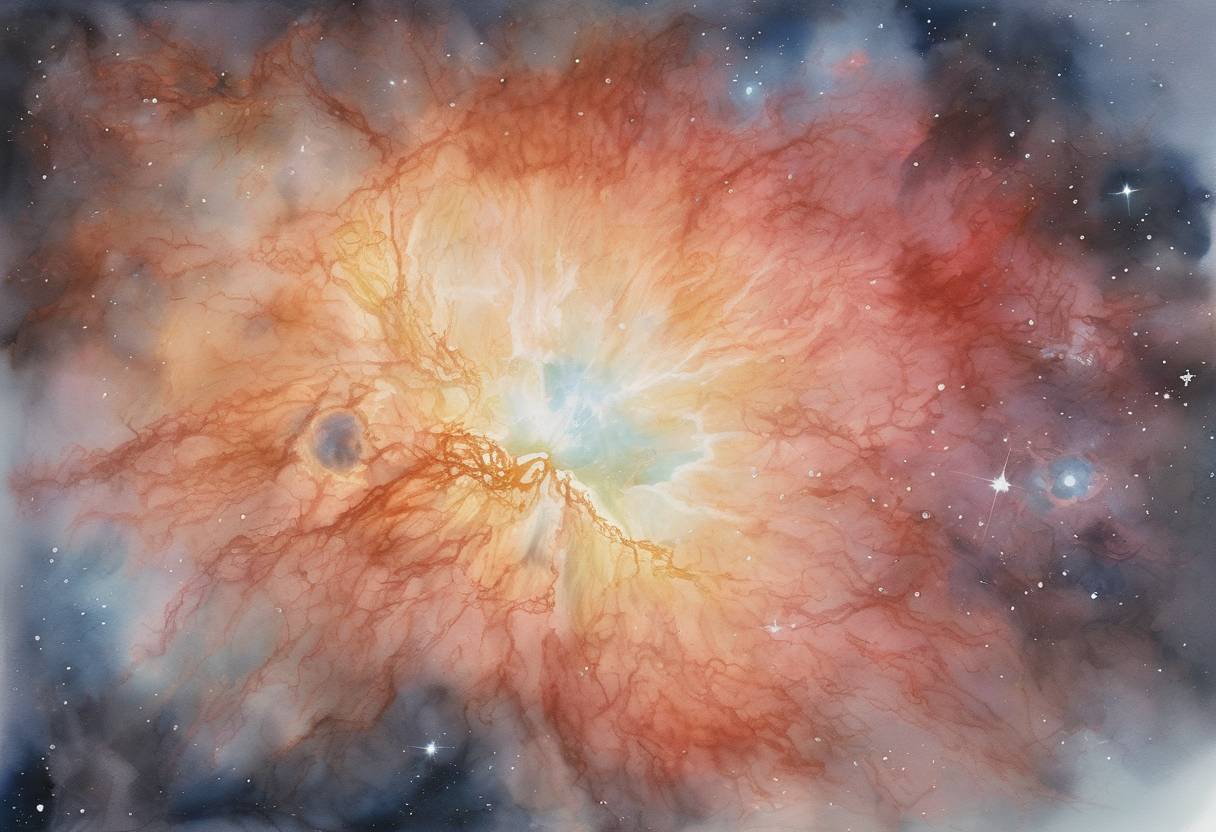
The Supernova SN 1054 and the Creation of the Crab Nebula
On July 4, 1054, Chinese astronomers documented a remarkable celestial event: the appearance of a supernova, now known as SN 1054. This supernova explosion was so bright that it was visible in daylight for 23 days and remained visible in the night sky for nearly two years. The remnants of this explosion eventually formed what we now call the Crab Nebula, a significant object of study in modern astronomy.
Historical Context
Observations by Chinese Astronomers
- Chinese Records: The supernova was meticulously recorded by Chinese astronomers, who referred to it as a “guest star.” These astronomers were part of a long tradition of sky watchers in China, who maintained detailed records of celestial events.
- Brightness and Duration: The supernova was noted for its extraordinary brightness, rivaling Venus, and its persistence in the sky, which was unusual for such phenomena.
Other Observations
- Global Observations: While Chinese records are the most detailed, there are also accounts from Japanese, Arab, and possibly Native American sources that suggest the event was observed across different cultures.
The Crab Nebula
- Remnants of SN 1054: The explosion of SN 1054 resulted in the formation of the Crab Nebula, located in the constellation Taurus. It is a supernova remnant and pulsar wind nebula.
- Structure: The nebula is characterized by its intricate filamentary structure and is one of the most studied objects in the sky due to its visibility and the wealth of information it provides about the life cycle of stars.
Modern Significance
- Astronomical Studies: The Crab Nebula has been crucial in advancing our understanding of supernovae, neutron stars, and pulsars. The central pulsar, a rapidly rotating neutron star, was discovered in 1968 and has been a key object in the study of these phenomena.
- Cultural Impact: The event and its remnants have had a lasting impact on both scientific inquiry and cultural interpretations of the cosmos.
Broader Historical Significance
- Advancements in Astronomy: The observation of SN 1054 and the subsequent study of the Crab Nebula have significantly contributed to the field of astronomy, particularly in understanding stellar evolution and the dynamics of supernovae.
- Cross-Cultural Observations: The event highlights the importance of cross-cultural astronomical observations and the shared human curiosity about the universe.
In summary, the supernova SN 1054 and the creation of the Crab Nebula represent a pivotal moment in astronomical history, illustrating the enduring human fascination with the stars and the profound impact of celestial events on scientific and cultural development.