Nikita Khrushchev Becomes Soviet Premier on March 27, 1958
1958 · Moscow, Soviet Union
Nikita Khrushchev became Soviet Premier, consolidating his power as both head of the Communist Party and the government.
April 3, 1922
Joseph Stalin became the first General Secretary of the Communist Party of the Soviet Union.
Moscow, Soviet Union | Communist Party of the Soviet Union
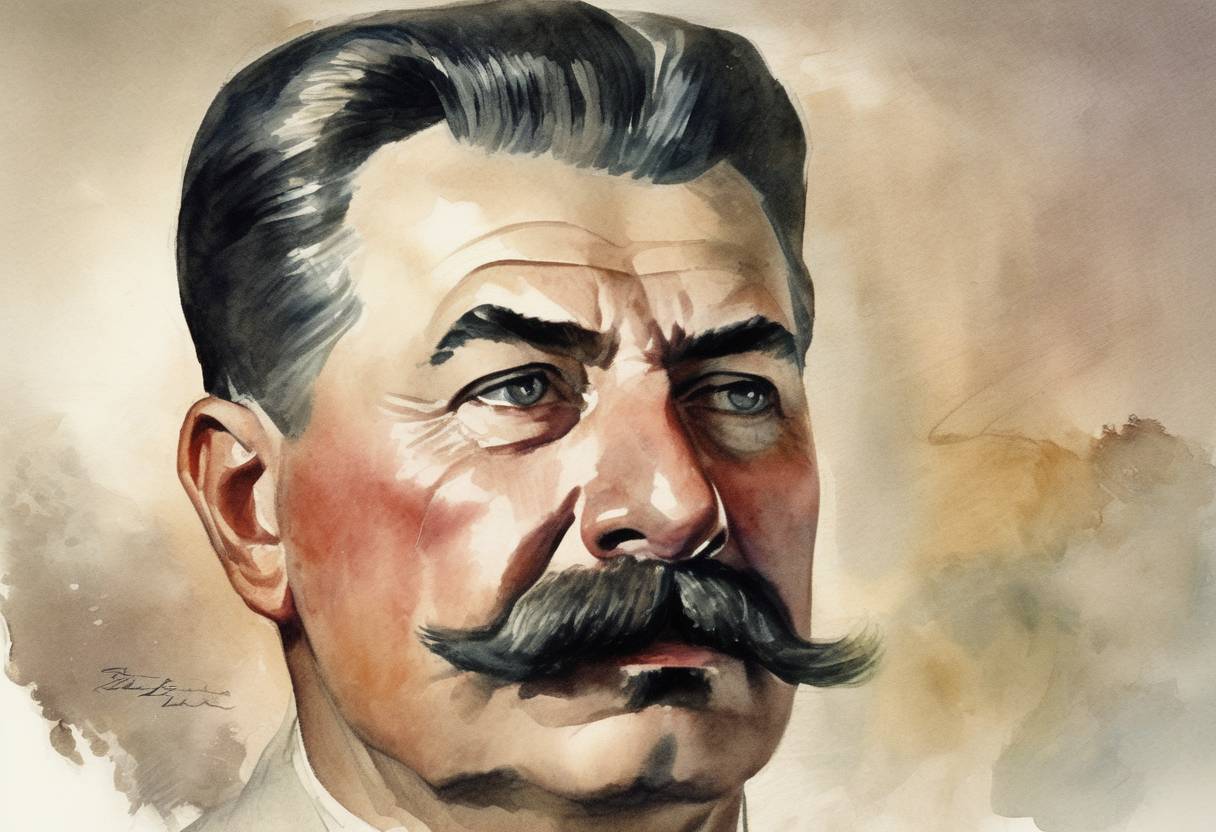
On April 3, 1922, Joseph Stalin was appointed as the first General Secretary of the Communist Party of the Soviet Union, a pivotal moment in Soviet history that would have profound implications for the future of the USSR and the world.
Post-Revolutionary Russia: Following the Russian Revolution of 1917, the Bolsheviks, led by Vladimir Lenin, established a socialist government. The early years were marked by civil war, economic hardship, and political instability.
Party Structure: The Communist Party was the central governing body in the Soviet Union. The role of General Secretary was initially intended to be an administrative position, responsible for managing party affairs and ensuring the implementation of decisions made by the Politburo.
Stalin’s Rise: Joseph Stalin, born Ioseb Besarionis dze Jughashvili in Georgia, was a prominent Bolshevik revolutionary. By 1922, he had gained significant influence within the party through his roles in various capacities, including as People’s Commissar for Nationalities and as a member of the Politburo.
Strategic Positioning: Stalin’s appointment was largely due to his strategic positioning within the party and his close relationship with Lenin. Although Lenin had reservations about Stalin’s character, he recognized his organizational abilities.
Role and Responsibilities: As General Secretary, Stalin was responsible for overseeing the party’s bureaucracy, managing appointments, and controlling the flow of information. This position allowed him to build a network of loyal supporters within the party.
Consolidation of Power: Over the next few years, Stalin used his position to consolidate power, outmaneuvering rivals such as Leon Trotsky, Grigory Zinoviev, and Lev Kamenev. By the late 1920s, Stalin had become the de facto leader of the Soviet Union.
Transformation of the Soviet State: Stalin’s leadership marked a significant transformation in Soviet policies and governance. His tenure saw the implementation of rapid industrialization, collectivization of agriculture, and the establishment of a totalitarian regime characterized by widespread purges and repression.
Global Impact: Stalin’s rule had a lasting impact on global politics, particularly during World War II and the subsequent Cold War era. His policies and actions shaped the geopolitical landscape of the 20th century.
Stalin’s appointment as General Secretary on April 3, 1922, was a critical juncture in Soviet history. It set the stage for his eventual rise to absolute power, influencing the direction of the Soviet Union and its role on the world stage for decades to come.
Source: en.wikipedia.org