Establishment of Standard Time Zones in the United States and Canada
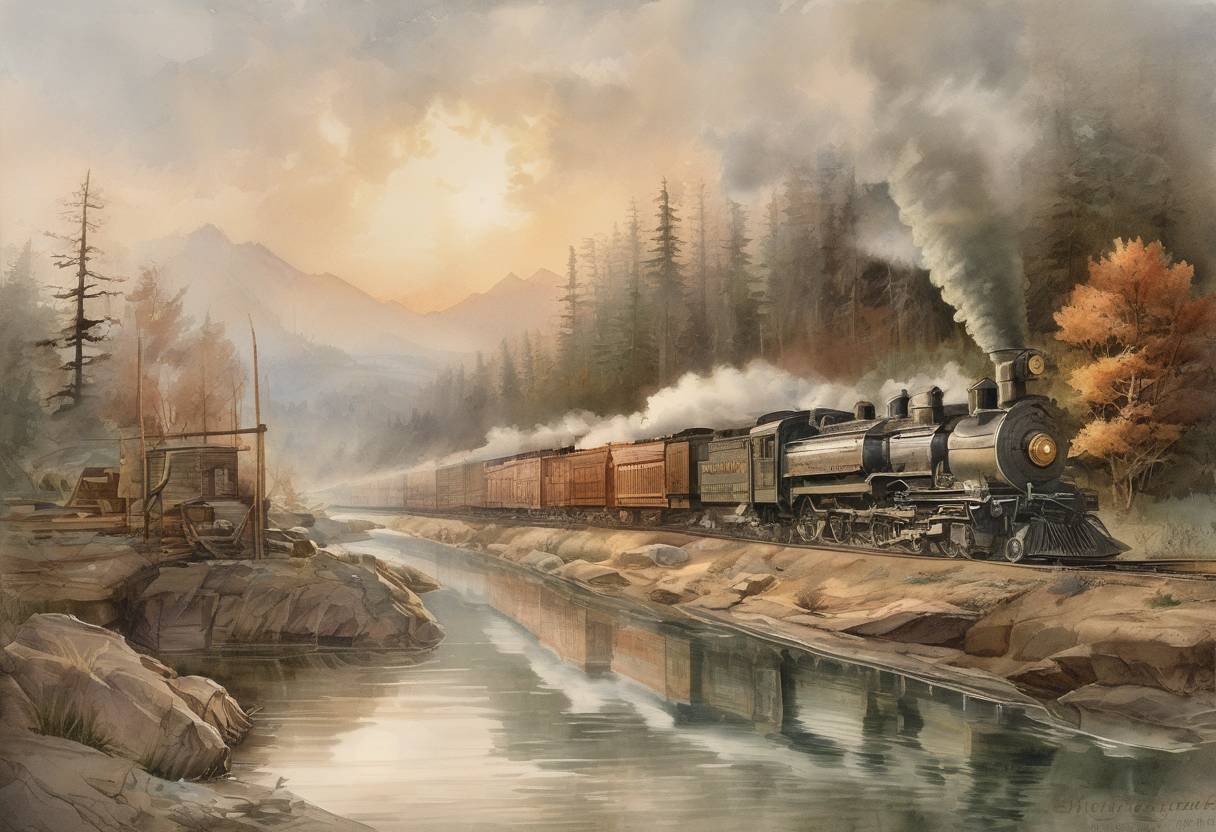
On November 18, 1883, a significant transformation in timekeeping occurred in North America with the establishment of standard time zones by the railroad companies. This event, known as “The Day of Two Noons,” marked a pivotal shift from the chaotic system of local mean times to a more organized and uniform time-keeping system.
Context and Background
Before the establishment of standard time zones, towns and cities across the United States and Canada set their clocks according to the position of the sun, leading to a myriad of local times. This system was manageable in a pre-industrial society but became increasingly problematic with the advent of the railroads.
The rapid expansion of the railroad network in the 19th century highlighted the inefficiencies and confusion caused by the lack of standardized time. Train schedules were difficult to coordinate, and the risk of accidents increased due to the discrepancies in local times.
Key Events Leading to Standardization
Railroad Influence: The railroads were the primary drivers behind the push for standardized time. As the most advanced and widespread form of transportation, they required precise scheduling to operate efficiently and safely.
General Time Convention: In 1883, the General Time Convention, a meeting of railroad officials, proposed a system of standard time zones. This system divided the continent into four time zones: Eastern, Central, Mountain, and Pacific.
Implementation: On November 18, 1883, at precisely noon, the railroads implemented the new time system. This moment was dubbed “The Day of Two Noons” because, in many places, the clocks were reset to align with the new standard time.
Aftermath and Consequences
Widespread Adoption: Although initially adopted by the railroads, the standardized time zones quickly gained acceptance by businesses, municipalities, and the general public. The system proved so effective that it was eventually adopted by the U.S. Congress in the Standard Time Act of 1918, which made the time zones official.
International Influence: The success of the North American time zone system influenced other countries and played a role in the establishment of the international time zone system at the International Meridian Conference in 1884.
Modern Timekeeping: The establishment of standard time zones laid the groundwork for the modern timekeeping system we use today, facilitating global communication, travel, and commerce.
Broader Historical Significance
The implementation of standard time zones was a crucial step in the modernization of society, reflecting the growing importance of technology and industry in daily life. It underscored the need for coordination and uniformity in an increasingly interconnected world, setting a precedent for future innovations in timekeeping and scheduling.
This event is a testament to the transformative power of the railroads and their role in shaping not only transportation but also societal norms and practices.