Establishment of Jamestown: May 13, 1607
1607 · Jamestown, United States
English settlers establish Jamestown, the first permanent English settlement in North America.
May 24, 1607
One hundred English settlers disembark in Jamestown, the first permanent English colony in America.
Jamestown, United States | Virginia Company
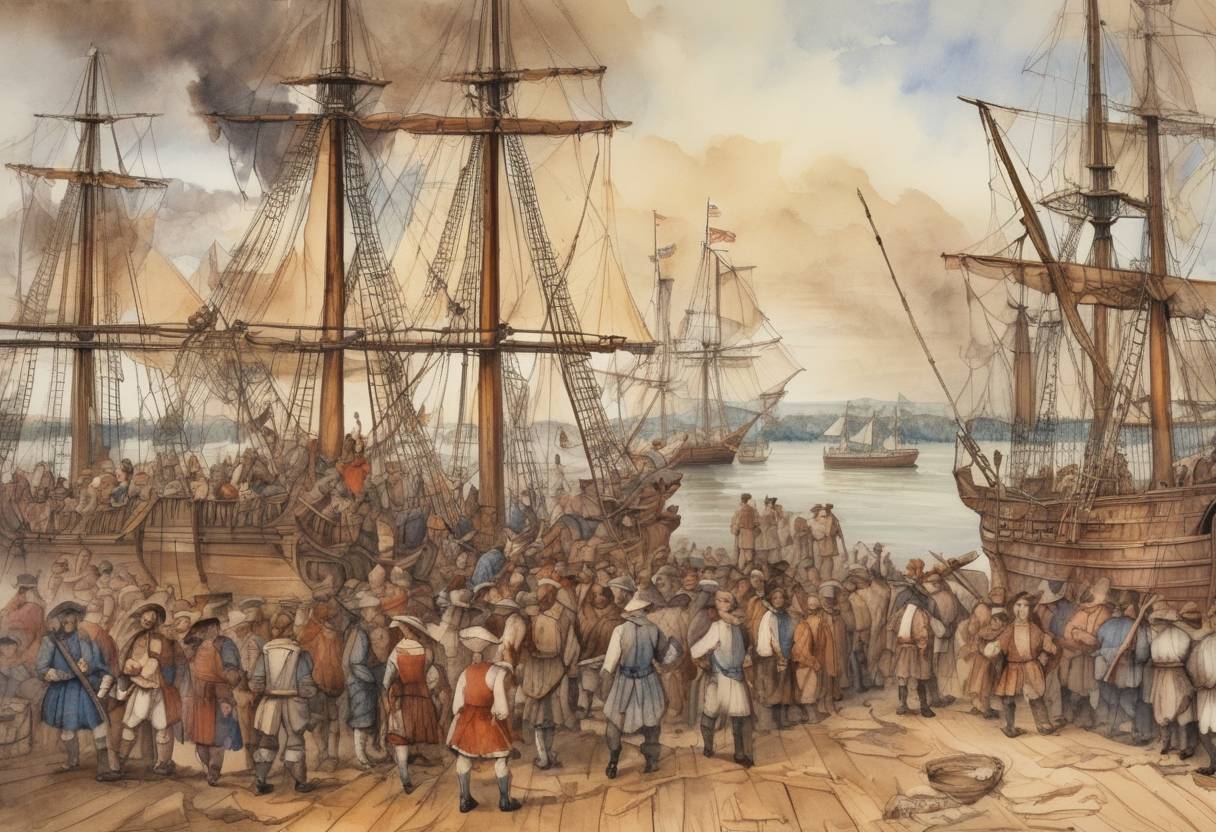
On May 24, 1607, a significant event in American history unfolded as approximately 100 English settlers disembarked at Jamestown, marking the establishment of the first permanent English colony in America. This event laid the foundation for the future expansion of English influence in the New World and had lasting implications for both the indigenous populations and the European settlers.
The journey to Jamestown was initiated by the Virginia Company of London, a joint-stock company chartered by King James I in 1606. The company’s mission was to establish a profitable colony in North America, driven by the promise of gold, the potential for trade, and the expansion of English territorial claims.
The expedition set sail in December 1606 aboard three ships: the Susan Constant, the Godspeed, and the Discovery. Led by Captain Christopher Newport, the fleet carried 104 settlers, including gentlemen, craftsmen, and laborers, all eager to seek their fortunes in the New World.
After a grueling four-month journey across the Atlantic, the settlers arrived in the Chesapeake Bay area in April 1607. They spent several weeks exploring the region before selecting a site on a peninsula along the James River, which they named Jamestown in honor of King James I.
The location was chosen for its defensible position and deep-water anchorage, but it was also marshy, mosquito-infested, and lacked fresh water, which would soon contribute to significant hardships for the settlers.
The early years at Jamestown were marked by severe challenges. The settlers faced food shortages, disease, and conflicts with the Powhatan Confederacy, the indigenous people who inhabited the region. The “Starving Time” during the winter of 1609-1610 was particularly devastating, with only 60 of the original settlers surviving.
Leadership under Captain John Smith, who famously declared, “He that will not work shall not eat,” was crucial in maintaining some order and discipline. Smith’s efforts to establish trade relations with the Powhatan were also vital for the colony’s survival.
Despite the initial struggles, Jamestown eventually stabilized and became a successful colony. The introduction of tobacco cultivation by John Rolfe in 1612 provided a profitable export that ensured the colony’s economic viability.
Jamestown’s establishment marked the beginning of a permanent English presence in North America, setting the stage for further colonization and the eventual development of the United States. It also initiated complex interactions between European settlers and Native American populations, with profound and lasting consequences.
The story of Jamestown is a testament to human resilience and the drive for exploration and expansion, reflecting both the opportunities and challenges of colonial endeavors.
The disembarkation of English settlers at Jamestown on May 24, 1607, was a pivotal moment in history. It represents the beginning of a new chapter in the colonization of North America, with enduring impacts on the cultural, economic, and political landscapes of the continent.
Source: en.wikipedia.org