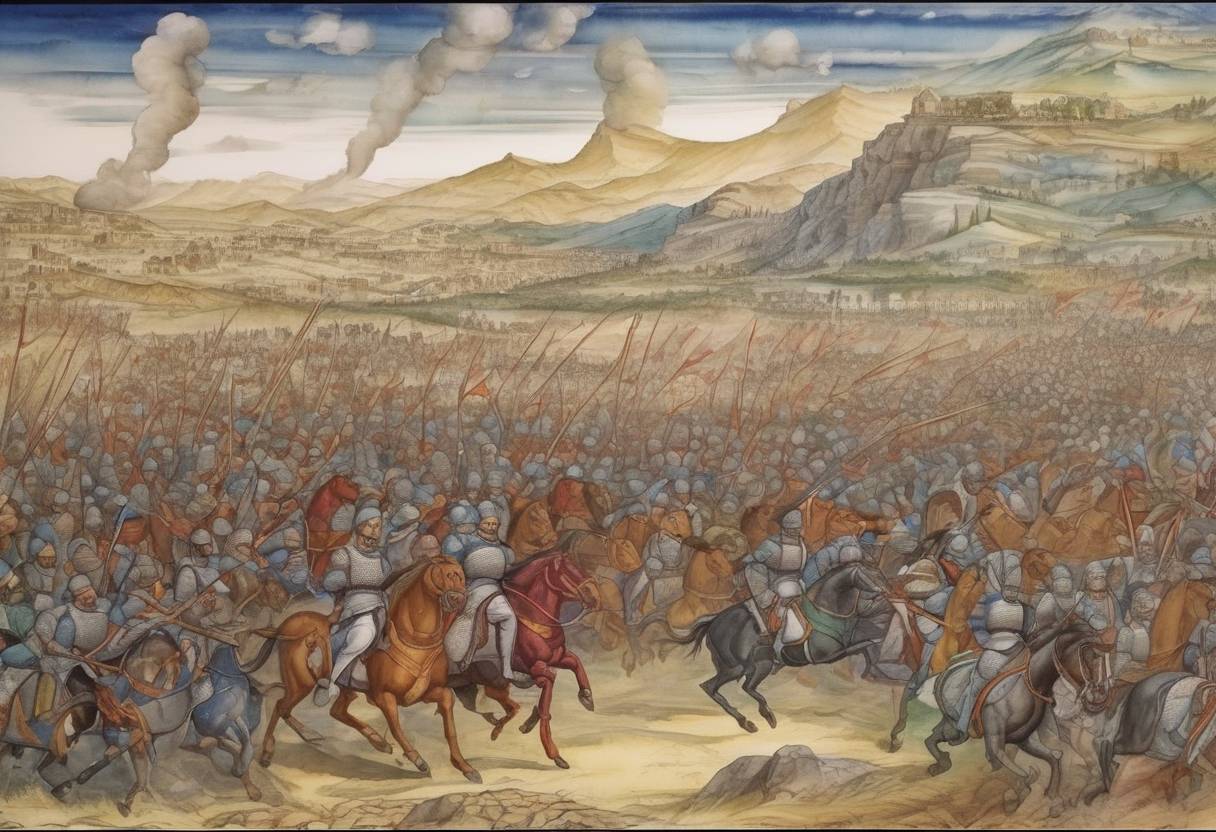
The Battle of Chaldiran: August 23, 1514
The Battle of Chaldiran, fought on August 23, 1514, was a pivotal conflict between the Ottoman Empire and the Safavid Empire. This battle marked a significant moment in the history of the Middle East, as it established the dominance of the Ottoman Empire in the region and set the stage for future geopolitical dynamics.
Context and Background
Ottoman Empire: Under the leadership of Sultan Selim I, known as Selim the Grim, the Ottoman Empire was expanding its territories. Selim sought to consolidate power and counter the influence of the Safavid Empire, which was promoting Shia Islam in a predominantly Sunni region.
Safavid Empire: Led by Shah Ismail I, the Safavid Empire was a rising power in Persia (modern-day Iran). Shah Ismail had established Shia Islam as the state religion, which posed a religious and political challenge to the Sunni Ottoman Empire.
Religious and Political Tensions: The conflict was fueled by religious differences, as the Ottomans were Sunni Muslims and the Safavids were Shia Muslims. Additionally, the Safavid support for rebellious factions within the Ottoman territories exacerbated tensions.
The Battle
Location: The battle took place near Chaldiran, in the northwestern part of present-day Iran.
Forces: The Ottoman forces, numbering around 60,000 to 100,000, were well-equipped with artillery and firearms, which were relatively new to warfare at the time. The Safavid forces, estimated at around 40,000, relied heavily on cavalry and traditional weapons.
Outcome: The Ottomans, with their superior military technology and strategic planning, decisively defeated the Safavid forces. The use of artillery played a crucial role in the Ottoman victory, as it overwhelmed the Safavid cavalry.
Aftermath and Significance
Territorial Gains: Following the victory, the Ottomans gained control over eastern Anatolia and parts of northwestern Persia, significantly expanding their empire.
Impact on the Safavid Empire: The defeat at Chaldiran was a major setback for Shah Ismail I, who lost prestige and influence. It exposed the vulnerabilities of the Safavid military and prompted a reevaluation of their military strategies.
Long-term Consequences: The battle established the Ottoman Empire as the dominant power in the region and curtailed the spread of Shia Islam into Anatolia. It also set the stage for ongoing Ottoman-Safavid conflicts, which continued for over a century.
Cultural and Religious Implications: The battle reinforced the sectarian divide between Sunni and Shia Islam, influencing the religious and political landscape of the Middle East for centuries to come.
The Battle of Chaldiran remains a significant event in the history of the Ottoman and Safavid empires, illustrating the impact of military technology and strategic leadership in shaping the course of history.