Alberta and Saskatchewan Join the Canadian Confederation
1905 · Ottawa, Canada
Alberta and Saskatchewan become provinces of Canada, expanding the country's confederation and shaping its western frontier.
December 31, 1857
Queen Victoria chose Ottawa as the capital of Canada, a decision that helped unify the provinces of Canada.
Ottawa, Canada | British Monarchy
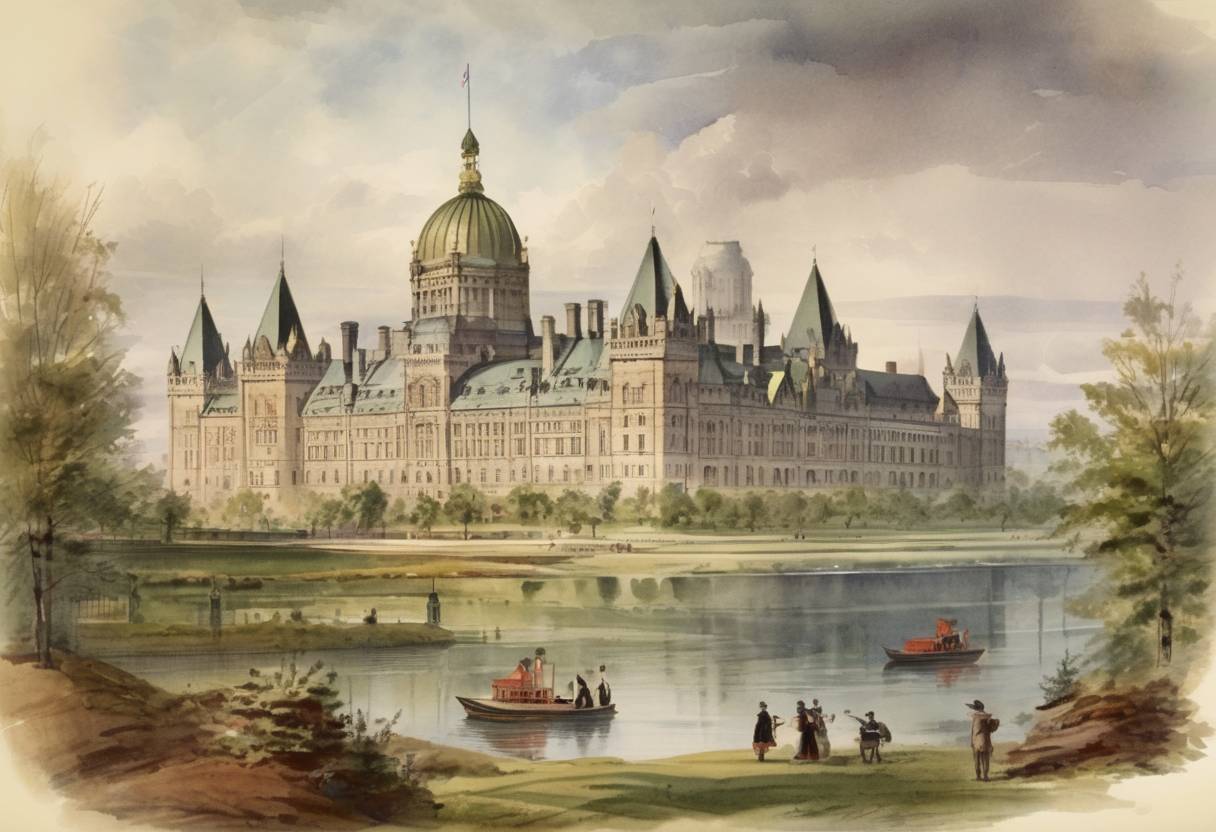
On December 31, 1857, Queen Victoria made a pivotal decision that would shape the future of Canada by selecting Ottawa as the capital of the Province of Canada. This choice was instrumental in unifying the provinces and establishing a central seat of government.
In the mid-19th century, the Province of Canada was a union of what are now Ontario and Quebec, known then as Canada West and Canada East, respectively. The capital had previously shifted between several cities, including Kingston, Montreal, Toronto, and Quebec City, leading to political instability and logistical challenges.
Geographical Location: Ottawa’s position on the border of Canada West and Canada East made it a neutral choice, reducing regional tensions between the English-speaking and French-speaking populations.
Defense Considerations: Situated further inland, Ottawa was less vulnerable to attacks from the United States, a significant concern following the War of 1812 and ongoing tensions.
Transportation and Accessibility: The presence of the Ottawa River facilitated transportation and trade, making it accessible while still remote enough to be defensible.
Political Neutrality: Ottawa was not associated with the political factions that dominated the larger cities, making it a more impartial choice.
Unification: By selecting Ottawa, Queen Victoria helped to unify the provinces by providing a permanent and neutral capital, which was crucial for the political stability of the young nation.
Development: The designation of Ottawa as the capital spurred its development, transforming it from a modest lumber town into a thriving political and administrative center.
Symbolic Importance: The decision underscored the importance of balancing regional interests in Canada, setting a precedent for future governance and policy-making.
Ottawa’s selection as the capital laid the groundwork for its growth and development into the political heart of Canada. The construction of key government buildings, including the Parliament Buildings, began shortly thereafter, further cementing its status.
The decision also highlighted the importance of strategic compromise in Canadian politics, a theme that would continue to play a significant role in the country’s evolution. Ottawa remains the capital of Canada to this day, a testament to the foresight of Queen Victoria’s choice.
In summary, Queen Victoria’s decision on December 31, 1857, was a crucial step in the formation of a unified Canadian identity and the establishment of a stable government infrastructure.
Source: en.wikipedia.org