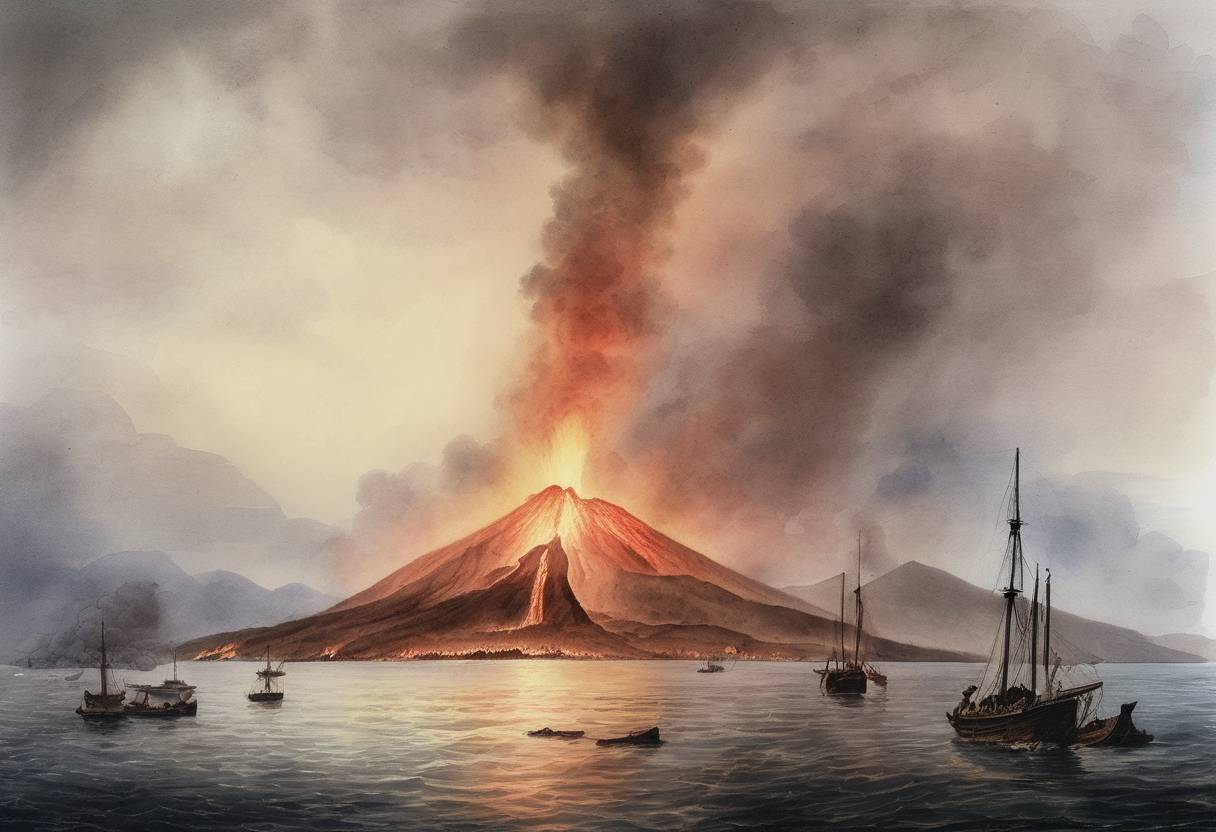
The Eruption of Krakatoa: August 26, 1883
The eruption of Krakatoa, which began on August 26, 1883, stands as one of the most violent volcanic events in recorded history. Located in the Sunda Strait between the islands of Java and Sumatra in Indonesia, Krakatoa’s eruption had profound and far-reaching effects both locally and globally.
Background
Krakatoa is part of the Pacific Ring of Fire, an area known for its seismic activity, including earthquakes and volcanic eruptions. Prior to the catastrophic events of 1883, Krakatoa had experienced several smaller eruptions, but none hinted at the scale of what was to come.
The Eruption
Initial Activity
- May 1883: The first signs of volcanic activity were observed, with steam venting and minor eruptions occurring intermittently.
- August 26, 1883: The eruption intensified dramatically. By the afternoon, a series of powerful explosions began, sending ash and pumice high into the atmosphere.
The Climax
- August 27, 1883: The eruption reached its cataclysmic peak. A series of four massive explosions occurred, the largest of which was heard as far away as Australia and the island of Rodrigues near Mauritius, over 4,800 kilometers (3,000 miles) away.
- The force of the explosions was equivalent to 200 megatons of TNT, making it one of the loudest sounds ever recorded in human history.
Consequences
- Tsunamis: The eruption generated massive tsunamis, with waves reaching heights of up to 40 meters (130 feet). These tsunamis devastated coastal towns and villages along the Sunda Strait, resulting in the deaths of over 36,000 people.
- Ash and Atmospheric Effects: The eruption ejected an estimated 25 cubic kilometers (6 cubic miles) of rock, ash, and pumice into the atmosphere. This material spread globally, affecting weather patterns and causing spectacular sunsets worldwide.
Global Effects
- Climate Impact: The volcanic ash and sulfur dioxide released into the atmosphere led to a significant drop in global temperatures, a phenomenon known as “volcanic winter.” This cooling effect persisted for several years, impacting agriculture and weather patterns.
- Cultural and Scientific Influence: The dramatic sunsets inspired artists and writers, while the event prompted scientific studies into atmospheric phenomena and volcanic activity.
Aftermath
The eruption of Krakatoa reshaped the geography of the region, with much of the island being destroyed or submerged. In the years following the eruption, a new volcanic island, Anak Krakatau (“Child of Krakatoa”), emerged from the caldera, continuing to be active to this day.
The 1883 eruption of Krakatoa remains a pivotal event in the study of volcanology and serves as a stark reminder of the power of natural forces. Its impact on climate, culture, and scientific understanding continues to be felt and studied over a century later.